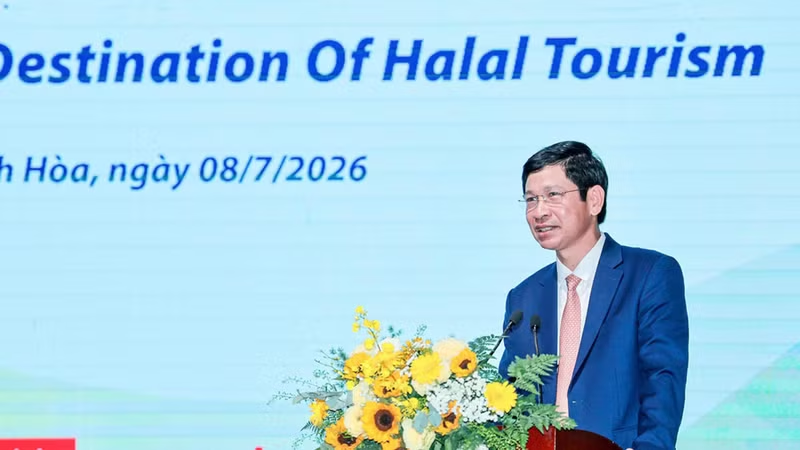
Halal Tourism: Vietnam's New Growth Engine
The global Halal market, with over 2 billion Muslims, is projected to reach 245 million travelers and $255-$280 billion in spending by 2030. Vietnam is focusing on this rapidly growing segment, aiming to promote Halal tourism as a new strategy.
Vietnam is identifying new growth opportunities in the rapidly expanding global Halal tourism market. With over 2 billion Muslims worldwide, the Halal market is projected to see approximately 245 million travelers and a total spending of $255-$280 billion by 2030. This market is recognized as one of the fastest-growing segments in the global tourism industry, presenting significant growth potential for Vietnam. The Vietnamese government and tourism-related businesses are accelerating efforts to develop and promote Halal tourism as a new tourism product, recognizing its potential. Specifically, efforts are underway to develop accommodation, dining, and tourist routes that cater to the needs of Muslim travelers. This strategy aims to appeal to a broader audience with Vietnam's diverse cultural attractions. Vietnam is also strengthening cooperation with ASEAN countries such as Singapore and Malaysia in building Halal value chains and developing products. This aims to enhance regional competitiveness in the Halal tourism market and attract tourists to each country. Under its one-party system, Vietnam emphasizes long-term economic growth strategies led by the state, with the tourism industry being a key pillar. While Vietnam's economy has achieved remarkable growth in recent years, diversifying into new markets is essential for its sustainability. Promoting Halal tourism is part of this economic growth strategy, aiming to attract a diverse range of tourists and expand foreign exchange earnings. In its relationship with China, while economic ties are strong, geopolitical tensions also exist. Vietnam is seeking to build a more stable economic foundation by diversifying its economy and reducing dependence on any single country. The move into the Halal tourism market can also be interpreted as a strategic step to enhance economic independence. Source: Nhan Dan
多角的分析
ハラル観光市場への参入は、ベトナム経済の多角化と新たな収益源の確保という点で極めて重要である。イスラム圏からの観光客は、特定の食習慣や宗教的慣習への配慮を求めるため、これに対応するインフラやサービスの整備は、新たな投資と雇用創ちを生む可能性がある。特に、ハラル認証を受けた食品産業や、イスラム教徒向けの宿泊施設・旅行サービスは、既存の観光インフラを補完し、付加価値を高めることが期待される。これは、ベトナムがこれまで強みとしてきた製造業や農業に加え、サービス産業における国際競争力を高める試みと言える。
ハラル観光市場への注力は、投資家にとって新たなビジネスチャンスを示唆している。イスラム圏からの観光客の増加は、ホテル、レストラン、旅行代理店、さらにはハラル認証食品の製造・供給業者など、関連産業への投資を促進する可能性がある。特に、ASEAN諸国との連携強化は、地域全体でのハラル観光エコシステムの構築を意味し、サプライチェーン全体にわたる投資機会を生み出すだろう。ただし、ハラル認証の取得やイスラム文化への理解といった、特有のハードルが存在する可能性も考慮する必要がある。
ハラル観光の推進は、ベトナム社会における多様性への理解と受容を深める機会となる。イスラム教徒の観光客の増加は、国内でのハラル対応食品の普及や、宗教的・文化的な習慣への配慮を促すだろう。これは、ベトナム社会の国際化を一層進める一方で、国内のイスラム教徒コミュニティとの相互理解を深める契機ともなりうる。ただし、ハラル認証の普及や、イスラム教徒のニーズに合わせたサービス提供体制の構築には、地域社会の協力や啓発活動が不可欠となる。
ハラル観光の発展は、ハノイやホーチミン市などの都市部だけでなく、地方における新たな雇用機会の創出に繋がる可能性がある。特に、イスラム文化と親和性の高い地域や、自然景観が豊かな地域では、ハラル対応の宿泊施設や体験型観光プログラムの開発が進むことで、地域経済の活性化が期待できる。しかし、ハラル基準の理解や、イスラム教徒の文化・習慣への対応といった点で、地域住民の教育や意識向上が求められる。
背景・歴史的文脈
ベトナムは、ドイモイ(刷新)政策以降、市場経済化を進め、観光産業を重要な外貨獲得源として位置づけてきた。近年、ベトナム経済は急速な成長を遂げ、国際社会における存在感を増している。その中で、経済の持続的な成長と多様化を目指し、新たな市場開拓が喫緊の課題となっている。ハラル観光市場は、イスラム教徒人口の増加と経済力向上に伴い、世界的に注目度が高まっている。ベトナムは、この巨大な潜在力を持つ市場に早期に参入することで、観光産業の新たな柱を築き、経済成長のエンジンとすることを目指している。ASEAN域内での連携強化も、地域経済統合の流れの中で、ハラル観光分野における協力を深める一環である。
原文ソース
Nhan Dan