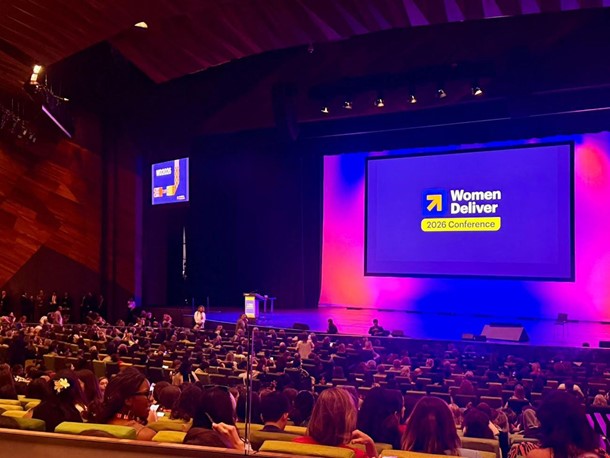
By Dr. Aung Tun 1. Change Calls Us Here In late April 2026, over 6,500 gender equality advocates from 180 countries gathered in Naarm (Melbourne), Australia, for the Women Deliver 2026 Conference (WD2026) — the most significant global convening on women’s health and rights in years. Weeks earlier, on 8 March, the world had observed International Women’s Day under the theme “Rights. Justice. Action. For ALL Women andGirls.” These two events, separated by weeks but united by purpose, have set the tone for what gender equality must look like in the years ahead. This article does not dwell on the history of International Women’s Day. It looks forward: at what WD2026 demanded, what the Melbourne Declaration committed to, and how Myanmar — a country with a record of genuine achievement for women — is answering that call. 2. Women Deliver 2026: The Conference that Redefining the Path Toward Global Gender Equality “Women Deliver 2026 was held from 27 to 30 April in Melbourne, Australia — the first time the conference had been hosted in the Oceanic Pacific region. Under the theme “Change Calls Us Here”, it brought together grassroots organizers, policymakers, researchers, young leaders, and frontline health workers in a shared refusal to accept that the rollback of women’s rights is inevitable. Four pillars shaped every discussion at the conference. Each one reflects a frontier where progress is being actively contested worldwide. Pillar 1: Adolescent Girls’ Rights and Sexual and Reproductive Health Young women’s bodily autonomy was placed at the centre of the WD2026 agenda. Delegates argued that adolescent girls cannot be treated as passive recipients of health services: they must be recognized as rights-holders and active leaders. Access to quality sexual and reproductive health information and services — including safe contraception, maternal care, and protection from child marriage — was framed not as a privilege but as a non-negotiable foundation for girls’ education, economic participation, and lifelong wellbeing. Pillar 2: Climate Justice as a Gender Issue Climatechange is not gender-neutral. Women in rural and low-income communities — who bear the greatest burden of food production, water collection, and caregiving — are disproportionately exposed to the impacts of floods, droughts, and extreme heat. WD2026 made the case that no climate solution is complete unless it centres the knowledge, leadership, and specific vulnerabilities of women and girls. First Nations women fromthe Oceanic Pacific region were given prominent platforms to share their communities’ lived experience at the intersection of gender inequality and environmental disruption. Pillar 3: Countering Anti-Rights Narratives One of the most sobering conversations at WD2026 was the open acknowledgement that progress on gender equality is not linear. Around the world, organised movements are actively working to restrict women’s reproductive rights, roll back legal protections against gender-based violence, and remove women from public decision-making. The conference developed evidence-based communication strategies and solidarity frameworks to help advocates, governments, and communities push back against these narratives with clarity and confidence. Pillar 4: Multilateral Action and Feminist Leadership in Global Governance WD2026 calledfor a fundamental shift in how international institutions operate: from including women’s voices as an afterthought to building feminist leadership into the architecture of global governance. Governments must be held accountable through transparent tracking mechanisms. Aid funding for women’s programmes — including gender-based violence response, reproductive health, and girls’ education — must be protected and increased, not diverted. Cutting this funding, delegates concluded, is not a fiscal neutral act. It reverses decades of hard-won gains. 3. The Melbourne Declaration: A Roadmap, Not a Resolution The conference concluded with the adoption of the Melbourne Declaration for Gender Equality — a collective commitment from the international development community that is notable for what it does not do: it does not offer vague aspirations or feel-good language. It makes specific, structural demands. Melbourne Declaration for Gender Equality — Three Core Commitments 1. Systemic Change: Move from tokenistic representation to meaningful, institutionalized leadership for women. Replace vague political promises with budgeted, enforceable rights that can be measured and tracked. 2. Accountability First: Shift resources and power directly to thoseclosest to the challenges. Governments and international actors must be held to account through transparent country scorecards — not self-reported progress, but independently verified outcomes. 3. A Feminist Future: Unapologetically reject politics of fear and division. Champion a future grounded in hope, care, and collective joy — one where women’s leadership is not celebrated as an exception but expected as a norm.The Declaration’s emphasis on accountability is its most important innovation. For too long, commitments to gender equality have been made in conference halls and forgotten in budget negotiations. WD2026 demanded that every government, donor, and development organisation be measured not by what it promises at global events but by what it delivers in communities where women actually live. “The conclusion of WD2026 marks not an end, but the beginning of a decade-long journey toward a transformative, just world for girls, women, and gender-diverse people.” — WD2026 Conference Statement 4. Myanmar and the WD2026 Call for Action: How the Country Is Responding The Melbourne Declaration’s calls are not abstract demands for Myanmar. They map directly onto initiatives, structures, and achievements that Myanmar has been building — some for decades, one of them brand new in 2026. In 2026, Myanmar took a landmark institutional step: the establishment of a dedicated Ministry of Women’s Affairs. This is precisely the kind of structural change WD2026 demanded — moving women’s issues from the margins of larger ministries into a cabinet-level portfolio with its own mandate, budget, and accountability. A dedicated ministry means that gender equality is no longer a secondary agenda item; it is a primary responsibility of government. This alignment between what WD2026 demanded and what Myanmar has put in place is not coincidental. It reflects a long-standing national commitment to gender equality that predates the Melbourne conference — from Myanmar’s ratification of CEDAW in 1997, to the founding of the MNCWA, to the current NSPAW 2023-2032 implementation. The 2026 ministry establishment is the most recent and most structurally significant expression of that commitment. 5. Myanmar Women: Evidence of a Society That Invests in Its Women Numbers alone do not tell the full story of Myanmar women’s lives. But the data from the 2025 Myanmar Statistic | NEWS-BRAIN