General articles are free for 24 hours after publish.
Social Media Hoax Fuels Deadly Violence in Africa; Vietnam's Digital Landscape
Over 80 people have been killed in six African countries due to 'genital theft' rumors spread on social media. This highlights the growing importance of media literacy in Vietnam, where social media use is also rapidly increasing.
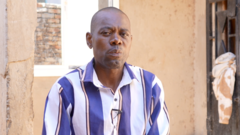
Over 80 people have been killed in six African countries between October 2025 and July 2026 following false accusations related to so-called 'genital theft'. The BBC Global Disinformation Unit's investigation, which collected and analyzed data from police forces across the six nations, revealed that these killings were fueled by rumors. These rumors, amplified on social media, suggested that merely touching a man's shoulder could cause his genitals to shrink or disappear. "The crowd was screaming that we had stolen someone's genitals, and there was no way we could escape because there were too many people," Boniface Mgala, a mechanic from Tanzania, told the BBC about an incident in April when he was brutally beaten for allegedly being a 'genital thief'. His experience mirrors accounts in videos reviewed by the BBC, where men claimed their penises and testicles had disappeared or shrunk after contact with strangers, followed by mobs demanding the return of the allegedly stolen body parts. Such rumors tap into long-standing fears and superstitions in Africa, particularly in communities with beliefs in witchcraft, and are not a new phenomenon. Social media has significantly magnified these fears. The recent wave of rumors appears to have started last year in the Democratic Republic of Congo, where similar accusations emerged in 2008. The rumors then gradually spread across the region to Burundi, Zambia, and Tanzania, as well as Mozambique, Angola, Malawi, and Kenya. In Zambia, rumors of disappearing genitals began to attract attention in March when a woman was lynched by a mob. The rumors then crossed the border, causing panic in Tanzania. In his home in Mpemba, near Tunduma – a bustling trading town on the Tanzanian border with Zambia – Mgala traced a crescent-shaped scar on the right side of his head, recalling his terrifying ordeal. "If I had known how close to death I was that day, I wouldn't have gone to that restaurant. But we never know how close death is to us," the mechanic said. On April 1, he and a friend went to Tunduma to meet a client to discuss a car sale and decided to have lunch first. Shortly after they sat down at a restaurant, they were dragged outside by a mob. Two small scars on his chin and a missing tooth are other marks left by the incident. Mgala lost consciousness during the beating and woke up in the hospital two days later to learn that his friend had died. Returning to the home he shares with his wife and four children, he now walks with a limp and suffers from frequent headaches. He has not been able to return to work at the garage, but neighbors and friends have helped him cover some of his medical expenses. On the same day Mgala and his friend were attacked, photographer and businessman Michael Silavwe said he witnessed another similar attack in Tunduma, where panic was escalating after videos of 'genital theft' began circulating on TikTok. Standing outside his shop, he saw people running in disarray and learned that a man nearby was accused and being beaten – and was later burned to death. "After they burned him, the police arrived at the scene, and everyone dispersed and ran away," Silavwe, 23, told the BBC. In a video of the attack, verified by the BBC Global Disinformation Unit and viewed over 100,000 times on TikTok and Facebook, a group of people is seen beating a man while demanding he return the genitals they claim he stole from a victim. "These incidents kept escalating, and people were constantly being beaten," Silavwe said. He noted that young people like him felt genuinely scared at the time but now understand that the rumors were baseless. Asha Steven Mwakilasa, a 50-year-old tailor and fashion designer in Tunduma, Momba district, agreed: "I realized it wasn't true." However, this did not completely alleviate her anxiety, especially when her husband or sons went out. She expressed gratitude that the police were now increasing patrols. Elias Daniel Mwandobo, head of the Momba district administration, told the BBC that local investigations suggested some incidents might stem from deliberate criminal intent: "Individuals have colluded to commit crimes and incite public panic for their own benefit." Another video, filmed in Dar es Salaam, Tanzania's largest city, shows a mob escorting a man through a dusty market street, shoving, pulling, and beating him while demanding he return his genitals, as he repeatedly pleads innocence. The BBC Global Disinformation Unit has verified similar videos of mob violence in Mozambique and Kenya. Dozens of videos documenting mob violence, alleged eyewitness accounts, warnings about purported incidents, and comments, along with videos presented as news reports from specific localities, are circulating on TikTok and Facebook. Many of the contents analyzed by the BBC, including some videos of mob violence, remain online. A Meta spokesperson told the BBC: "We are reviewing the content submitted to us and will take action on content identified as violating our policies." TikTok has not yet responded to the BBC's request for comment. For some social media creators who warn viewers to be vigilant, it remains unclear whether they genuinely believe the rumors or are primarily seeking engagement. Alongside such posts, some users promote 'charms' allegedly capable of protecting people from genital theft, while comedians mock the rumors through skits. Author Julien Bonhomme argues that smartphones and social media allow rumors to spread faster, reach more people, and become harder to control once they begin to disseminate. His book, 'The Sex Thieves: The Anthropology of a Rumor,' examines how rumors about 'sex thieves' spread and why people believe them. According to him, people not only hear claims that someone has lost their genitals – they also see distressed men saying it happened to them, or witness mobs reacting to accusations. He suggests that videos shared on social media can make unverified claims more believable due to their immediacy, calling it "one of the most significant differences" between the current digital environment and previous outbreaks of similar rumors.
Original source
BBC Vietnamese