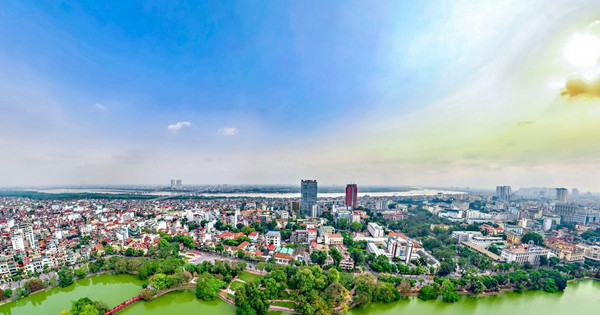
Hanoi Positions Culture as Core Driver in Century-Long Development Plan
Culture
2026年8月4日
5
VietnamPlus English

General articles are free for 24 hours after publish.

Hanoi Positions Culture as Core Driver in Century-Long Development Plan

Share
AI Summary

Hanoi's 100-year master plan adopts a novel approach, transforming culture from mere heritage preservation into an endogenous resource, a source of soft power, and a catalyst for sustainable development. The plan integrates cultural spaces with urban development and contemporary life, aiming to create new landmarks symbolizing Hanoi's unique 'Civilization – Identity – Creativity'.

Hanoi is poised to elevate culture to a pivotal role in its development strategy, positioning it as the core value underpinning its ambitious 100-year master plan. This strategic shift marks a departure from previous planning, where culture was primarily associated with heritage preservation, urban identity, and tourism. The new approach transforms culture from a sector requiring preservation into a catalyst for development. It also involves reorganizing the capital''s cultural space by integrating it with urban development, landscapes, and contemporary life. Hanoi boasts nearly 6,000 historical and cultural relics, the highest number in Vietnam, alongside thousands of intangible cultural heritage items and numerous UNESCO-recognized heritage assets. Director of the Hanoi Department of Culture and Sports, Pham Tuan Long, stated that these are not merely statistics but living evidence of Hanoi's centuries-long formation. Instead of treating heritage as something to be "frozen" for preservation, the master plan considers it a development resource. Within the capital's development framework featuring nine growth poles, Hanoi's rich heritage assets will serve as historical, cultural, and civilizational foundations that shape the identity of each urban space. Heritage is viewed not as an obstacle to modernization but as an element that enables a modern city to retain its distinctive character. This is reflected in the plan's spatial organization, which establishes large-scale cultural corridors and heritage networks rather than preserving individual relics in isolation. A key feature is the development of four major heritage, cultural, and landscape corridors along the Da, Hong, and Duong Rivers, spanning about 150 kilometers. The Red River corridor, in particular, is set to become the capital's primary landscape, cultural, historical, and environmental axis. Riverbanks will accommodate public facilities, parks, cultural venues, tourism services, and landmark structures, connecting urban areas on both sides. This area symbolizes Hanoi's identity as a city of "Civilization – Identity – Creativity" and aims to become a new icon, linking with provinces in the Red River Delta to form a distinctive ecological and economic landscape for northern Vietnam. Alongside the Red River corridor, the master plan establishes a "Green - Spiritual Arc" to the west and south of the capital. This arc connects a chain of key scenic spots and historical, cultural, and spiritual relics, serving as both a green belt for environmental protection and a large-scale inter-regional "Heritage and Spirituality Route" for experiential tourism. The plan also reorganizes cultural spaces into an integrated system, linking sites such as the Thang Long Imperial Citadel, the Co Loa relic site, the Old Quarter, Hoan Kiem Lake and surrounding areas, the Red River corridor, traditional craft villages, communal houses, pagodas, temples, ancient villages, riverside cultural spaces and traditional agricultural areas. The goal is to create cultural, landscape, and tourism corridors where residents and visitors can experience heritage as a continuous journey rather than a series of isolated destinations. Furthermore, the plan extends beyond Hanoi's historic urban core by promoting the role of heritage "nuclei" in outlying areas. Sites like the Son Tay Ancient Citadel, the Duong Lam Ancient Village, the Huong Son and Co Loa complexes, Thay, Tay Phuong, Tram Gian and Tram pagodas will become cultural centers supporting the sustainable development of surrounding satellite areas. The presence of ancient villages and traditional craft villages associated with these sites will help harmonize modern living spaces with traditional values. Alongside heritage space reorganization, Hanoi aims to build a modern, distinctive cultural and creative ecosystem, making cultural industries a spearhead economic sector for the capital. Information Source: VietnamPlus English

0

Original source

VietnamPlus English

原文を読む