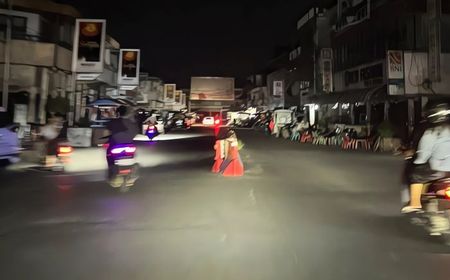
Energy Ministry Faces Scrutiny Over Sumatra, Bali Blackouts Amidst Coal Corruption Allegations
Politics
2026年7月11日
5
VOI English

Energy Ministry Faces Scrutiny Over Sumatra, Bali Blackouts Amidst Coal Corruption Allegations

AI サマリー

Indonesia's Ministry of Energy and Mineral Resources is facing calls for accountability over recent blackouts in Sumatra and Bali, linked to alleged coal corruption and failures in enforcing Domestic Market Obligation (DMO).

The Ministry of Energy and Mineral Resources (ESDM) is being held accountable for the recent total power outage, or blackout, that affected several regions in Indonesia, including Sumatra and Bali. The Center of Energy and Resources Institute (CERI) assesses that the coal corruption scandal, which led to the power outages, stems from the negligence of the Director General of Minerba within the Ministry of Energy and Mineral Resources regarding the governance of coal supply fulfillment. CERI suspects that the lack of coal supply arises because many coal mining companies fail to meet their Domestic Market Obligation (DMO) requirements but are still permitted to produce and export abroad. CERI argues that regulatory instruments available to the Ministry of Energy and Mineral Resources should have prevented this. "The Ministry of Energy and Mineral Resources, the Director General of Mineral and Coal, should be responsible when there are irregularities," stated CERI Executive Director Yusri Usman. He added that the Ministry should be able to monitor companies not fulfilling their DMO obligations using the Simbara system, which provides real-time information on production, royalties, and DMO commitments. Yusri expressed surprise that mining companies could still export when they had not met their DMO. He explained that typically, a violation would prevent a company from obtaining an export permit, and miners require an export recommendation from the Director General of Mining to the Director General of Foreign Trade. Furthermore, Yusri highlighted the leniency of penalties imposed by the Ministry on companies failing to meet DMO. He noted that the cost of coal production for power plants is around $45 per ton, while the fine for not meeting DMO is only $5 per ton. With international market prices around $68 per ton, companies still profit significantly by exporting, even after paying the fine. CERI believes the Ministry's negligence in utilizing its instruments, such as RKAB (Work Plan and Budget), Simbara, and export recommendations, is the primary reason for the energy supply deficit that caused the recent blackouts. While the Corruption Tipikor Unit of the National Police has identified PT OBP and PT BRA as suspects in coal procurement irregularities leading to the blackout, CERI rejects this assertion, arguing that the supply from these two companies constitutes a very small fraction of PLN's total needs.

多角的分析

経済的影響

石炭の国内供給義務(DMO)違反を放置したことが、電力供給の不安定化とそれに伴う経済的損失を招いた。国際市場価格との差を利用した不正輸出は、国内産業のエネルギーコスト上昇を招き、PLN(国営電力会社)の収益性にも影響を与えうる。罰金制度の緩さが、企業の不正行為を助長する構造となっている。

投資家心理

エネルギー供給の不安定性は、インドネシア経済全体の投資リスクを高める要因となる。特に、電力依存度の高い産業や、インフラ開発への投資意欲を減退させる可能性がある。透明性の欠如と規制当局の監督責任の曖昧さは、外国人投資家にとって懸念材料となる。

社会的影響

スマトラ島やバリ島での大規模停電は、市民生活に直接的な影響を与える。特に、経済活動が停滞し、日常生活が困難になる。また、エネルギー供給の不安定さは、地域間の経済格差を拡大させる可能性も指摘されている。石炭不正疑惑は、政府の監督能力への不信感を増幅させる。

市民の声

今回の停電は、ジャカルタ市民の生活にも間接的な影響を与える。物流の遅延や、電力不足による経済活動の停滞は、物価の上昇や雇用機会の減少につながる可能性がある。エネルギー供給の安定性は、市民の生活の質に直結する重要な課題である。

背景・歴史的文脈

インドネシアでは、国内の電力需要を満たすために、石炭採掘企業に国内市場への供給義務(DMO)が課されている。しかし、国際石炭価格の高騰時などに、DMOを履行せずに石炭を輸出し、利益を得る企業が現れることが問題視されてきた。過去にも同様の供給不足による停電事例が発生しており、エネルギー鉱物資源省の監督体制の甘さが指摘されてきた。特に、2022年夏にスマトラ島とバリ島で発生した大規模停電は、このDMO違反と関連付けられ、監督当局であるエネルギー鉱物資源省の責任が問われる事態となった。

原文ソース

VOI English

原文を読む