General articles are free for 24 hours after publish.
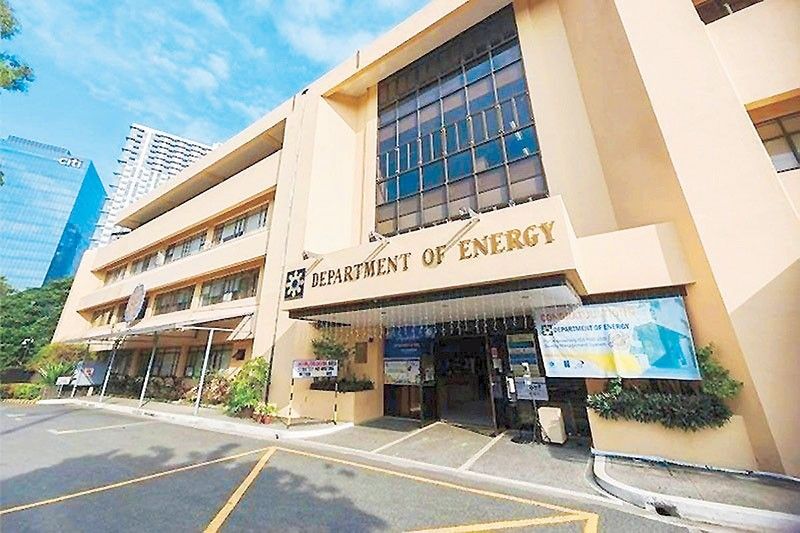
DOE Accelerates Power Projects, Aims for Brighter Sector by 2028
The Philippines, facing the highest electricity rates in Southeast Asia, aims for a brighter power outlook by accelerating the completion of 200 new power projects by 2028. The Department of Energy (DOE) is also implementing battery energy storage systems (BESS) in the Visayas region to address tight power supply and ensure grid stability.
MANILA, Philippines — The Philippines, which now has the highest electricity rates in Southeast Asia, could see a brighter power outlook before President Marcos ends his term in 2028. That is the Department of Energy (DOE)’s commitment to millions of Filipinos, counting on a pipeline of new power projects to address the country’s persistent electricity challenges. Energy Secretary Sharon Garin said the DOE is accelerating the completion of 200 power plants by 2028, in line with Marcos’ directive during last year’s State of the Nation Address (SONA). The projects are intended to address the country’s immediate power needs while strengthening long-term energy security and supporting industrial growth. “By 2028, we have a few power plants coming in. It’s all about timing,” Garin said in an interview, noting that both conventional and renewable power projects take years to build and cannot be completed overnight. Under the Philippine Energy Plan, peak electricity demand is projected to triple to 68.5 gigawatts by 2050 from 16.6 GW in 2022. According to Garin, the DOE is also working on an energy master plan designed to resolve longstanding power issues in Mindoro, Palawan and the entire Visayas grid. As a temporary measure, the agency is in talks with power generation companies for the rollout of 200 megawatts of battery energy storage systems (BESS) in the Visayas. A BESS facility stores excess electricity generated during low-demand periods and supplies it back to the grid during peak demand, ensuring the stability and reliability of the transmission network. “Despite the fact that the long-term solution is still set for 2028, the DOE is really working hard so that, even temporarily, there will be relief for the Visayas. It’s difficult when there are blackouts,” Garin said. Since May 12, the Visayas grid has been under yellow and red alert conditions due to tight power supply driven by high electricity demand and limited available reserves. The strain pushed electricity costs higher, with the Philippines emerging as the country with the highest average power rates in Southeast Asia. Energy Undersecretary Rowena Cristina Guevara said the Philippines’ average electricity rate reached P12.43 per kilowatt-hour last month, surpassing Singapore’s average rate by P0.093 per kWh. Ahead of this year’s SONA, consumer group Power for People Coalition criticized the Marcos administration for failing to shield Filipinos from surging electricity costs. The group accused the government of allowing energy companies to pass on volatile charges to consumers. Given this, the coalition has teased plans to pursue legal action against the DOE and the Energy Regulatory Commission.
Original source
Philstar Business