General articles are free for 24 hours after publish.
Cambodia Reiterates Definition of 'Ceasefire' Amid Border Tensions with Thailand
Cambodian Information Minister Net Pheaktra has reiterated the definition of a 'ceasefire' in the context of border issues with Thailand, stating it does not permit territorial advances or the establishment of new borders. He accused Thailand of occupying land and undertaking construction activities beyond the agreed-upon ceasefire lines.
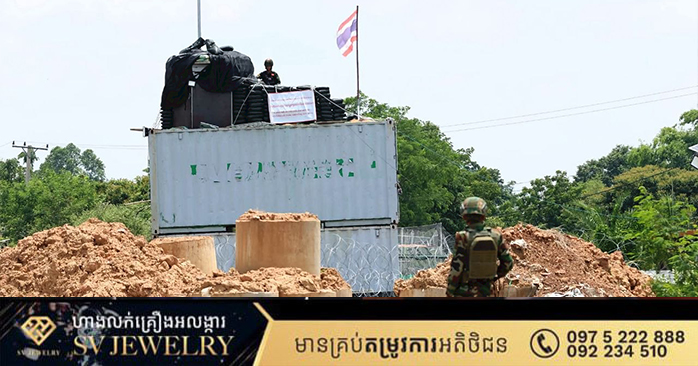
Cambodian Minister of Information, Net Pheaktra, has reiterated the definition of a 'ceasefire' in the context of border disputes with Thailand, accusing the Thai side of violating the agreement. Minister Pheaktra stated that a 'ceasefire means no advancing forward, no creating new situations on the ground, and no establishing new border lines.' He asserted that a ceasefire cannot transform illegally occupied territory into the legal land of the occupier. He explained that this stance is not merely Cambodia's position but aligns with fundamental principles of international law and the Joint Declaration signed by Cambodia and Thailand on December 27, 2025. The declaration, effective from noon on that date, stipulated that under the ceasefire, there would be no advances, no additional troop movements, no strengthening of occupation beyond one's own side, no obstruction of citizens' return home, and crucially, no establishment of new borders. However, Minister Pheaktra alleged that the Thai military has not adhered to these stipulations. He specifically countered Thailand's claim that maintaining current troop positions constitutes adherence to the ceasefire, arguing that this is a selective interpretation of the Joint Declaration, which must be read in conjunction with other paragraphs. He emphasized that freezing troop positions is a temporary military measure, not an acknowledgment of sovereignty over the occupied areas. Furthermore, he accused the Thai military of penetrating deep into Cambodian territory after the ceasefire and engaging in illegal occupation and construction activities, exceeding not only the international border but also Thailand's own unilaterally declared border. These construction activities, he detailed, include the installation of barbed wire, containers, trenches, barracks, and roads, all of which, he stated, cannot be justified by the argument of 'maintaining current troop positions.' Minister Pheaktra also questioned Thailand's claim of no illegal occupation by pointing to the situation of approximately 20,000 Cambodian refugees who are allegedly prevented from returning to their homes and farmland by the Thai military. He highlighted that Paragraph 4 of the Joint Declaration guarantees the safe and dignified return of affected citizens to their homes and normal lives. In conclusion, Minister Pheaktra declared that Thailand cannot cherry-pick favorable parts of the Joint Declaration and that a ceasefire is not a title deed to territory. He stressed that the temporary location of military forces does not determine the international border, which is a legal matter. Cambodia, he affirmed, will not tolerate any advances, creation of new situations, strengthening of forceful occupation, obstruction of citizens' return, or the use of temporary military positions as a basis for territorial claims after the ceasefire.
Original source
CEN Cambodia