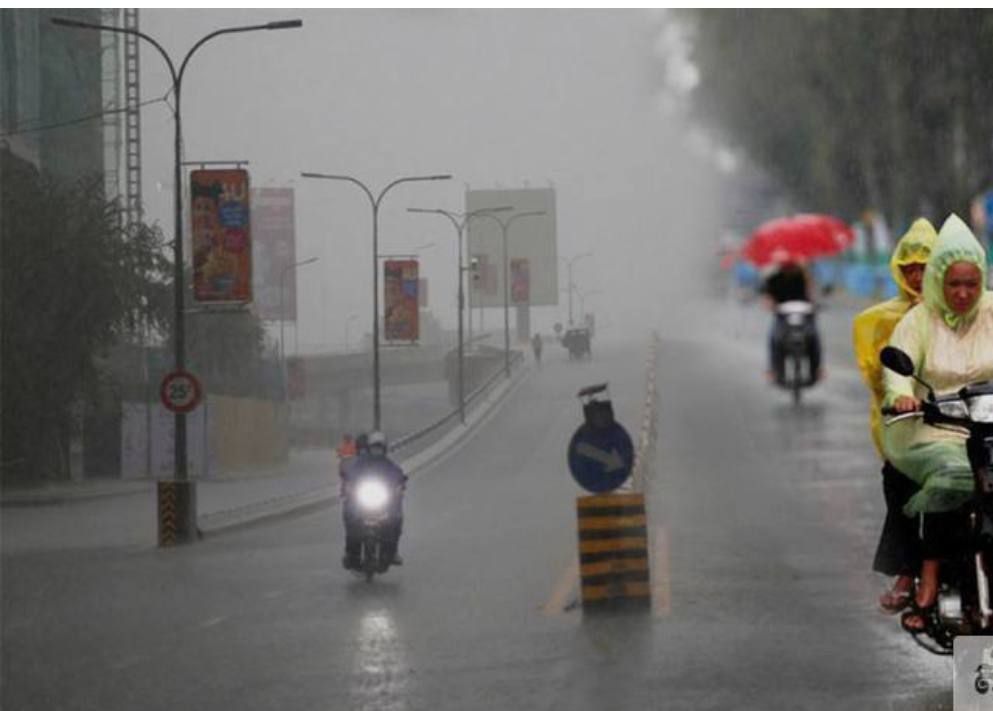
Cambodia Warns of Heavy Rain, Strong Winds, and Thunderstorms Due to Tropical Depressions
The Cambodian Ministry of Water Resources and Meteorology has issued a warning of heavy rain, strong winds, and thunderstorms across the country from July 4th to 6th, due to the influence of tropical depressions 'Bavi' and 'Maysak'. Coastal and plateau regions are expected to be particularly affected.
The Ministry of Water Resources and Meteorology announced on July 4, 2026, that tropical depressions 'Bavi' (T2609) and 'Maysak' (T2610) are influencing the southwest monsoon, potentially affecting the Bay of Bengal, Andaman Sea, South China Sea, Mekong River basin, Cambodian Sea, and the entire Kingdom of Cambodia. However, the Kingdom of Cambodia is not in the direct path of these two storms. 'Maysak' is a name given by Cambodia and is expected to dissipate by July 6, 2026. 'Bavi' is projected to continue its influence until July 12, 2026. Due to this situation, several areas within the Kingdom of Cambodia are expected to experience the effects of these depressions for three days, from July 4th to July 6th, 2026. The affected regions include: 1. Plains Areas: Average minimum temperature of 25°C and an average maximum temperature of 36°C. Winds blowing from the southwest and northwest at an average speed of 3 meters per second. Provinces such as Banteay Meanchey, Battambang, Poipet, Siem Reap, Kampong Chhnang, Kampong Thom, Kampong Cham, Tboung Khmum, Svay Rieng, Prey Veng, Takeo, Kandal, and Phnom Penh may experience rain, strong winds, and thunderstorms covering 50% of their land area. 2. Plateau Areas: Average minimum temperature of 24°C and an average maximum temperature of 35°C. Winds blowing from the southwest and west at an average speed of 3 meters per second. Provinces such as Kampong Speu, Pailin, Oddar Meanchey, Preah Vihear, Kratie, Stung Treng, Ratanakiri, Mondulkiri, the Dangrek Mountains, and the Cardamom Mountains may experience rain, strong winds, and thunderstorms covering 60% of their land area. 3. Coastal Areas: Average minimum temperature of 25°C and an average maximum temperature of 35°C. Winds blowing from the southwest and southeast at an average speed of 2 meters per second. Provinces such as Koh Kong, Preah Sihanouk, Kampot, Kep, and the Bokor Mountains may experience rain, strong winds, and thunderstorms covering 70% of their land area. Sea waves are expected to have an average minimum height of 0.50 meters and an average maximum height of 1.50 meters. Source: AKP Khmer
多角的分析
熱帯低気圧による悪天候は、短期的に農業生産に影響を与える可能性がある。特に、雨量過多や強風は収穫期の作物に被害をもたらすリスクがある。また、インフラへの影響も懸念され、道路の冠水や寸断は物流を滞らせ、経済活動を一時的に停滞させる要因となりうる。観光業も、悪天候により旅行計画の変更やキャンセルが発生し、一時的な落ち込みが見込まれる。
投資家にとっては、短期的なインフラ被害や物流の混乱による経済活動の停滞は、事業継続性へのリスク要因となりうる。特に、農業関連や観光関連の事業者は、天候リスクへの備えを強化する必要がある。長期的な視点では、気候変動への適応策がインフラ整備や農業技術の改善に繋がる可能性もあり、そうした分野への投資機会も生まれるかもしれない。
今回の悪天候は、特に農村部や沿岸部の住民の生活に直接的な影響を与える。家屋の損壊、農作物の被害、漁業への打撃などが懸念される。また、強風や大雨による交通網の寸断は、移動の自由を制限し、緊急時の対応や物資の供給にも遅れを生じさせる可能性がある。市民は、気象情報に注意を払い、安全確保に努める必要がある。
市民生活への影響は、地域によって差が出ると考えられる。平原地帯では都市部での冠水や交通の麻痺、沿岸部では高波や浸水被害、高原部では土砂災害のリスクなどが懸念される。特に、脆弱なインフラを持つ地域では、被害が拡大する可能性があり、政府による迅速な情報提供と避難勧告、そして被害発生後の支援体制の確立が重要となる。市民は、最新の気象情報を常に確認し、不要不急の外出を控えるなどの自衛策を講じることが求められる。
背景・歴史的文脈
カンボジアは熱帯モンスーン気候に属しており、年間を通じて降雨量が多く、特に雨季(5月から10月)にはしばしば激しい雨や強風に見舞われる。近年、気候変動の影響により、異常気象の頻度と強度が増加する傾向にある。2026年7月という時期は、雨季の真っ只中にあたり、熱帯低気圧の影響を受けやすい時期である。過去にも、同様の気象現象がカンボジア国内のインフラや農業、人々の生活に影響を与えてきた経緯がある。
原文ソース
AKP Khmer