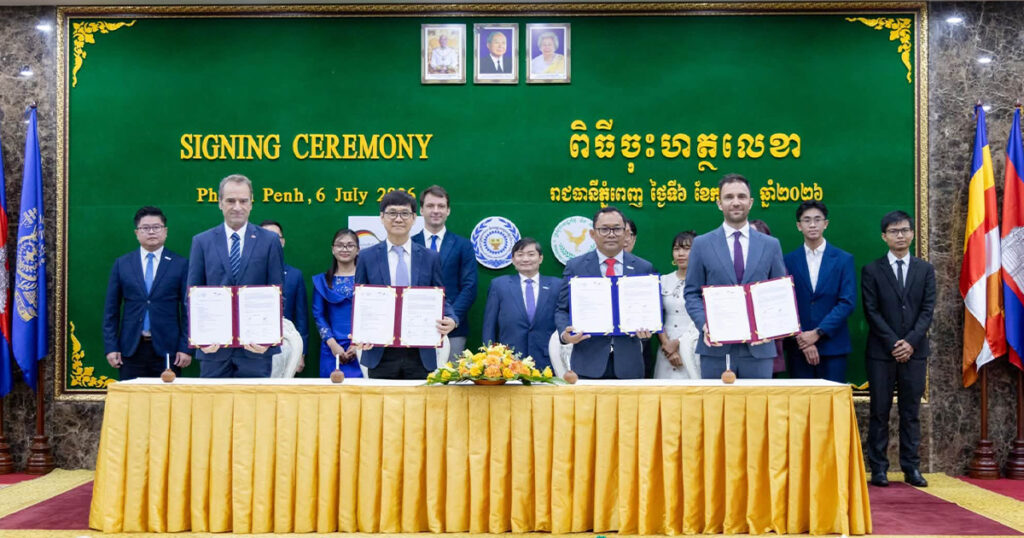
Cambodia, Germany Launch Phase Two of Sustainable Textile Initiative
Cambodia and Germany have launched the second phase of the FABRIC Cambodia II project, aiming to enhance the competitiveness and sustainability of the nation's garment, footwear, and travel goods industry. The initiative focuses on strengthening labor and environmental standards and adapting to international market demands.
PHNOM PENH, July 7, 2026 (KPT) – Cambodia and Germany have launched the second phase of the Sustainable Textile Industry in Cambodia (FABRIC Cambodia II) project, aimed at promoting sustainable supply chains, strengthening labor and environmental standards, and enhancing the global competitiveness of Cambodia’s garment, footwear and travel goods (GFT) industry, officials said Monday. The implementation agreement was signed between the Ministry of Labour and Vocational Training, the Ministry of Economy and Finance, and the German Agency for International Cooperation (GIZ), in the presence of Labour Minister Heng Sour and Christof Weigelmeier, Deputy Head of Mission and Head of Development Cooperation at the German Embassy in Phnom Penh. The project seeks to deepen collaboration between the public and private sectors, improve compliance with social and environmental standards, and prepare Cambodia’s GFT industry to meet rising global demands for sustainable production. Speaking at the ceremony, Sour expressed appreciation to Germany for its continued support, saying the agreement reflects “our shared commitment to translating common goals into concrete actions that will bring tangible benefits to workers, enterprises and Cambodia’s economic foundation.” He noted that the GFT sector remains a key driver of Cambodia’s economy, exports and employment, but faces growing pressure to adapt as international markets demand higher labor standards, environmentally sustainable practices and responsible business conduct. Sour said the government considers decent work, productivity, sustainability and legal compliance as core priorities under the Pentagonal Strategy – Phase I and the Cambodia Garment, Footwear and Travel Goods Development Strategy 2022–2027. The minister praised GIZ’s long-standing partnership, which he said extends beyond financial support to include knowledge sharing, institutional strengthening, policy dialogue and capacity building. He highlighted progress in labor inspection, occupational safety and health, responsible business conduct and workforce development. Sour added that Cambodia will continue to promote digital transformation and enhance preparedness to comply with international frameworks such as Environmental, Social and Governance (ESG) standards and Human Rights and Environmental Due Diligence (HREDD) requirements. He stressed that success will require cooperation among government institutions, employers, workers’ organizations, civil society and international brands. Weigelmeier said Germany is proud to continue supporting Cambodia’s GFT industry, noting that stronger labor, environmental and human rights standards would improve competitiveness in global supply chains. He reaffirmed Germany’s readiness to remain a strong partner as Cambodia prepares for graduation from Least Developed Country (LDC) status.
多角的分析
カンボジアのGFT産業は、同国の輸出と雇用における重要な柱であり続けている。しかし、国際市場からの持続可能性と倫理的調達への要求の高まりは、このセクターにとって大きな課題となっている。今回のFABRIC Cambodia IIプロジェクトは、ドイツの技術的・財政的支援を通じて、これらの国際基準への適合を支援するものである。これは、カンボジアが将来的に最貧国(LDC)の地位から卒業する際に、貿易上の優遇措置の喪失を乗り越え、国際市場での競争力を維持するために不可欠なステップである。持続可能な生産への移行は、初期投資を必要とするものの、長期的にはブランドイメージの向上、新規市場の開拓、そしてサプライチェーンのリスク低減に繋がる可能性がある。
カンボジアのGFTセクターへの投資家にとって、このプロジェクトはポジティブなシグナルと捉えられる。国際的なESG(環境・社会・ガバナンス)基準やHREDD(人権・環境デューデリジェンス)要件への対応能力強化は、欧米市場のバイヤーからの信頼を高め、新規取引の獲得に繋がる可能性がある。特に、大手グローバルブランドがサプライチェーンにおける持続可能性を重視する傾向が強まる中、これらの基準を満たすことは、投資リスクの低減にも寄与する。ただし、プロジェクトの進捗状況や、国内の労働者、中小企業への波及効果を注視する必要がある。また、LDC卒業後の市場アクセスへの影響も、投資判断において重要な要素となるだろう。
本プロジェクトは、カンボジアの繊維産業で働く労働者の労働条件と安全衛生の向上に直接的な影響を与える可能性がある。国際基準に沿った労働慣行の強化は、労働者の権利保護を促進し、より安全で健康的な職場環境の実現に貢献することが期待される。また、環境基準の強化は、工場周辺の地域社会における環境負荷の低減にも繋がるだろう。しかし、これらの改善が、特に小規模な工場や下請け業者にまで均等に波及するかどうかが課題となる。労働者組織や市民社会との連携強化は、現場レベルでの実効性を高める上で重要となる。労働者の賃金水準や、デジタル化による雇用への影響なども、今後の注視点である。
カンボジア市民、特に繊維産業で働く人々にとって、このプロジェクトは生活の質に直結する可能性がある。労働条件の改善や安全衛生の強化は、日々の労働環境の向上を意味する。しかし、持続可能性への移行は、初期段階では生産コストの増加や、場合によっては雇用の変動を招く可能性も否定できない。特に、国際的な要求に応えられない中小規模の工場では、事業継続が困難になるリスクも考えられる。そのため、政府や支援機関は、労働者や企業への十分な情報提供と、移行期間中の支援策を講じることが求められる。また、環境基準の強化は、地域住民の健康や生活環境の改善にも寄与する可能性があるが、その恩恵が公平に分配されるかが重要となる。
背景・歴史的文脈
カンボジアの繊維・衣料品産業は、同国の経済発展において長らく重要な役割を担ってきた。特に1990年代以降、欧米諸国からの特恵関税措置などを背景に、安価な労働力を武器に急速な成長を遂げた。しかし、その発展は、低賃金、長時間労働、そして労働環境の問題を抱えることも少なくなかった。国際社会からの労働基準や人権に関する批判が高まる中、カンボジア政府は、国際的な要求に応えるべく、労働法制の整備や労働監督の強化を進めてきた。ドイツは、長年にわたりカンボジアの産業開発を支援しており、特に労働者の権利保護や持続可能な開発といった分野で協力関係を築いてきた。本プロジェクトは、こうした歴史的背景を踏まえ、カンボジアが国際競争力を維持しつつ、より倫理的で持続可能な産業構造へと移行していくための重要な一歩である。
原文ソース
Kampuchea Thmey English