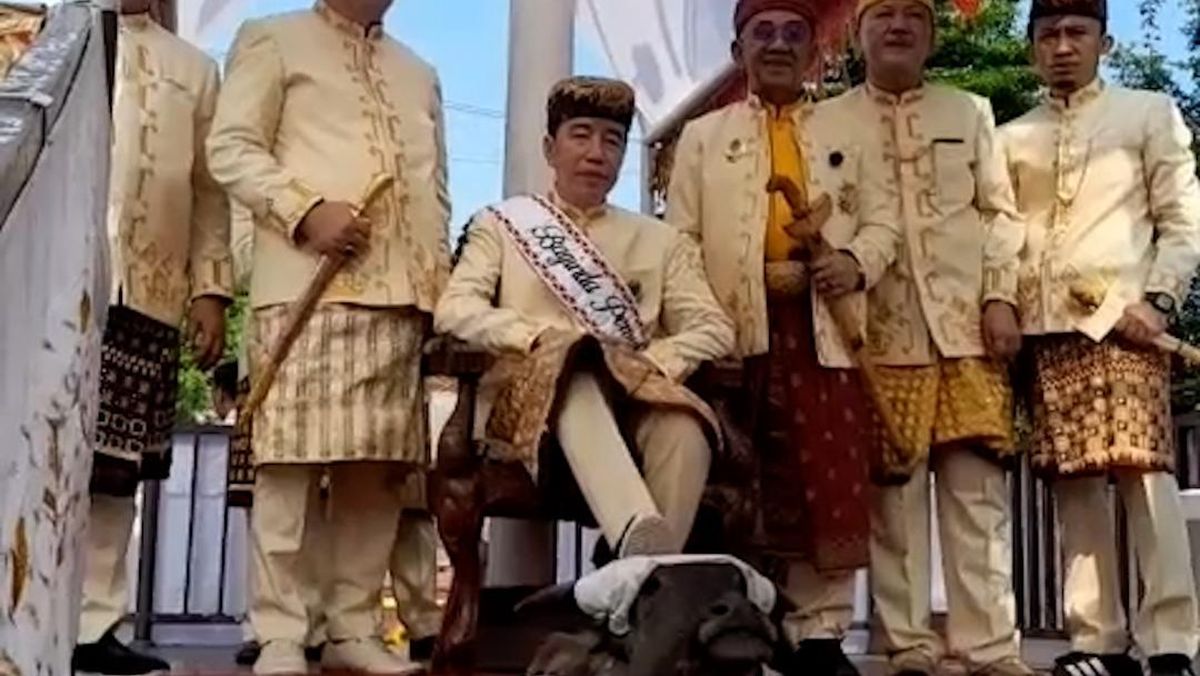
Jokowi's Buffalo Head Ritual Seen as Challenge to PDIP
Technology
2026年6月29日
3
CNN Indonesia

Jokowi's Buffalo Head Ritual Seen as Challenge to PDIP

AI サマリー

President Joko Widodo's ritual of stepping on a buffalo head in Lampung is being interpreted as a political message to the Indonesian Democratic Party of Struggle (PDIP), his former party. Experts suggest it signals a stance against PDIP ahead of the 2029 elections.

A traditional ritual involving President Joko Widodo stepping on a buffalo's head in Lampung province has stirred political waters in Indonesia. Political analysts interpret the ceremony as President Jokowi's political message to the Indonesian Democratic Party of Struggle (PDIP), his long-time party. Agung Baskoro, Executive Director of Trias Politika Strategis, points out that while the ritual superficially honors Lampung's cultural heritage, it carries deeper connotations, possibly referencing PDIP's party symbol, the "bull's head." "The act of stepping on the buffalo's head is evidence of President Jokowi's stance in confronting PDIP, suggesting his determination to defeat PDIP in the 2029 general election," Baskoro stated. The ritual took place when President Jokowi received the title "Baginda Pemuka Bangsa" (Leader of the Nation) in Lampung. Donning traditional attire, the president stepped on the buffalo head placed on a red carpet. A leader from the PSI (Indonesian Solidarity Party) explained that the ritual was not initiated by the president but by the traditional community of Lampung to honor his contributions. Mawardi Rahma Harirama, a traditional leader from Lampung, described the title-conferring ceremony as an integral part of Lampung's culture for thousands of years, embodying the "nemui nyimah" (hospitality) principle of the "piil pesenggiri" cultural philosophy. However, in a political context, many view it as a sign of President Jokowi strengthening his political position and accelerating his moves towards the next election. Source: CNN Indonesia

多角的分析

経済的影響

この儀式自体に直接的な経済的影響は限定的だが、ジョコウィ大統領とPDIPの関係悪化は、インドネシアの政治的安定性への懸念を高め、外国投資家がインドネシア経済への投資を慎重にする可能性を示唆する。特に、PDIPはインドネシアで最も影響力のある政党の一つであり、その有力政治家との関係性の変化は、経済政策の不確実性を増大させる要因となりうる。

投資家心理

投資家にとって、この儀式はジョコウィ大統領の政治的野心と、PDIPとの関係における緊張の高まりを示すシグナルと受け止められる。これは、インドネシアの政治的安定性に対する懸念を増幅させ、特に2029年の選挙に向けた政治的駆け引きが激化する可能性を示唆する。結果として、短期的な市場のボラティリティ(変動性)を高め、長期的な投資判断に影響を与える可能性がある。

社会的影響

ジョコウィ大統領が水牛の頭を踏むという儀式は、ランプン州の伝統文化を尊重する姿勢を示す一方で、PDIPとの政治的対立を象徴する行為として捉えられている。これは、インドネシア社会における伝統と現代政治の交錯を示しており、市民の間で様々な解釈を生んでいる。特に、若年層はSNSを通じてこの儀式とその政治的含意について活発な議論を展開しており、政治への関心を高める一因となっている。

市民の声

ランプン州の市民にとっては、伝統文化への敬意と、大統領の功績を称える機会として受け止められている。しかし、国内の他の地域、特にPDIP支持者にとっては、大統領の行動が政治的な挑発と見なされる可能性がある。これにより、社会全体に政治的な緊張感が生じ、地域間の感情的な対立を招くことも懸念される。市民生活への直接的な影響は少ないものの、政治的風向きの変化は、将来的な政策や社会情勢への不安につながる可能性がある。

背景・歴史的文脈

ジョコ・ウィドド大統領は、2014年の大統領就任以来、長年所属してきた国民闘争党(PDIP)の支援を受けてきた。しかし、2024年の大統領選挙で、ジョコウィ大統領の息子が副大統領候補として当選したことで、PDIPとの間に亀裂が生じていると見られている。PDIPは、ジョコウィ大統領の政治的影響力が拡大することに懸念を示しており、両者の関係は冷え込んでいる。今回の水牛の頭を踏む儀式は、こうした政治的背景の中で、ジョコウィ大統領がPDIPに対して自らの政治的独立性と対決姿勢を明確に示すものと解釈されている。

原文ソース

CNN Indonesia

原文を読む