Northern Vietnam Explores Forest-Based Medicinal Herbs and Agri-tourism for Sustainable Livelihoods
A new initiative in Vietnam's northern Lai Chau province is combining the cultivation of medicinal herbs under forest canopies with agri-tourism to boost the local economy and improve residents' livelihoods. This model holds the potential to balance the conservation of valuable forest resources with the creation of sustainable income.
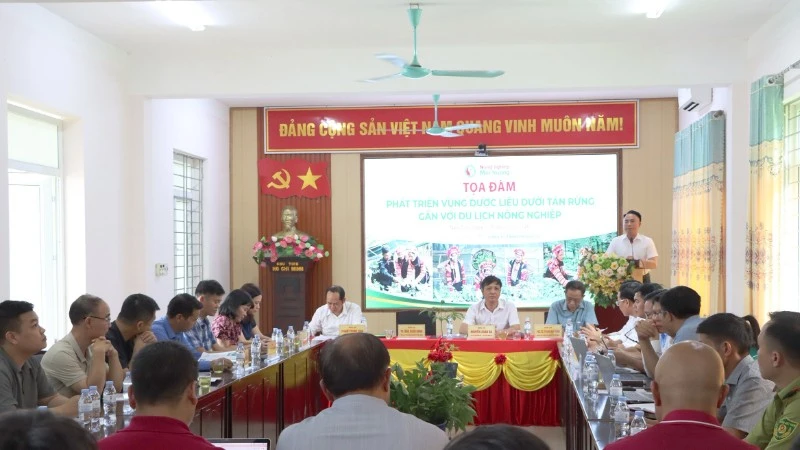
In Nam Tam commune, Lai Chau province, northern Vietnam, an initiative to integrate the cultivation of medicinal herbs under forest canopies with agricultural tourism has been launched. This was discussed at a forum co-organized by the Agriculture and Environment Magazine, under the Ministry of Agriculture and Rural Development, and local authorities, with the theme 'Unlocking Potential, Creating Sustainable Livelihoods.' The event is part of a series of activities focused on environmental protection and sustainable development. Previous activities included a campaign on sustainable water resource management and transboundary water environment protection, as well as tree planting under the 'Green Pagoda' program at Linh Son Pagoda. In his opening remarks, Dr. Dao Xuan Hung, Editor-in-Chief of the Agriculture and Environment Magazine, emphasized that Lai Chau province is blessed with vast forests that not only regulate climate and conserve water but also host numerous rare medicinal plants. The model of combining forest-based medicinal herb cultivation with agri-tourism is expected to transcend the boundaries of a mere agricultural product, becoming a distinct cultural feature and a magnet for tourists seeking to experience the local life and nature. Discussions among representatives from local authorities, experts, businesses, medicinal herb buyers, and residents of Nam Tam commune focused on the core challenge: how to preserve Lai Chau's pristine forests while transforming them into a source of sustainable livelihood and income for the people. Issues such as technical aspects of cultivation, conservation of valuable medicinal plant genes, product market access, access to capital, deep processing technologies, and communication and market access strategies by specialized media like the Agriculture and Environment Magazine were also addressed. The forum opened up numerous new cooperation opportunities, affirming the determination of government representatives, the partnership of businesses, media, and the people in making medicinal herbs flourish, preserving the green cover of the forests, and becoming a driving force for Lai Chau's economic takeoff.
多角的分析
この取り組みは、ベトナムが推進するグリーン経済および持続可能な開発政策の一環と位置づけられる。森林資源を保護しつつ、高付加価値の薬用植物栽培と観光を組み合わせることで、地域経済の多角化と新たな収入源の創出を目指す。特に、ベトナムは伝統医学に根差した薬用植物の潜在能力が高く、これを観光資源と結びつけることで、農村部の貧困削減と地方経済の活性化に貢献する可能性がある。ただし、栽培技術の標準化、品質管理、および国内外市場への安定供給体制の構築が課題となる。
投資家にとっては、ベトナムの農村部における新たなビジネスチャンスとなり得る。薬用植物の栽培・加工、および農業観光関連施設への投資が考えられる。特に、政府が持続可能な開発を推進する中で、環境に配慮した事業にはインセンティブが付与される可能性がある。しかし、地方部におけるインフラの整備状況、専門人材の確保、そして市場へのアクセスといったリスク要因も考慮する必要がある。長期的な視点での市場調査と、現地パートナーとの強固な連携が成功の鍵となるだろう。
この取り組みは、ライチャウ省の山岳部住民、特に少数民族の生計向上に直接的な影響を与える。森林資源の持続可能な利用を通じて、伝統的な生活様式を維持しながら収入を増加させることが期待される。ナムタム県のような地域では、森林の恩恵を直接受ける住民が、その保全と開発の最前線に立つことになる。彼らが栽培技術や観光サービス提供に関するトレーニングを受け、その成果を享受できるかが、社会的な受容度と持続可能性を左右する。また、森林伐採の抑制につながることで、環境破壊のリスクを低減させる効果も期待される。
ライチャウ省の山岳部住民、特にナムタム県のような地域に住む人々にとって、この取り組みは生活の質を向上させる大きな機会となる。これまで森林に依存しながらも、その恩恵を十分に享受できていなかった層が、薬用植物の栽培や農業観光の受け入れを通じて、新たな収入源を得られる可能性がある。例えば、伝統的な薬草の知識を持つ高齢者がその知識を共有し、観光客向けの体験プログラムを提供することで、収入と地域文化の継承を両立させることが考えられる。一方で、栽培技術の習得や観光客への対応といった新たなスキル習得への意欲や、収入の安定性に対する不安も存在するだろう。
背景・歴史的文脈
ベトナムは、経済成長と並行して、森林資源の持続可能な利用と環境保全の重要性を認識している。特に、北部山岳地帯は豊かな生物多様性と伝統的な薬草文化を有しており、これらを地域経済の活性化に繋げる試みが続けられてきた。1986年のドイモイ(刷新)政策以降、市場経済化が進む中で、地方経済の自立と貧困削減が課題となり、農林業の付加価値向上策が模索されてきた。本件は、こうした背景のもと、自然資本を活用したグリーン経済モデルを推進する一環として位置づけられる。
原文ソース
Nhan Dan