Subak Tradition Threatened by Land Conversion, Pests, and Floods in Bali
Environment
2026年8月7日
4
Mongabay Indonesia

General articles are free for 24 hours after publish.

Subak Tradition Threatened by Land Conversion, Pests, and Floods in Bali

Share
AI Summary

Bali's 'Subak' irrigation system, a thousand-year-old tradition, faces threats from land conversion, increasing pests, water scarcity, and floods. Farmers striving to maintain traditional methods are grappling with development pressures and natural disasters.

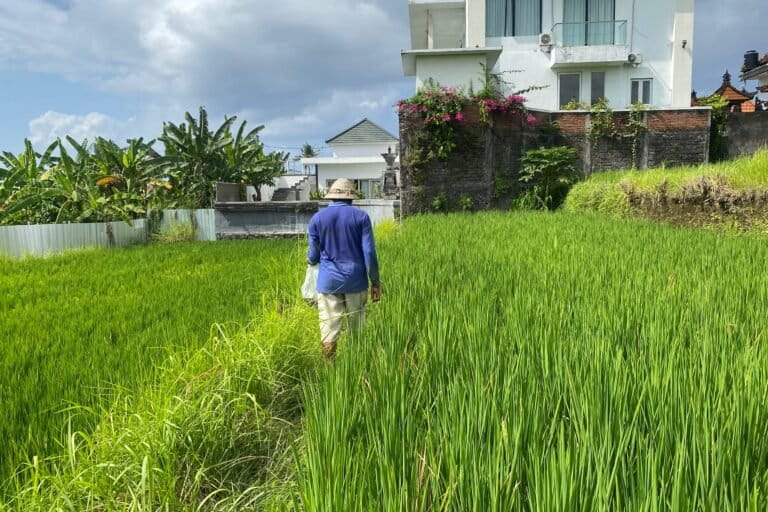
Bali's 'Subak' irrigation system, a thousand-year-old tradition and a UNESCO World Heritage site, is facing a critical situation due to a combination of issues including land conversion for development, increasing pest infestations, water scarcity, and floods. Made Kuter, a 63-year-old farmer in Subak Padang Legi, Medahan Village, Gianyar Regency, explained that his 30-are paddy field is being encroached upon by the construction of adjacent villas, which has led to the obstruction of water channels. In recent years, Kuter has been plagued by escalating rat infestations during each planting season. He resorts to using traditional homemade rat poison, but the rodent population continues to grow, jeopardizing his harvest prospects. Water scarcity has also become a severe problem. Kuter lamented, "There's hardly any water, and the water channels are often blocked by development." The once bountiful Subak fields are now drying up, making it difficult for crops to grow. The closure of drainage channels due to development also heightens the risk of flooding during the rainy season. Subak is more than just an irrigation system; it is a community system deeply intertwined with Bali's culture, religion, and social structure. However, the wave of tourism development is fundamentally challenging the traditional land use and water management practices. Land conversion not only reduces the land that sustains Subak but also threatens the livelihoods of farmers who maintain traditional farming methods. This situation raises broader questions about Bali's sustainable development and how to preserve its unique cultural heritage for future generations.

0

Original source

Mongabay Indonesia

原文を読む