General articles are free for 24 hours after publish.
Underwater Autonomy Key to China-US Naval Race
The China-U.S. naval race is increasingly hinging on dominance in the underwater domain. Both nations are prioritizing persistent underwater sensing, data interpretation, and rapid decision-making, which experts believe will determine future maritime superiority.
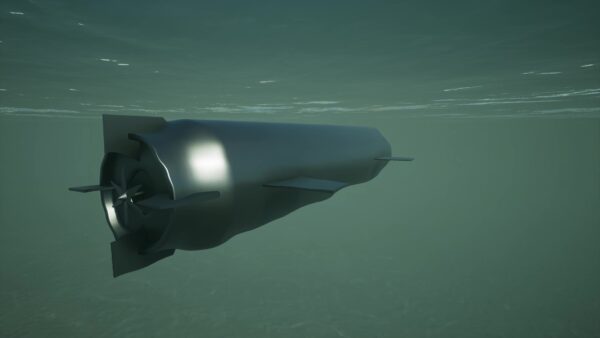
The naval race between China and the United States is increasingly shifting its focus from the surface to the underwater domain. Experts suggest that understanding and operating effectively within this environment will be a decisive factor in future maritime power. The underwater landscape directly impacts submarine operations, anti-submarine warfare, mine warfare, and the security of critical infrastructure. While complete "control" of this vast and challenging environment is impossible, the nation that can map it accurately, monitor it persistently, communicate effectively underwater, and rapidly translate sensor data into decisions will gain a significant operational advantage. China's expanding underwater reach could complicate U.S. maritime dominance. Persistent sensing and the use of autonomous underwater vehicles (AUVs) enable broader surveillance and increase uncertainty for adversaries. However, mere "reach" does not guarantee superiority; sensor quality, communication capabilities, data fusion, logistics, and reliable operation in complex environments are essential. Trends in underwater intelligence, surveillance, and reconnaissance (ISR) are also crucial for risk management in maritime chokepoints like the Taiwan Strait. The Taiwan Strait is shaped by military and gray-zone competition, the Strait of Malacca by strategic rivalry and commercial density, and the Strait of Hormuz by a combination of state confrontation, energy security, and asymmetric threats. While the technology may be similar, the rules for interpreting and responding to underwater events must differ by region. Ultimately, underwater advantage will belong not simply to the country with the most platforms, but to the side that can maintain persistent situational awareness, interpret ambiguous activity, and translate reliable data into timely and proportionate decisions fastest. Source: The Diplomat Indonesia
Original source
The Diplomat Indonesia