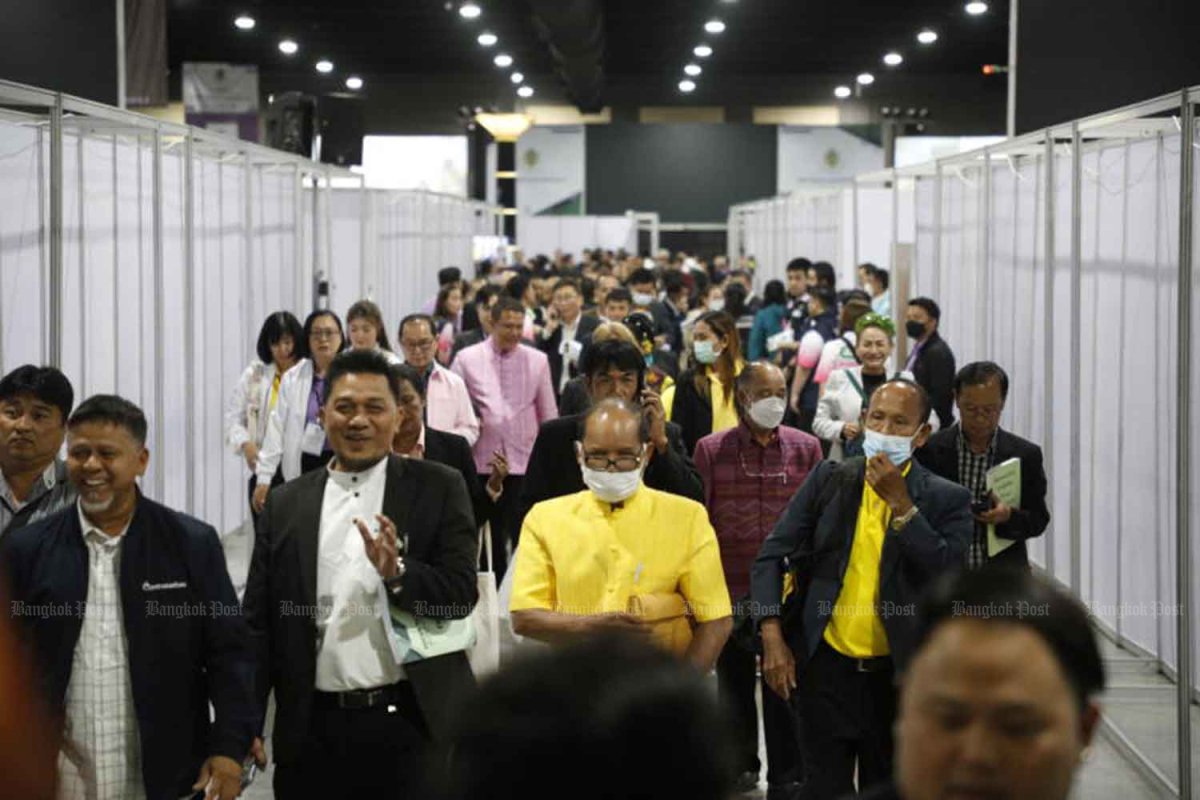
Senators blast People’s Party for ‘false’ poll claims
A group of Thai senators has accused the opposition People’s Party (PP) of misleading the public with “false” claims about the 2024 Senate election to discredit the upper house. They have urged the Election Commission to investigate whether list-MP Parit Wacharasindhu unlawfully disclosed election evidence at a seminar.
Senators blast People’s Party for ‘false’ poll claims Election Commission urged to investigate whether party unlawfully disclosed evidence PUBLISHED : 15 Jul 2026 at 20:58 A group of senators has accused the opposition People’s Party (PP) of misleading the public with false claims about the 2024 Senate election in an effort to discredit the upper House. The group also urged the Election Commission (EC) to investigate whether list-MP Parit Wacharasindhu had unlawfully disclosed election-related evidence during a seminar held on Sunday at parliament. Phisit Apivatanapong, a senator who serves as spokesperson for the Senate whip, said the party had deliberately chosen parliament as the venue for the seminar to lend credibility to its allegations. He insisted the Senate had fully cooperated with all investigations into the election, adding that senators had carried out their duties in accordance with the law. He accused Mr Parit and other speakers of presenting “clickbait” content designed to attract public attention rather than provide factual information, alleging the seminar sought to mislead the public and diminish the legitimacy of the Senate. At the event, Mr Parit described the Senate election as a fraud because evidence, some of which his party revealed last month, suggested the organised recruitment of candidates and voters through payments and other inducements. Mr Phisit also questioned how Mr Parit had obtained documents and video purportedly linked to the EC’s investigation into the election. If the materials were genuine evidence, they should have been submitted to the EC through the proper legal process rather than being disclosed publicly, he said. As a legislator, Mr Parit should rely on legal procedures rather than attempting to pressure the EC through public opinion, Mr Phisit said, adding that any authentic evidence could be verified through forensic examination, including fingerprint analysis. He further criticised comments made by former senators at the seminar alleging that the current Senate had improperly entered office and was using its authority to appoint members of independent state agencies for political gain. Such accusations were serious and unfairly damaged the reputation of the current Senate, whose members should still be presumed innocent, Mr Phisit said, adding that they had been subjected to “trial by public opinion” despite no legal ruling against them. He maintained the current Senate was elected entirely in accordance with the 2018 organic law and defended the body’s constitutional authority to endorse office-holders in independent organisations. Mr Phisit called on the EC to determine whether the evidence presented at the seminar formed part of its investigation files and, if so, whether its public disclosure was lawful. If any laws had been violated, the EC should take appropriate action, he said, arguing the reputational damage to senators had already been done. The 2024 Senate election gave rise to allegations of systemic fraud and vote-buying by over 120 senators. The vote produced some highly unusual results, notably a preponderance of winners from provinces where the Bhumjaithai Party, which now leads the government, is strong electorally. Buri Ram, the home base of party patriarch Newin Chidchob, sent 14 senators to the Upper House. Bangkok elected only nine. The Election Commission since March 2025 has been investigating reports of collusion to rig the vote in 2024. It is expected to decide by September whether to forward cases involving 229 individuals identified by an investigative panel. The Department of Special Investigation, meanwhile, has interviewed hundreds of people about reports of money-laundering related to the election and is now reviewing the findings. Mr Parit expressed concern at Sunday’s seminar that both the EC and DSI could halt their investigations before they ever reach the courts.
多角的分析
上院選挙を巡る不正疑惑は、タイの政治的安定性への懸念を高め、国内および海外からの投資家心理に影響を与える可能性がある。もし大規模な不正が認定されれば、選挙制度への信頼が揺らぎ、経済政策の実行力にも影響が出かねない。特に、選挙結果が特定の政党に有利に働いたという指摘は、政治的リスクプレミアムの上昇につながる恐れがある。
上院選挙における不正疑惑は、タイの政治リスクを増大させる要因となる。投資家は、選挙制度の透明性や公平性に対する信頼が損なわれることを懸念するだろう。特に、証拠とされるものが公に開示されるプロセスは、法的手続きの迂回と見なされ、法治国家としての信頼性を低下させる可能性がある。これは、株式市場や債券市場、さらには直接投資にもネガティブな影響を与える可能性がある。
上院選挙を巡る国民党の主張と、それに対する上院議員らの反論は、タイ社会における政治的二極化を浮き彫りにしている。国民党が提示したとされる証拠の開示方法を巡る議論は、情報公開のあり方や、政治的言説が世論に与える影響についても問題を提起している。特に、一般市民は、選挙の公正性に対する疑問や、政治家間の対立によって生じる社会的な分断に不安を感じる可能性がある。また、選挙結果が特定の地域や政党に偏ったという指摘は、地方と都市部、あるいは異なる政治的信条を持つ人々との間の摩擦を深める可能性も指摘されている。
国民にとって、上院選挙を巡る疑惑は、自分たちの声が政治に反映されているのか、そして選挙制度が公正に機能しているのかという根本的な疑問を投げかけている。国民党が主張する証拠の開示が、公の場で行われたことは、一般市民が政治プロセスに関与し、情報を得る機会を提供したとも言える。しかし、上院議員側がこれを「クリックベイト」と批判し、法的手続きの無視だと指摘したことは、市民が政治的情報をどのように解釈し、信頼すべきかという混乱を生じさせる可能性がある。特に、選挙結果の偏りに関する指摘は、地域間の格差や不公平感を感じている市民にとって、さらなる不満の種となりうる。
背景・歴史的文脈
タイの上院は、2014年のクーデター後に制定された憲法に基づき、2019年と2024年に選挙が行われた。特に2024年の選挙は、従来の公職者や専門家が候補者となる方式から、一般市民が直接投票する方式へと変更され、大きな注目を集めた。しかし、この新しい選挙制度の下で、候補者募集や投票における不正行為、買収の疑惑が多数報告された。国民党は、これらの不正行為を告発し、選挙制度の抜本的な見直しを求めているが、現職の上院議員や政府関係者は、これらの疑惑を否定し、選挙の正当性を主張している。今回の事件は、タイにおける民主主義制度の成熟度と、選挙プロセスの透明性に対する国民の関心の高まりを反映している。
原文ソース
Bangkok Post