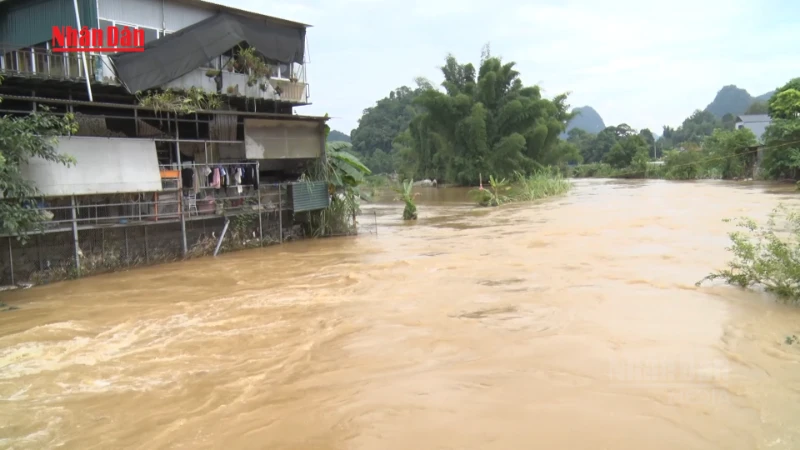
Cao Bang Province Suffers Heavy Losses Due to Torrential Rains
Environment
2026年6月30日
4
Nhan Dan

Cao Bang Province Suffers Heavy Losses Due to Torrential Rains

AI サマリー

Torrential rains in Vietnam's northern Cao Bang province from June 28-29 have caused significant damage to 51 homes, approximately 160 hectares of agricultural land, and transportation infrastructure. Local authorities are urgently assessing losses and mobilizing resources for recovery.

Torrential rains that persisted from the night of June 28 to June 29 have caused significant damage to housing, agriculture, and transportation infrastructure in Cao Bang province. Local authorities are urgently working to assess the damage, mobilize forces to support residents in overcoming the aftermath, and proactively respond to weather developments. From the night of June 28, the province experienced moderate to heavy rainfall accompanied by thunderstorms, with some areas receiving very intense downpours. Rainfall measurements included 119.6mm in Can Yen commune, 107.6mm in Thai Hoc (Yen Tho), and 106.4mm in Thong Nong. The heavy rains affected 51 households, with one house completely collapsing. Approximately 159.7 hectares of agricultural land, including rice paddies and other crops, were damaged, and 62 poultry were swept away. Significant landslides occurred in many production areas along the Bang Giang River. Transportation infrastructure also suffered severe impacts. National Highway 4A was submerged to a depth of about 0.5 meters, causing traffic disruptions. Several provincial roads, 17 rural traffic routes, one local bridge, and two irrigation works were affected by landslides and washouts. Vietnam, under its one-party system, has achieved significant economic growth over the years. However, it also faces vulnerabilities to natural disasters due to rapid development and its geographical conditions. Particularly in the northern mountainous regions and coastal areas, floods and landslides caused by heavy monsoon rains are frequent occurrences, severely impacting infrastructure and agriculture. The damage in Cao Bang province is one such challenge Vietnam confronts. While managing complex relations with China, domestic infrastructure development and disaster preparedness remain crucial policy priorities for ensuring the stability of citizens' lives and economic development.

多角的分析

経済的影響

今回の豪雨によるカオバン省の農業およびインフラへの被害は、地域経済に直接的な打撃を与えます。特に、約160ヘクタールの農地被害は、地元農家の収入減に繋がり、食料供給にも影響を及ぼす可能性があります。また、国道4A号線やその他の道路網の寸断は、物流コストの増加や地域間の経済活動の停滞を招く恐れがあります。ベトナム経済は製造業や輸出に依存していますが、農業も依然として重要なセクターであり、このような自然災害は経済成長の持続可能性に対するリスク要因となります。政府による迅速な復旧支援は、経済的損失を最小限に抑える上で不可欠です。

投資家心理

カオバン省のような地方部での自然災害は、直接的な投資機会に影響を与える可能性は低いですが、ベトナム全体のリスク評価においては無視できない要素です。インフラの脆弱性は、物流やサプライチェーンの安定性に懸念をもたらし、特に製造業や輸出関連企業にとっては、予期せぬコスト増や遅延のリスクとなります。投資家は、気候変動による自然災害のリスクがベトナム全土で高まっていることを認識し、インフラ投資やサプライチェーンのレジリエンス強化といった側面を評価に含める必要が出てくるでしょう。長期的な視点では、災害に強いインフラ整備への投資が、ベトナムの経済的安定性を高める鍵となります。

社会的影響

カオバン省の住民にとって、家屋の全壊や農作物の被害は、生活基盤を直接的に揺るがす深刻な事態です。特に、洪水や土砂崩れは、人命に関わる危険性も伴います。被災した農家は、収入源を失い、生計を立てることが困難になる可能性があります。また、交通網の寸断は、地域住民の移動や物資の供給を滞らせ、生活必需品の入手にも影響を与えることが考えられます。政府による迅速な支援が、住民の生活再建とコミュニティの安定に不可欠です。このような災害は、地方部におけるインフラ整備の遅れや、気候変動への適応策の必要性を浮き彫りにします。

市民の声

カオバン省の住民は、突然の豪雨によって自宅が被害を受け、農作物が流され、生活の基盤が奪われるという現実に直面しています。特に、家を失った人々は、一時的な避難場所の確保や、今後の住居再建という大きな不安を抱えています。また、道路の寸断により、食料や生活必需品の供給が滞る可能性もあり、日々の生活に支障が出ています。被災した農家にとっては、収穫期を前にした農作物への被害は、一年間の収入を失うことを意味し、家族の生活を維持するための深刻な課題となります。政府や地域社会からの迅速かつ継続的な支援が、彼らの生活再建には不可欠です。

背景・歴史的文脈

ベトナムは、モンスーン気候の影響を受けやすく、特に北部の山岳地帯や沿岸部では、豪雨による洪水や土砂崩れが頻繁に発生しています。1990年代以降の経済開放政策(Đổi Mới)以降、急速な経済成長と都市化が進む一方で、インフラ整備が追いつかず、自然災害に対する脆弱性が指摘されてきました。過去にも、2008年の台風セサ(Ketsana)や、2017年の台風ダムレイ(Damrey)など、甚大な被害をもたらした自然災害が複数発生しています。これらの災害は、ベトナム政府にとって、気候変動への適応策、インフラの強靭化、そして国民の安全確保という、継続的な課題となっています。

原文ソース

Nhan Dan

原文を読む