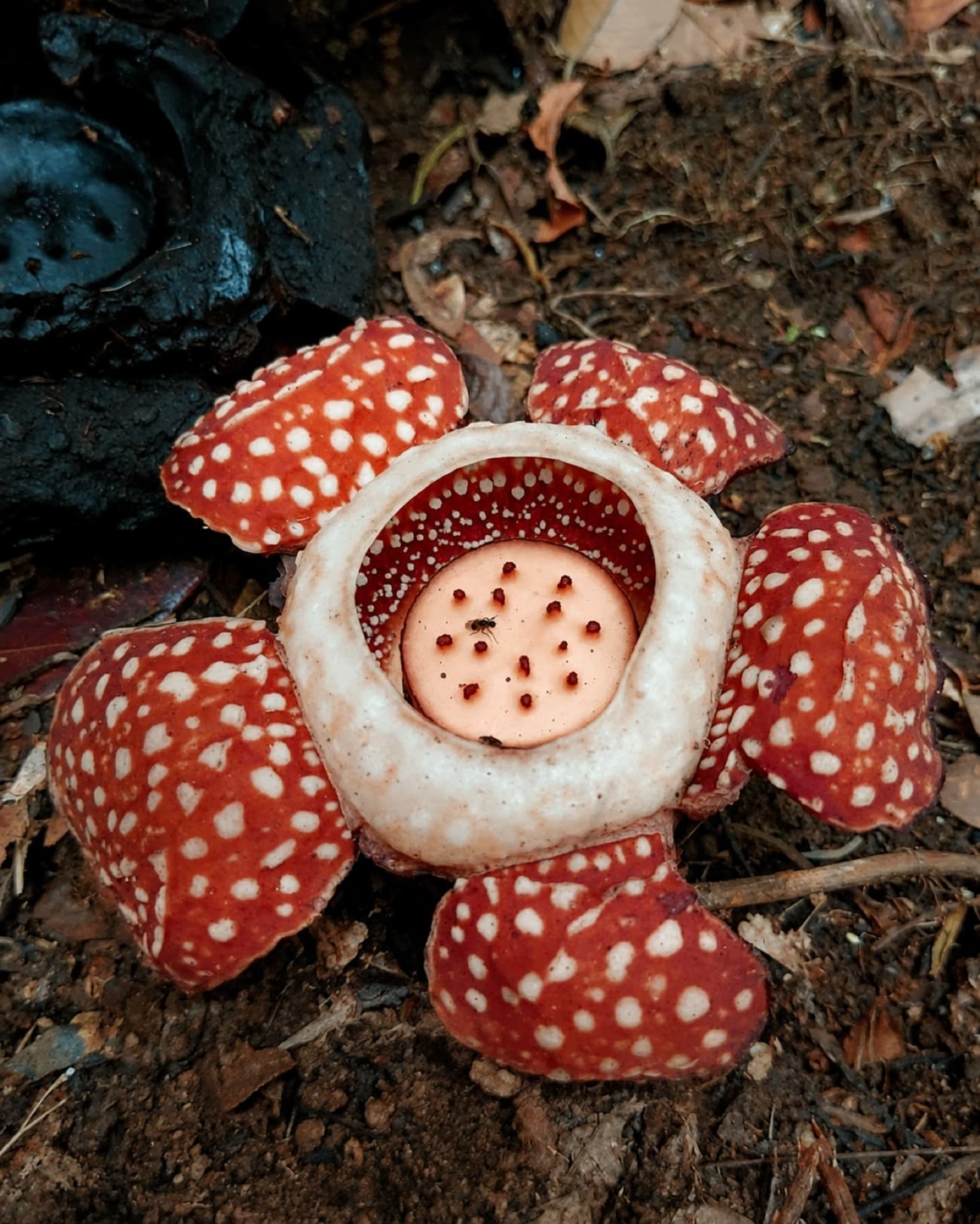
Rare Samar Rafflesia Rediscovered in Protected Forest After 15 Years
The endangered Samar Rafflesia (Rafflesia manillana) has been confirmed for the first time in 15 years within the protected forests of Samar Island, Philippines. This rediscovery highlights the island's status as a crucial biodiversity hotspot and offers renewed hope for conservation efforts.
One of the country’s rarest flowering plants, the endangered Samar Rafflesia (Rafflesia manillana), has been documented once again inside the protected forests of Samar Island, marking its first confirmed sighting in 15 years and underscoring the island’s status as one of the Philippines’ most important biodiversity hotspots. The rare parasitic plant was recorded during an exploratory survey conducted by the Samar Island Natural Park (SINP) Protected Area Management Office, which wanted to determine the current distribution and condition of these species within the country’s largest terrestrial protected area. The SINP posted the story on its Facebook account on Monday, June 29. The Samar Rafflesia was last documented in March 2011. Its recent rediscovery provides conservationists with renewed hope that viable populations of the endangered species are surviving despite increasing threats to forest ecosystems. The identity of the plant was confirmed by botanists Dr. Pastor Malabrigo Jr. and Dr. Julie Barcelona, both recognized experts in Philippine plant biodiversity. The survey aimed to locate and map existing populations of Rafflesia manillana and gather field data would guide future conservation strategies, habitat management, and long-term monitoring of the species. Under Department of Environment and Natural Resources (DENR) Department Administrative Order No. 2026-20, Rafflesia manillana, locally known as the Samar Rafflesia, is classified as an endangered species due to its extremely limited distribution and vulnerability to habitat destruction. Unlike ordinary flowering plants, Rafflesia is a holoparasitic species that survives entirely by attaching itself to the roots and stems of vines belonging to the genus Tetrastigma. It has no leaves, stems, or roots of its own and spends most of its life hidden inside its host before producing a massive flower that blooms for only a few days. Its distinctive odor, often compared to decaying flesh, attracts flies that serve as its pollinators. The Samar Island Natural Park, spanning the provinces of Samar, Northern Samar, and Eastern Samar, covers more than 333,000 hectares, making it the largest terrestrial protected area in the Philippines under the National Integrated Protected Areas System (NIPAS). The park preserves one of the country’s last remaining expanses of old-growth tropical rainforest and serves as a critical watershed supplying water to hundreds of communities across the island. Apart from the Samar Rafflesia, SINP is home to numerous endemic and threatened wildlife species, including the Philippine eagle, Philippine tarsier, Philippine warty pig, Philippine spotted deer, Philippine flying lemur, the Samar hornbill, and several species of rare amphibians, reptiles, orchids, and forest trees found only on Samar Island. Environmental officials said the rediscovery demonstrates the continuing ecological importance of the protected area and reinforces the need to strengthen biodiversity monitoring and forest protection efforts against illegal logging, land conversion, poaching, and other human activities that threaten fragile ecosystems. The Protected Area Management Office said it remains committed to expanding scientific research and conservation initiatives to safeguard the Samar Rafflesia and other rare species inhabiting the park. Conservationists noted that each successful documentation of endangered species inside SINP provides valuable scientific information, while highlighting the importance of protecting Samar’s remaining forests, considered among the country’s last strongholds of unique and irreplaceable biodiversity.
多角的分析
サマルラフレシアの再発見は、直接的な経済効果は限定的であるものの、サマル島自然公園(SINP)が持つ生物多様性の豊かさを証明するものであり、エコツーリズムの潜在的可能性を示唆する。しかし、その保護と持続可能な活用には、インフラ整備や地域住民の経済的インセンティブ提供など、長期的な投資と計画が必要となる。現状では、保護活動への財政支援が課題であり、国際的な支援や民間企業のCSR活動の呼び込みが、経済的持続可能性を高める鍵となるだろう。
このニュースは、直接的な投資機会を提示するものではない。しかし、フィリピンの生物多様性保全への関心の高まりは、環境・社会・ガバナンス(ESG)投資の観点から注目に値する。特に、エコツーリズム関連のインフラ開発や、持続可能な森林管理、野生生物保護に貢献する企業への投資は、長期的な視点で見れば、社会貢献とリターンの両立を目指す投資家にとって魅力的となり得る。ただし、現時点では具体的な投資対象は不明瞭である。
サマルラフレシアの再発見は、サマル島に住む地域住民にとって、自分たちの故郷が持つユニークな自然遺産への誇りを高める契機となる。しかし、この貴重な生態系が直面する違法伐採や土地転用といった脅威は、住民の生活基盤である森林資源の持続可能性にも影響を及ぼす。地域住民が保全活動に積極的に参加し、その恩恵を享受できるような仕組み作りが不可欠である。また、この希少植物の存在は、教育の機会としても活用され、次世代の環境意識の育成に貢献する可能性がある。
フィリピン市民にとって、サマルラフレシアの再発見は、国の豊かな自然遺産への誇りを再認識させる出来事である。しかし、このニュースは、日常生活において、違法伐採や土地開発といった環境破壊が、自分たちの住む地域だけでなく、国全体の貴重な生物多様性を脅かしているという現実を突きつける。市民は、環境保護活動への参加や、持続可能な消費行動を通じて、このような貴重な自然を守るための行動を求められている。特に、サマル島のような地方のコミュニティでは、自然環境の保全が直接的に生計と結びついているため、その重要性はより大きい。
背景・歴史的文脈
サマル島は、フィリピンの中でも特に生物多様性が豊かな地域として知られている。1990年代後半から、サマル島自然公園(SINP)の設立など、保護活動が進められてきたが、違法伐採、土地の農地への転換、密猟といった人間活動による脅威は依然として存在している。ラフレシア・マニラナは、その極端な生息地の限定性と、寄生植物としての生態ゆえに、環境の変化に非常に脆弱である。2011年の記録以来、15年間確認されなかったことは、その生存状況への懸念を高めていたが、今回の再発見は、保護努力の重要性と、さらなる保全活動の必要性を改めて浮き彫りにした。
原文ソース
Inquirer NewsInfo