Cambodia Addresses Water Shortage in Battambang Amid El Niño, Inspects Irrigation and Meets Farmers
Politics
2026年7月17日
5
CPP Cambodia

General articles are free for 24 hours after publish.

Cambodia Addresses Water Shortage in Battambang Amid El Niño, Inspects Irrigation and Meets Farmers

Share
AI Summary

Cambodia's Deputy Prime Minister Kun Kim inspected irrigation facilities and discussed water intervention measures in Battambang province to support farmers facing water shortages due to El Niño. Provincial authorities and experts emphasized efforts to equitably distribute limited water resources and minimize damage.

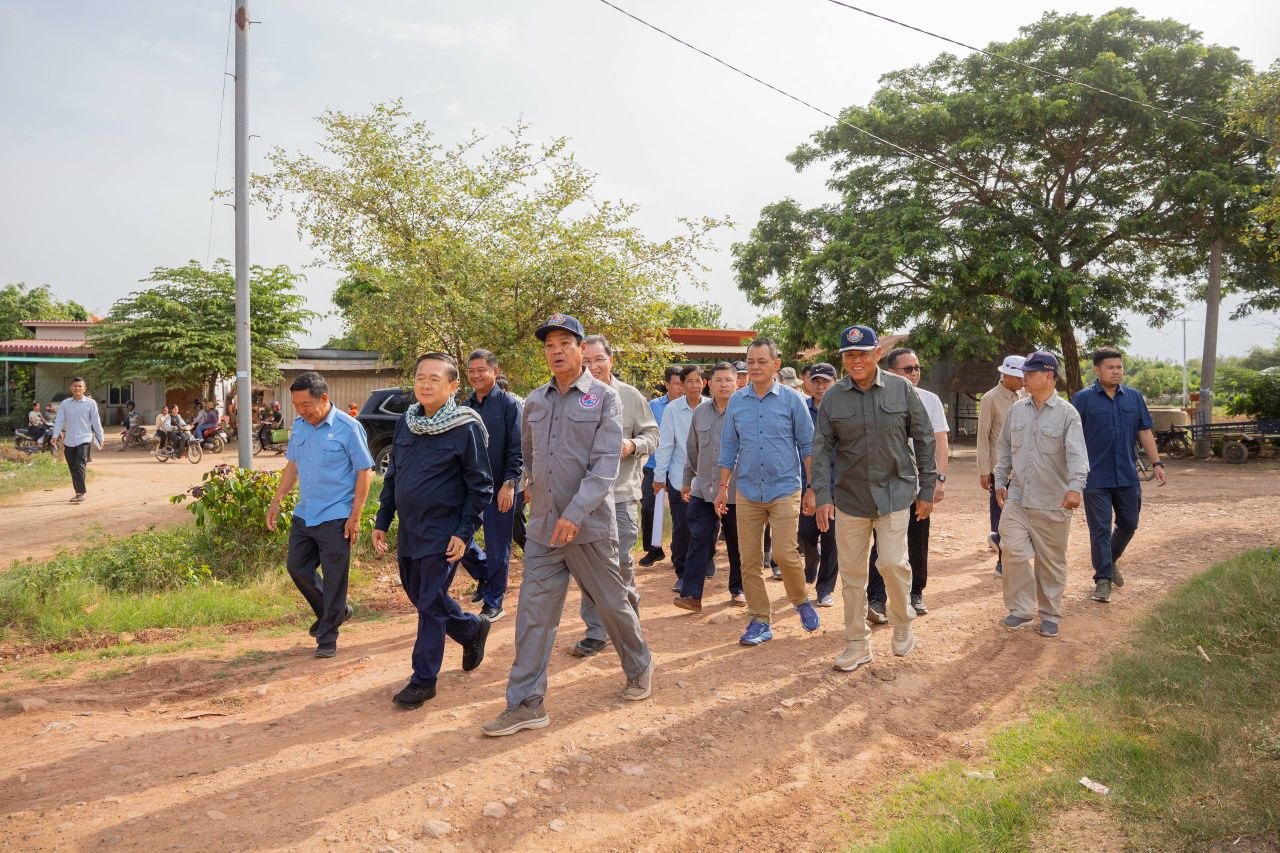
In Battambang province, western Cambodia, Deputy Prime Minister and Chairman of the National Committee for Disaster Management, Kun Kim, visited on July 17 to address the severe water shortage affecting farmers due to the El Niño phenomenon. The visit included Governor of Battambang, Sok Lou, and representatives from the Ministry of Water Resources and Meteorology. During the visit, the Deputy Prime Minister inspected the Kanghout irrigation facility in Banan district and met with farmers in Kampong Phleung commune, Sangke district, who are facing water scarcity. He instructed provincial authorities and relevant ministries to expedite the supply and distribution of water to the rainfed rice cultivation areas. He also appealed to farmers in the upper areas, who have already received some irrigation water, to understand and refrain from monopolizing the water, ensuring it reaches the lower areas. Chea Bunrith, Secretary of State of the Ministry of Water Resources and Meteorology, explained that El Niño has caused extreme heat and a lack of rainfall across the country. Battambang province, in particular, has experienced water shortages. However, fortunately, after receiving rainfall in the upper reaches of Samlot district, officials have collected water and are releasing it from the Sek Sak multipurpose dam through the Kanghout and Sala Ta On irrigation facilities, and the Phaeas pond in Ek Phnom district for distribution to farmers. He emphasized that all available water is being released to save the farmers' rice crops. Battambang Governor Sok Lou stated that the provincial authorities, the Ministry of Water Resources and Meteorology, and relevant departments are diligently working to intervene in the distribution and supply of water to save rice crops in areas where it is possible, with a high sense of responsibility. According to the governor, after receiving rainfall from Samlot district, the provincial Department of Water Resources and Meteorology has supplied water via the Sangke River to save approximately 30,000 hectares of rice fields in Ek Phnom district. Furthermore, water is being distributed through the Kanghout irrigation facility to save rice crops in Sangke, Banan, Battambang city, Kuas Kral, and Moung Russey districts, covering over 100,000 hectares. Farmers expressed their joy and gratitude to the leaders at all levels for their attention and intervention in resolving the water shortage for rice cultivation. It is recalled that heavy rainfall from July 12 to 14 in Samlot district caused flash floods in the upper areas and subsequent flooding in the lower areas of Ek Phnom district. However, this flash flood also created an excellent opportunity to store a significant amount of water in the Sek Sak dam. The provincial Department of Water Resources and Meteorology and the relevant local authorities have managed and distributed this water through two main tasks: 1. Flood Release Work: Technically managing the water flow within the Stung Sangke river basin (from the upper Sek Sak dam to the lower reaches) to prevent flooding, especially in Battambang city. 2. Rainfed Rice Rescue Work: Diverting water from the Kanghout weir through the two main canals of the Kanghout irrigation system to supply water to the rice fields of farmers in the lower areas who are experiencing water shortages. The Battambang Provincial Department of Water Resources and Meteorology indicated that the Sangke River has the capacity to supply water to the Kanghout, Sala Ta On, and Phaeas pond irrigation systems. However, distributing and supplying water to the vast rainfed rice cultivation areas requiring substantial water simultaneously requires a defined period of 4 to 5 more days for the water to reach its destinations sequentially. Therefore, all farmers are kindly requested to be understanding, have trust, and provide adequate time to the working team. Source: CPP Cambodia

0

Original source

CPP Cambodia

原文を読む