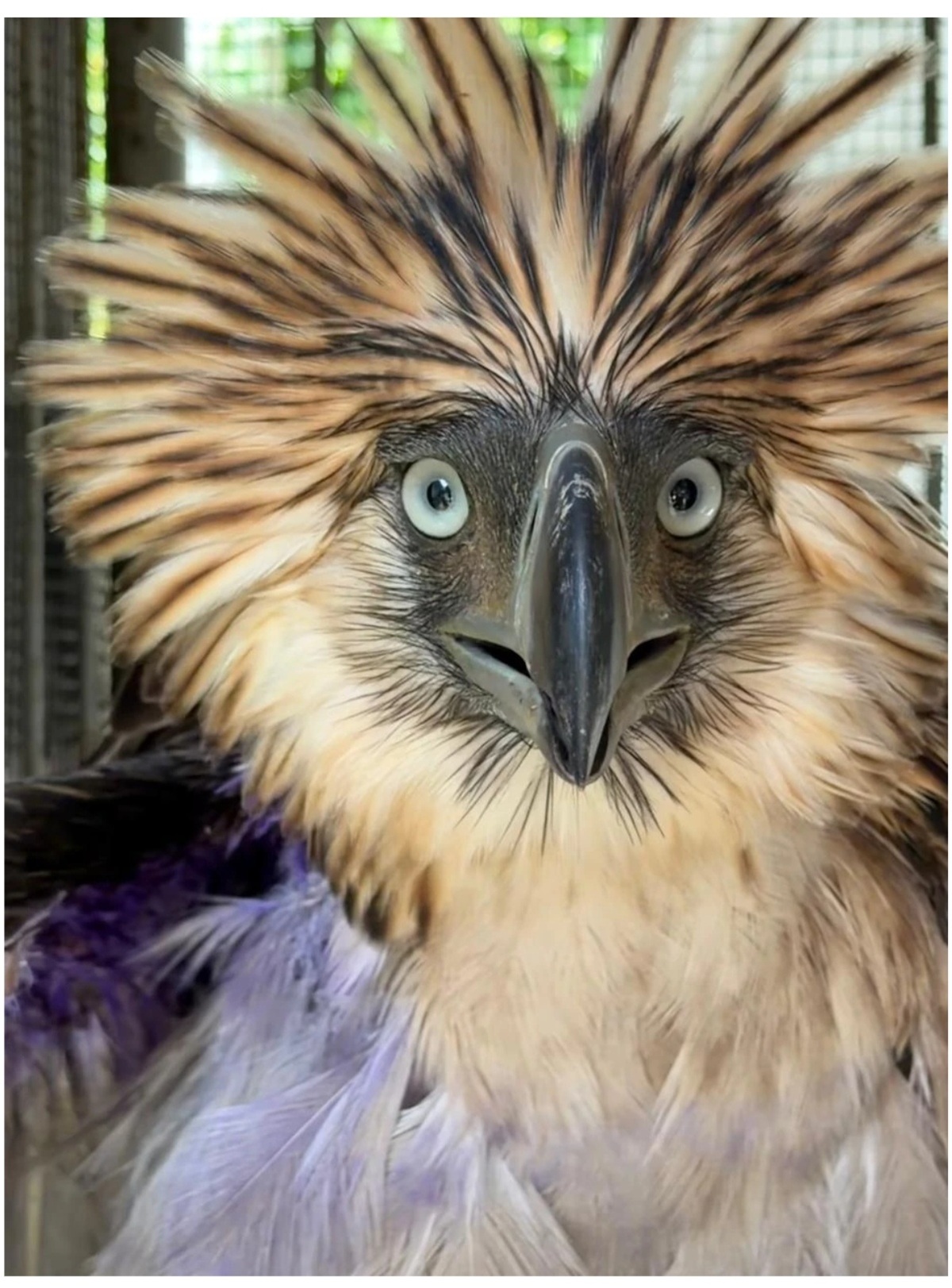
Conservationists Urge Deeper Probe into Philippine Eagle Shooting
Conservationists are urging authorities to thoroughly investigate the shooting and wounding of an adult Philippine eagle, the country's national bird. While the eagle is recovering, experts emphasize the urgent need for intensified protection efforts for this critically endangered species.
Conservationists have urged authorities to investigate the circumstances surrounding the shooting and wounding of an adult Philippine eagle (Pithecophaga jefferyi) in the hinterlands of Malaybalay City in Bukidnon province early this month. This developed as biologists of the Philippine Eagle Foundation (PEF) told the Inquirer on Thursday that the raptor, named “Sawaga-Dalwangan,” is “now alert and responsive, and eating on its own” following over a week of being in intensive care in a facility here. Dr. Jayson Ibañez, PEF director for operations, said agencies like the Department of Environment and Natural Resources (DENR), the Philippine National Police, and the National Bureau of Investigation can be helpful in establishing the facts of the attack in cooperation with leaders of indigenous peoples and the barangay council in the area. READ: Senate resolution filed to recognize PH Eagle rescuer The investigation, according to PEF, should be a major part of an intensified campaign to protect the critically endangered national bird. Sawaga-Dalwangan was surrendered by residents to the DENR on July 3, after it was found near the Sawaga River at Barangay Dalwangan in Malaybalay. READ: Philippine Eagle Sawaga-Dalwangan shows major recovery—PEF Sawaga River is within the Mt. Kitanglad Natural Park, one of the eagle’s major habitats. The area is considered the second oldest known breeding territory in Mindanao since 1986 and the longest-monitored nesting territory anywhere in the world for the critically endangered national bird which is estimated to number only less than 400 pairs in the wild. The raptor was severely dehydrated and very weak when turned over to the PEF team. Upon examination, the eagle had an airgun pellet on its right wing, which was later removed. Another metal pellet remains deep inside its left thigh. PEF said the eagle’s wounds suggested that the injuries were not recent. When turned over, the eagle’s feathers were soiled, its plumage was damaged and had an advanced maggot infestation in the wounded wing. When alerted by residents, government responders and conservationists quickly organized a rescue. Personnel from DENR, Malaybalay Provincial Zoo, indigenous community members, local volunteers and the PEF worked together to bring the eagle here for further care. Senate Majority Leader Juan Miguel Zubiri, a native of Bukidnon, filed Senate Resolution No. 519, seeking to commend indigenous farmer Marvin Linoy, 21, for rescuing the eagle. The resolution aims to recognize Linoy’s “exemplary courage and heroism” and his contribution to the protection and conservation of one of the most treasured and critically endangered wildlife species. According to Zubiri, Linoy was gathering fruits in the forest when he discovered a group of monkeys attacking the eagle, which was covered in soil. The rescuer, who drove the monkeys away by mimicking the barking of a dog, calmed the injured eagle by covering its eyes with fern leaves and wrapping its body with his jacket. The measure also recognized indigenous farmers Junissa Docenos and Sanny Docenos, members of the Inhandig Tribal Multi-Purpose Cooperative, for assisting Linoy during the rescue. “Marvin Linoy’s bravery, presence of mind and compassion played a vital role in saving the Philippine eagle from further harm and his act exemplifies the highest ideals of environmental stewardship and responsible citizenship,” Zubiri said in his resolution. —WITH A REPORT FROM MARC ANDRE ESGUERRA Source: Inquirer NewsInfo
多角的分析
フィリピンワシの生息環境は、自然保護区として指定されている場合が多く、これらは地域経済においてエコツーリズムや関連産業の潜在的な源泉となり得る。しかし、密猟や生息環境の破壊は、これらの経済的機会を損なう。今回の事件は、法執行の弱さや、地域住民の環境意識の向上といった課題を浮き彫りにし、持続可能な自然資源管理への投資や、地域社会への経済的インセンティブの必要性を示唆している。保護活動の強化は、長期的に見て、生態系サービス(水質浄化、気候安定化など)の維持にも繋がり、間接的な経済的利益をもたらす可能性がある。
フィリピンワシのような象徴的な種の保護に失敗することは、国の環境ガバナンスに対する国際的な信頼を低下させる可能性がある。これは、環境・社会・ガバナンス(ESG)投資を重視する投資家にとって、リスク要因となり得る。また、保護区周辺での開発プロジェクトへの投資も、生態系への影響を懸念される場合がある。一方で、持続可能な観光や、環境保全に貢献する企業への投資機会は増加する可能性があり、投資家は、環境保護政策の実施状況や、地域社会との連携を注視する必要がある。
フィリピンワシの銃撃事件は、地方部における違法行為の蔓延と、それに対する当局の対応能力という社会的な課題を浮き彫りにしている。特に、先住民コミュニティがワシの保護において重要な役割を果たしているにもかかわらず、彼らの声が十分に行政に届いていない可能性も示唆される。また、若者であるマービン・リノイ氏の勇気ある行動は、次世代の環境保護への意識の高まりを示す一方で、彼のような市民が安心して活動できる環境整備の必要性も浮き彫りにしている。銃器の規制や、地域社会への環境教育の徹底が、公共の課題として取り組まれるべきである。
地方では、野生動物への銃器の使用が、食料確保や、家畜を守るための手段として行われることがある。しかし、フィリピンワシのような絶滅危惧種への危害は、その種の存続だけでなく、地域社会の生物多様性への意識や、将来の世代への遺産という観点からも、深刻な問題である。市民は、このような事件に対して、当局への情報提供や、環境保護団体への支援を通じて、自らの意思表示を行うことが求められる。特に、地方の住民は、生息環境の管理者としての役割を担っており、彼らの協力と理解なしには、効果的な保護は望めない。
背景・歴史的文脈
フィリピンワシ(Pithecophaga jefferyi)は、フィリピンの固有種であり、国の象徴として大切にされている。しかし、生息地の破壊(森林伐採、農業開発)や密猟により、絶滅の危機に瀕しており、その数は激減している。1980年代から本格的な保護活動が開始されたが、広大な国土と、地方部における法の執行力の課題から、密猟や違法な銃器の使用は後を絶たない。今回の事件は、長年にわたる保護活動の難しさと、地域社会の協力、そして法執行機関の連携強化の必要性を改めて浮き彫りにしている。
原文ソース
Inquirer NewsInfo