General articles are free for 24 hours after publish.
Vietnam Braces for Heavy Rains as Tropical Convergence Zone Persists
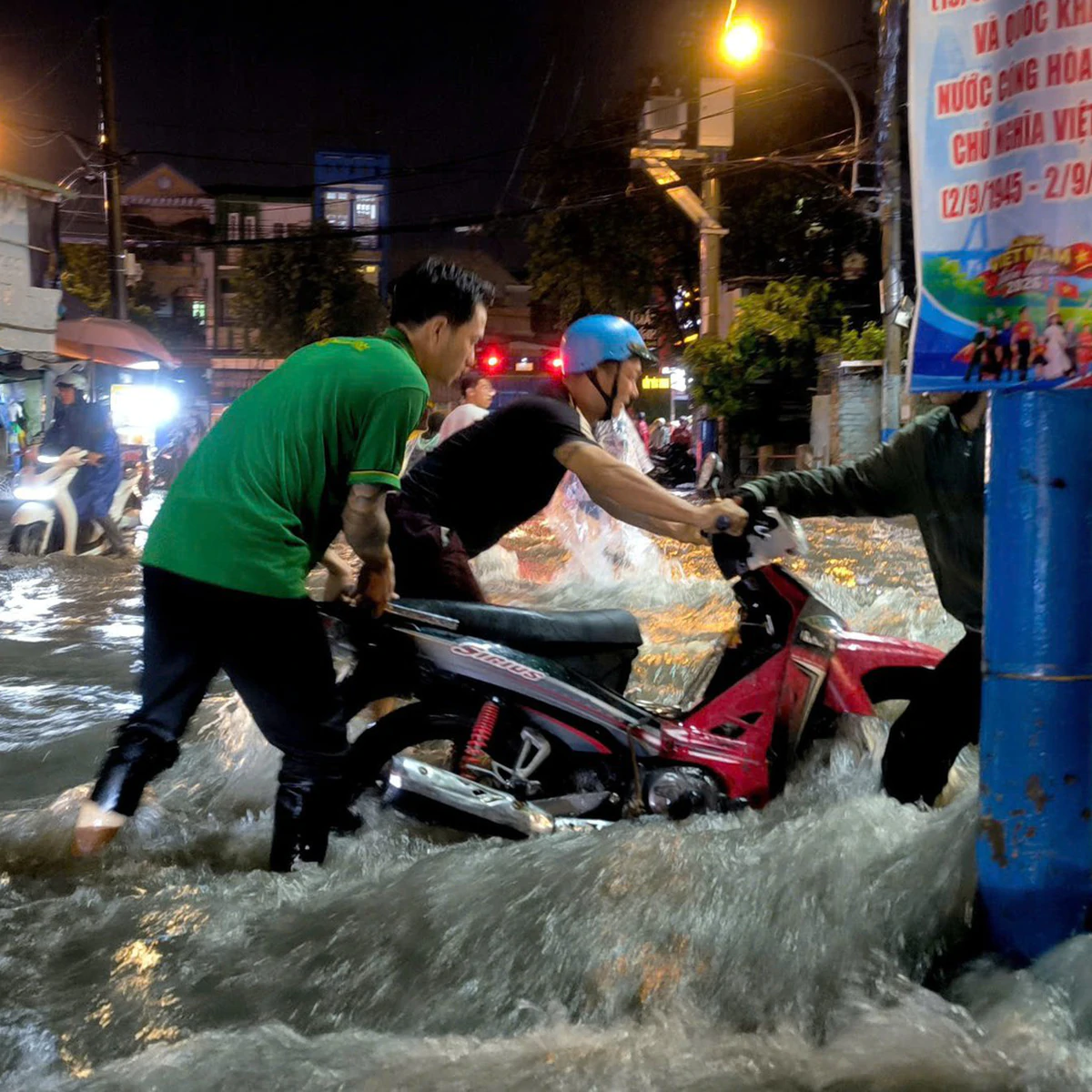
Vietnam is anticipating heavy rainfall, particularly in its central and southern regions, due to the lingering effects of a tropical convergence zone. Areas from Quang Tri province southward could see localized downpours exceeding 250mm. Coastal regions should also be wary of high waves, strong winds, and potential tornadoes.
Vietnam is bracing for heavy rainfall across the country due to the influence of a tropical convergence zone. Particularly in regions from Quang Tri province southward, localized downpours exceeding 250mm are anticipated, necessitating strict vigilance. According to the National Center for Hydro-Meteorological Forecasting, from the night of September 23rd into September 24th, areas from Quang Tri province to Da Nang city and the eastern part of Quang Ngai province are expected to experience heavy to very heavy rain and thunderstorms, with rainfall amounts ranging from 60mm to 120mm, and locally over 250mm. Furthermore, eastern parts of Gia Lai and Dak Lak provinces, Khanh Hoa province, Lam Dong province, and the southern region will see moderate to heavy rain and thunderstorms, with rainfall amounts of 40mm to 80mm, and locally over 150mm. In the northern regions (excluding Lai Chau and Dien Bien provinces) and the North Central region, scattered showers and thunderstorms are forecast with rainfall of 15mm to 30mm, and locally over 60mm. In the northern areas, rain is expected to be concentrated during nighttime and morning hours. Coastal areas, including the southwestern Gulf of Tonkin, the sea from southern Quang Tri to Ca Mau, Ca Mau to An Giang, the Gulf of Thailand, and the western seas of the central and southern East Sea (including the western part of the Spratly Islands), are predicted to have showers and thunderstorms. These maritime areas face a high risk of developing tornadoes, strong gusts of wind (level 7-8), and sea waves exceeding 2 meters. Ensuring the safety of all vessels operating in these regions is a pressing concern. In Hanoi, cloudy skies are expected with scattered showers and thunderstorms, with a high of 30-32°C and a low of 24-26°C. Western areas of provinces from Quang Ngai to Dak Lak will experience moderate showers and thunderstorms, with rainfall of 20mm to 40mm, and locally over 80mm. Northwestern Vietnam will have cloudy skies with scattered showers and thunderstorms, with rain concentrated during nighttime and morning. Temperatures will range from 21-25°C (low) to 30-33°C (high). Northeastern Vietnam will also have cloudy skies with scattered showers and thunderstorms, with rain concentrated during nighttime and morning. Temperatures will range from 22-26°C (low) to 30-33°C (high). Thanh Hoa to Hue will be cloudy with scattered showers and thunderstorms, with locally heavy rain. The southern part (Quang Tri to Hue) will experience heavy to very heavy rain and thunderstorms. Temperatures will range from 24-27°C (low) to 28-31°C (high). The South Central Coast will be cloudy, with heavy to very heavy rain and thunderstorms in the northern part, and moderate to heavy rain and thunderstorms in the southern part, with some areas experiencing very heavy rain. Temperatures will range from 22-25°C (low) to 26-29°C (high). The Central Highlands will be cloudy with moderate showers and thunderstorms, with localized heavy to very heavy rain, particularly in Lam Dong province. Temperatures will range from 20-23°C (low) to 25-28°C (high). Southern Vietnam will be cloudy with moderate to heavy rain and thunderstorms, with some areas experiencing very heavy rain. Temperatures will range from 22-25°C (low) to 28-31°C (high). Ho Chi Minh City will be cloudy with moderate to heavy rain and thunderstorms, with some areas experiencing very heavy rain. Temperatures will range from 23-25°C (low) to 28-30°C (high). Vietnam, while experiencing continuous economic growth under its one-party system, faces the urgent challenge of responding to extreme weather events exacerbated by climate change. Delays in infrastructure development, in particular, are seen as a potential factor that could amplify damage from such heavy rains, pushing the government to strengthen disaster prevention measures. Concurrently, while emphasizing economic ties with China in recent years, the nation also navigates tensions related to issues like the South China Sea, creating a complex interplay between domestic stability and international relations. Source: The Saigon Times
Original source
The Saigon Times