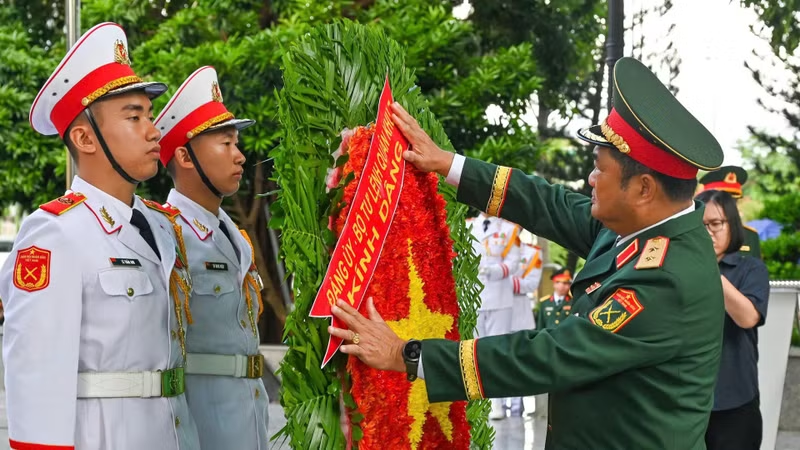
Vietnam's Southern Military Region Establishes Unmanned Vehicle Battalion
Vietnam's Southern Military Region announced the establishment of an Unmanned Aerial Vehicle (UAV) battalion on June 29 in Ho Chi Minh City. This move is seen as part of the Vietnam People's Army's modernization efforts and response to security challenges, particularly in relation to China.
The Southern Military Region of Vietnam announced on June 29 in Ho Chi Minh City the decision to establish an Unmanned Aerial Vehicle (UAV) battalion directly under the command of the Military Region's Staff Department. The establishment of this unit is seen as part of the Vietnam People's Army's modernization strategy, aiming to respond to the changing security environment in the region. Vietnam has been actively modernizing its military capabilities in recent years, with a particular focus on the adoption of UAV technology. This is likely influenced by geopolitical factors such as complex maritime disputes with neighboring China and rising tensions in the South China Sea. The Vietnamese government, under its one-party system, prioritizes national sovereignty and territorial integrity, viewing military strengthening as a crucial means to achieve these goals. The establishment of this UAV battalion is expected to enhance reconnaissance, surveillance, and intelligence-gathering capabilities, while also aiming to acquire new operational capabilities for future combat scenarios. Despite Vietnam's remarkable economic growth in recent years, the country is also demonstrating its commitment to preparing for security risks.
多角的分析
ベトナムの軍事近代化、特にUAV技術への投資は、長期的な経済成長と安定を確保するための戦略的投資と捉えられる。防衛産業への投資は、国内の技術開発を促進し、関連産業の雇用創出に繋がる可能性がある。しかし、軍事費の増大は、教育や医療といった社会福祉分野へのリソース配分に影響を与える可能性も否定できない。
UAV部隊の設立は、直接的な投資機会というよりは、ベトナムの安全保障環境への投資家心理に間接的な影響を与える可能性がある。安全保障の強化は、外国からの直接投資(FDI)にとって、より安定したビジネス環境を提供する要因となり得る。特に、サプライチェーンの多様化を進める日本企業などにとって、地政学的なリスク低減は重要な判断材料となる。
UAV部隊の設立は、国民の安全保障への関心を高める可能性がある。特に、南シナ海問題など、国境を巡る地域情勢は、市民の生活実感にも影響を与えうる。また、軍事技術の進歩は、国内の科学技術分野の発展を促し、若年層のキャリアパスに新たな選択肢をもたらすことも考えられる。一方で、軍事予算の配分が社会福祉に与える影響についても、市民の間で関心が寄せられる可能性がある。
ホーチミン市のような大都市で、無人機部隊が設立されることは、市民の安全保障への意識を高めるだろう。特に、南シナ海における中国との関係が緊迫する中で、自国の防衛力強化は、多くの市民にとって安心材料となりうる。また、軍事技術の進歩は、国内の科学技術分野の発展を促し、若年層のキャリアパスに新たな選択肢をもたらすことも考えられる。
背景・歴史的文脈
ベトナムは、1975年のベトナム戦争終結後、社会主義国家としての体制を維持しつつ、1986年のドイモイ(刷新)政策以降、市場経済を導入し急速な経済成長を遂げてきた。しかし、一党体制下での政治的安定と、隣国中国との複雑な関係、特に南シナ海における領有権問題は、常にベトナムの安全保障政策の重要な要素となっている。近年、中国の海洋進出が活発化する中で、ベトナムは軍事力の近代化を加速させており、特に空軍力や海軍力の強化、そして無人機技術の導入は、その戦略の柱の一つとなっている。
原文ソース
Nhan Dan