ASEAN Special Envoy Holds Engaging Talks with Myanmar’s Resistance Government
Burma News International (BNI) is a network of 15 independent media and news organizations based in and around Burma The Association of Southeast Asian Nations (ASEAN) special envoy on Myanmar has initiated separate, dir
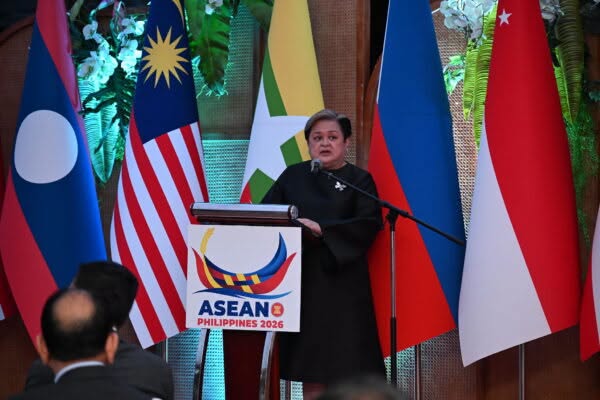
Burma News International (BNI) is a network of 15 independent media and news organizations based in and around Burma The Association of Southeast Asian Nations (ASEAN) special envoy on Myanmar has initiated separate, direct engagements with rival stakeholders in the country’s civil war, marking the first time the regional bloc has formally included the anti-junta resistance in high-level talks. Philippine Undersecretary for Bilateral Relations and ASEAN Affairs Maria Theresa Lazaro, currently serving as the ASEAN special envoy under the Philippines' bloc leadership, held a series of separate meetings in Thailand with the Myanmar junta’s foreign minister, the regime’s National Solidarity and Peacemaking Negotiation Committee (NSPNC), and several Ethnic Armed Organizations (EAOs). Lazaro also held a virtual meeting with the National Unity Government (NUG)—the Myanmar resistance government. NUG Prime Minister’s Office spokesperson U Nay Phone Latt confirmed the briefing to BBC Burmese, noting that official details would be released soon. The inclusion of the NUG marks a breakthrough. Previous ASEAN envoys faced intense international and domestic criticism for exclusively engaging with the military regime while freezing out pro-democracy forces, especially NUG. "If ASEAN genuinely aims to facilitate a viable peace process, it must directly engage the primary drivers of the Spring Revolution—specifically the NUG and allied Ethnic Resistance Organizations (EROs)," said Ko Min Thway Thit, a prominent former student activist leader. According to the Philippine Department of Foreign Affairs, the diplomatic track—hosted by Thai Foreign Minister Sihasak Phuangketkeow—included closed-door sessions in Pattaya on July 13. The discussions reportedly aimed to establish blueprints for an inclusive political dialogue involving all warring factions. While the Philippine government did not disclose which ethnic factions participated, international media reports indicated a diverse delegation. Attendees reportedly included groups actively fighting the junta—such as the Karen National Union (KNU), Karenni National Progressive Party (KNPP), and Chin National Front (CNF)—as well as the Restoration Council of Shan State (RCSS) and the New Mon State Party (NMSP), which currently maintain fragile ceasefires with the regime. Beyond political dialogue, Lazaro pledged to personally lead an ASEAN humanitarian mission into Myanmar during the fourth quarter of 2026, a proposal that reportedly gained baseline consensus from all participating groups. However, analysts urge caution regarding the junta's compliance. Captain Zin Yaw, a military defector who joined the Civil Disobedience Movement (CDM), warned that the regime will likely attempt to weaponize the aid mission. "The junta will almost certainly exploit the itinerary, restricting the envoy to regime-controlled zones under the pretext of ongoing postwar reconstruction," Zin Yaw said. "This allows them to present a curated, stabilized image to the international community for political legitimacy. However, the envoy’s parallel talks in Thailand could pave the way for subsequent, independent visits into opposition-held territories." The flurry of diplomacy coincided with an informal meeting in Bangkok on July 12, where ASEAN foreign ministers met with the junta-appointed Foreign Minister Tin Maung Swe to reaffirm the bloc's stalled Five-Point Consensus peace plan. The session marked the first in-person ministerial gathering including a junta representative since the 2021 coup. The engagements have drawn sharp scrutiny from rights groups. Justice for Myanmar issued a statement urging ASEAN member states to exercise extreme caution, warning that high-profile diplomatic engagements risk legitimizing the military junta and enabling continued state-sponsored violence with impunity.
多角的分析
直接の経済ニュースではありませんが、治安と司法の信頼は地域経済の土台です。職場での暴力や未成年者保護への不安が強まると、夜間営業、観光、雇用、地域サービス業のリスク認識が高まります。
投資家目線では、個別事件よりも法執行の予見可能性が焦点です。加害者への対応が曖昧になれば、ローカルビジネスの統治リスクや従業員保護の弱さとして評価されやすくなります。
シャン州の現場では、暴力を「個人間の事件」で片づけず、誰が守り、誰が説明するのかを可視化する圧力が強まります。軍の動きは、被害者側が孤立しやすい環境で、沈黙より手続きを選ぶための足場になります。
市民にとっては、自分や家族が被害に遭った時に公正な手続きへアクセスできるのかが最大の関心です。地域団体が声を上げることで、事件の風化を防ぎ、被害者側の孤立を和らげる意味があります。
背景・歴史的文脈
このニュースは、ミャンマーの地域社会で法の支配と弱者保護がどこまで機能しているかを映す事案です。暴力事件そのものに加え、女性団体や市民社会が司法手続きを求めて声を上げている点が重要です。軍政下では警察・司法への信頼が揺らぎやすく、個別事件が地域の不安や統治への不信に直結します。
原文ソース
BNI (Burma News International)