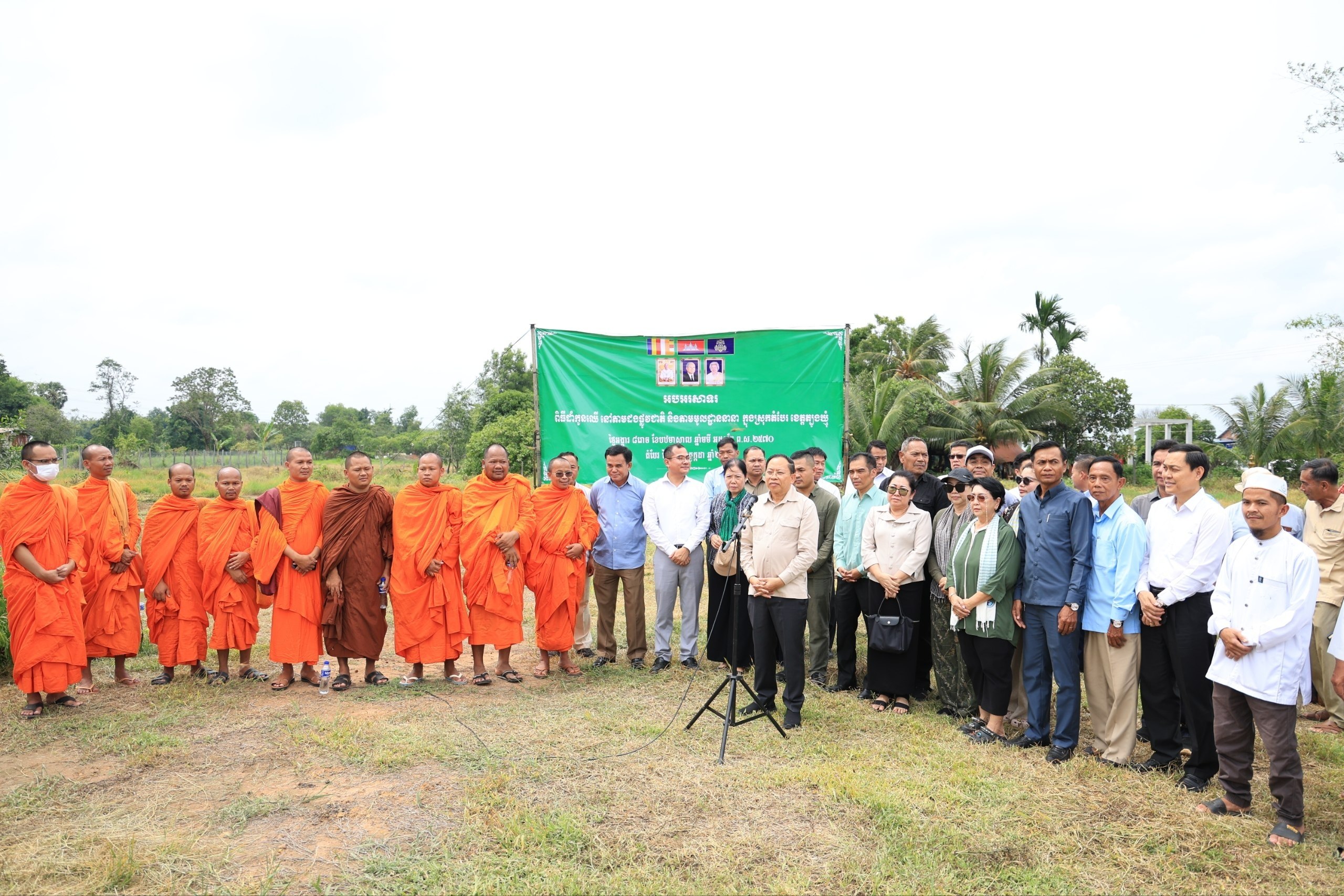
Cambodia Distributes 12,000 Seedlings to Temples for Greening Campaign
Politics
2026年7月7日
3
CPP Cambodia

Cambodia Distributes 12,000 Seedlings to Temples for Greening Campaign

AI サマリー

A greening campaign in Tbaeng Meanchey district, Tboung Khmum province, Cambodia, has seen the distribution of 12,000 seedlings to 29 temples. The initiative aims to increase forest cover and promote environmental protection rooted in Buddhist principles.

On the afternoon of July 7, 2027, in Tbaeng Meanchey district, Tboung Khmum province, HE Minister of Cults and Religion, Chai Borin, presided over a ceremony to plant trees and distribute a total of 12,000 seedlings to 29 pagodas across 7 communes. This event is part of a campaign to increase green cover, with participation from abbots, monks, government officials, armed forces, authorities at all levels, students, and many citizens. During the occasion, HE Chai Borin conveyed greetings from Samdech Techo Hun Sen, President of the Senate, and Samdech Kittipritthbandit Bun Rany Hun Sen, as well as from Samdech Moha Borvor Thipadei Hun Manet, Prime Minister of the Kingdom of Cambodia, and his wife, Dr. Pich Chanmony Hun Manet. He reiterated that Samdech Techo, Samdech Kittipritthbandit, Samdech Moha Borvor Thipadei, and Dr. Pich Chanmony consistently care about the well-being of citizens nationwide. HE the Minister highlighted the close relationship between Buddhism and nature, noting that the life of the Buddha, from birth to enlightenment, the first sermon, and parinirvana, all occurred under the shade of trees. Therefore, planting trees in pagodas not only enhances green aesthetics, provides shade, and offers fresh air but also serves as a way to honor Buddhist traditions and create serene Buddhist resorts for devotees to practice Dharma, meditate, and overcome defilements. The tree planting and distribution ceremony was organized to encourage all pagodas to diligently implement the 'S3 Approach' – 'Clean Pagoda, Bright Pagoda, Peaceful Pagoda' – as set forth by the Ministry of Cults and Religion. It also contributes to increasing green cover, aligning with the 'Pentagon Strategy' Phase 1 of the 7th mandate government under the pragmatic leadership of HE Prime Minister Hun Manet, to achieve Cambodia's vision for 2030 and 2050 in building an orderly, clean, and sustainable nation. Furthermore, expanding tree planting during the rainy season aims to create a natural shield, absorb greenhouse gases, purify the air, and strengthen Cambodia's resilience against climate change and other natural phenomena, such as the El Niño phenomenon. Concurrently, HE the Presiding Official appealed to all abbots, monks, and pagoda committees to continue their roles as educators and role models for devotees in loving, maintaining, and protecting the natural environment. Pagodas should be considered safe havens of non-violence for wildlife and green spaces for humanity, while tree planting and care activities are considered a noble act of accumulating merit according to Buddhist philosophy (giving shade is cool merit), bringing happiness and prosperity in this life and the next. Moreover, the trees to be planted in the 7 communes of Tbaeng Meanchey district will help increase forest cover and green aesthetics in the communities, creating opportunities for the locality to attract tourists and investors, thereby increasing income for infrastructure development and further improving the living standards of the people. On this occasion, HE the Minister presented 12,000 seedlings to the abbots and monks of the 29 pagodas in the 7 communes of Tbaeng Meanchey district, Tboung Khmum province. He also offered blessings and good wishes to all monks, leaders, civil servants, armed forces, authorities at all levels, students, and citizens, wishing them the four blessings of Buddhism: longevity, beauty, happiness, and strength, without any decline.

多角的分析

経済的影響

この緑化キャンペーンは、直接的な経済効果よりも、長期的な環境保全と持続可能な開発への投資と位置づけられる。寺院周辺の緑化は、地域の景観を向上させ、観光客誘致に繋がる可能性がある。また、植樹による気候変動への対応は、農業やインフラへの影響を軽減し、経済的損失を防ぐ間接的な効果が期待できる。しかし、大規模な経済効果を生み出すには、さらなる民間投資や観光インフラの整備が必要となる。

投資家心理

投資家にとって、このニュースは直接的な投資機会を示すものではない。しかし、カンボジア政府が環境保全と持続可能な開発を重視している姿勢を示すものとして、ESG(環境・社会・ガバナンス)投資の観点からポジティブに捉えられる可能性がある。長期的な視点では、環境が改善され、気候変動への耐性が高まることは、カンボジアへの投資リスクを低減させる要因となり得る。

社会的影響

この取り組みは、仏教徒が多いカンボジアにおいて、宗教的な価値観と環境保護を結びつける社会的な試みである。寺院が地域社会の精神的中心であることから、植樹活動への参加を促す効果が期待される。また、緑化された寺院は、住民にとって憩いの場となり、地域コミュニティの結束を深める可能性もある。一方で、苗木の配布や植樹の管理が、寺院や地域住民の負担とならないような継続的な支援体制の構築が重要となる。

市民の声

市民にとっては、寺院周辺の環境改善や、より良い気候条件への期待が持てる。特に、自然災害への耐性強化は、生活の安全に直結する。また、仏教徒にとっては、宗教的な実践と環境保護を同時に行う機会となり、精神的な満足感を得られるだろう。しかし、植樹活動が日常生活にどのような具体的な変化をもたらすかについては、さらなる進展が待たれる。

背景・歴史的文脈

カンボジアは、過去の紛争と貧困からの復興を目指し、経済発展と並行して環境保全の重要性を認識し始めている。特に、気候変動の影響を受けやすい地域として、緑被率の向上は国家的な課題となっている。仏教はカンボジアの国民の精神的支柱であり、自然との調和を重んじる教えは、環境保護活動と親和性が高い。政府は、仏教寺院を環境保護活動の拠点として活用することで、国民の参加を促し、持続可能な社会の実現を目指している。2023年9月に発足したフン・マネッ政権は、「五角戦略」を掲げ、経済成長と国民生活の向上を追求する中で、環境政策も重要な柱の一つとしている。

原文ソース

CPP Cambodia

原文を読む