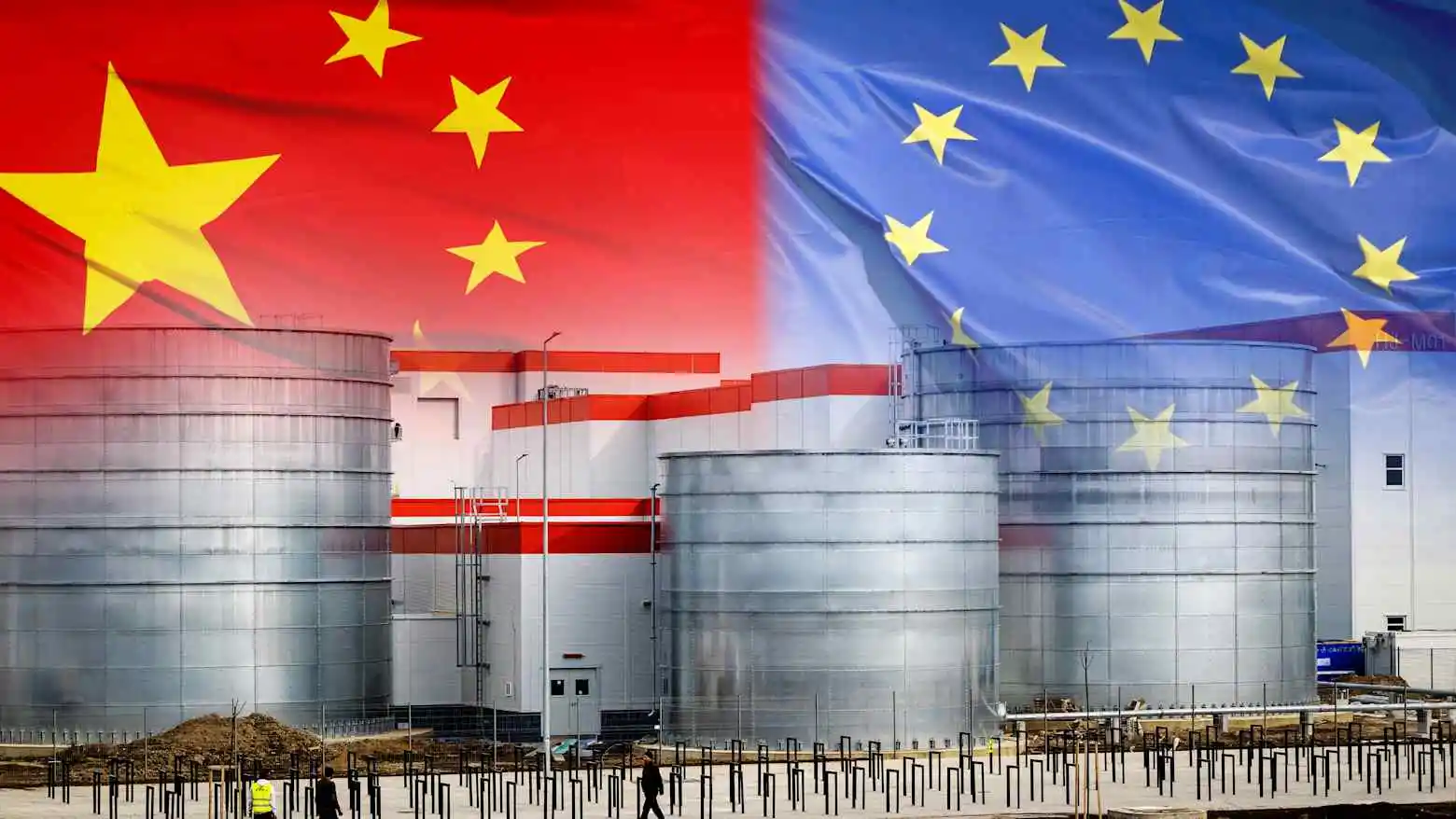
China Downplays EU Trade Imbalance Claims, Citing Complex Economic Ties
China has countered the European Union's concerns over a large trade deficit, arguing that focusing solely on goods trade presents a distorted view and that actual economic ties are more complex, encompassing investments and services.
Home - China - China Downplays EU Trade Imbalance Claims EU Painting a False Picture BEIJING – Trade tensions between the European Union and China are reaching a boiling point this summer. European leaders are raising alarms over a rapidly growing trade deficit with Beijing. However, Chinese experts are stepping forward to say the EU is misreading the relationship entirely. They argue that focusing only on goods trade paints a false picture of actual economic ties. The debate is heating up as both sides launch new trade talks in Brussels. European officials point to a massive trade gap that now tops €1 billion a day. Yet, researchers from China insist this simple math ignores a complex web of global supply chains. European leaders have grown increasingly vocal about their trade imbalance with China. The EU’s statistics agency recently reported that Chinese exports to Europe far outpace European imports. This gap amounts to nearly €360 billion annually, which translates to a staggering €1 billion every single day. For many politicians in Brussels, these numbers look like a severe threat to local industries. EU Trade Commissioner Maros Sefcovic recently made his stance very clear after long meetings. Following marathon talks with China’s Commerce Minister Wang Wentao, Sefcovic stated that the current trend is simply not sustainable. He warned that the status quo is no longer an option for European businesses. European factories are increasingly worried about losing their market share to affordable Chinese goods. Many fear a repeat of previous economic shocks where domestic industries were overwhelmed by imports. This fear has pushed the EU to adopt a much tougher stance on trade defenses. Officials are exploring new regulations to protect their critical sectors from cheaper overseas products. They worry that highly subsidized foreign industries will force traditional European companies out of business. The mood in Europe has shifted dramatically over the past few years regarding global trade. Once a champion of free commerce, the bloc is now looking at strict protective measures. This defensive strategy is largely driven by fears of deindustrialization across major European nations. However, China strongly pushes back against this narrative of unfair trade practices. Foreign Ministry officials state that China does not deliberately seek a trade surplus with the EU. They argue that the current trade figures are the natural result of free market forces. While the EU focuses heavily on physical goods, Chinese experts argue this view is far too narrow. They claim that looking only at the movement of physical products misses the bigger economic picture. Modern trade is deeply connected through direct investments, global services, and shared technologies. Sun Yanhong, a director at the Chinese Academy of Social Sciences, recently shared her thoughts on the issue. She explained that nearly half of the bilateral trade involves intermediate goods, not finished products. These are parts and raw materials used to build finished items inside European factories. Many European companies manufacture goods in China and then ship them back to the EU. In these cases, the final profit often goes directly to European corporate headquarters. However, on paper, these products still count as Chinese exports, making the deficit look worse. Experts say ignoring these corporate profits leads to a very one-sided and inaccurate conclusion. A significant share of European firms’ output in China is exported to global markets. Breaking apart these deeply embedded supply chains would likely hurt European businesses just as much. Trade is no longer as simple as one country selling a finished product to another. Today, a single product might cross borders several times before it reaches a consumer. Chinese experts urge European leaders to look at where the actual value is created. They argue that fixating on headline trade figures without analyzing trade composition is a mistake. When you dig into the details, the economic relationship is much more balanced than it appears. The wealth generated by this trade is shared across both regions. Another major point raised by Chinese analysts is the booming trade in international services. When politicians talk about trade deficits, they usually mean manufactured goods like cars and electronics. However, the service sector tells a completely different story about the China-EU economic relationship. Zhang Jian, a vice president at the China Institutes of Contemporary International Relations, highlighted this hidden reality. He pointed out that the EU actually runs a large and growing services surplus with China. In fact, this surplus reached over $50 billion in recent years alone. This massive number includes more than $10 billion just in intellectual property royalties. European companies earn huge profits by licensing their advanced technology and famous brands to Chinese businesses. According to experts, leaving these billions of dollars out of the conversation is highly misleading. European firms have a massive advantage in consulting, finance, and software services. They sell these valuable services to Chinese companies that need global expertise to grow. This flow of money from China to Europe rarely makes the front-page news. Experts argue that a fair assessment must include both goods and services in the final calculation. Goods trade alone is simply insufficient to judge the true balance of an economic partnership. You cannot paint an accurate picture by only counting half of the available data. Furthermore, exports account for about a quarter of the EU’s total gross domestic product. In contrast, exports make up roughly 19 percent of China’s overall economy today. This shows how heavily Europe actually relies on selling to foreign markets to survive. So, why is the EU so focused on the physical goods deficit right now? Chinese scholars believe the answer actually lies within Europe itself, rather than in Asia. They argue that the tough trade stance reflects Europe’s own internal struggles with economic growth. Sun Yanhong suggests that slow structural reforms in Europe are causing these intense trade anxieties. Unresolved issues within the EU single market make external partners look like a looming threat. Instead of looking inward at domestic problems, it is much easier to point fingers outward. Zhang Jian echoed these feelings, stating that European concerns reflect deep, underlying competitiveness anxieties. As Chinese industries grow rapidly, especially in green technology, older European companies feel the pressure. They are struggling to keep up with the fast pace of modern innovation. However, these experts emphasize that trade is driven by natural market forces, not deliberate plots. Consumers simply want high-quality products at the most affordable prices available to them. European citizens are willingly buying these g
多角的分析
EUが主張する貿易赤字は、財貿易に限定された統計に基づくものであり、サービス貿易や投資収益といったEUが黒字を計上している分野を考慮すると、実質的な経済関係はより均衡が取れているという中国側の主張は、国際貿易の多角的な側面を浮き彫りにしている。特に、中間財の貿易や、欧州企業が中国で得た利益の計上方法の違いは、単純な貿易統計の解釈に警鐘を鳴らすものである。
EUの保護主義的な動きは、欧州市場への投資リスクを高める可能性がある。一方で、中国側が主張するサービス貿易や投資の活況は、新たな投資機会を示唆している。投資家は、単なる財貿易の赤字・黒字だけでなく、両国間のサプライチェーンの複雑さや、サービス分野での収益機会を総合的に評価する必要がある。
EU域内の産業界が中国製品への対抗措置を求める声は、欧州における雇用不安や産業競争力低下への懸念を反映している。一方、中国側は、消費者がより安価で高品質な製品を求めるのは自然な市場原理であり、EUの懸念は国内の構造的な問題に起因すると示唆している。この対立は、グローバル化の恩恵と代償、そして国内経済の課題に直面する各国の複雑な社会情勢を示している。
EU市民は、輸入品の価格上昇や、国内産業の衰退による雇用機会の減少といった影響を懸念する可能性がある。中国市民は、安価な輸入品へのアクセスが制限されることや、国内産業の成長への影響を懸念するかもしれない。両国間の貿易摩擦は、最終的には消費者の選択肢や生活コストに間接的な影響を与えうる。
背景・歴史的文脈
EUと中国の貿易関係は長年にわたり拡大してきたが、近年、EUは中国からの安価な製品輸入による国内産業への影響を懸念するようになった。特に、中国の産業政策や補助金が不公正な競争を生んでいるとの見方がEU内で強まっている。2023年後半からEUは中国に対し、より厳格な貿易姿勢を示すようになり、貿易赤字の是正を求める声が高まっていた。中国側は、EUの主張が財貿易に偏っており、サービス貿易や投資を含めた全体像を無視していると反論。両国は、EU・ブリュッセルで新たな貿易交渉を開始したが、根本的な認識の隔たりが存在している。
原文ソース
Chiang Rai Times