General articles are free for 24 hours after publish.
North Bekasi Coast: Rare Javan Langur Habitat Under Threat
A small remaining forest area on the north coast of Bekasi Regency, Indonesia, serves as a crucial habitat for the endangered Javan langur. However, coastal erosion and severe mangrove degradation are rapidly threatening this vital ecosystem.
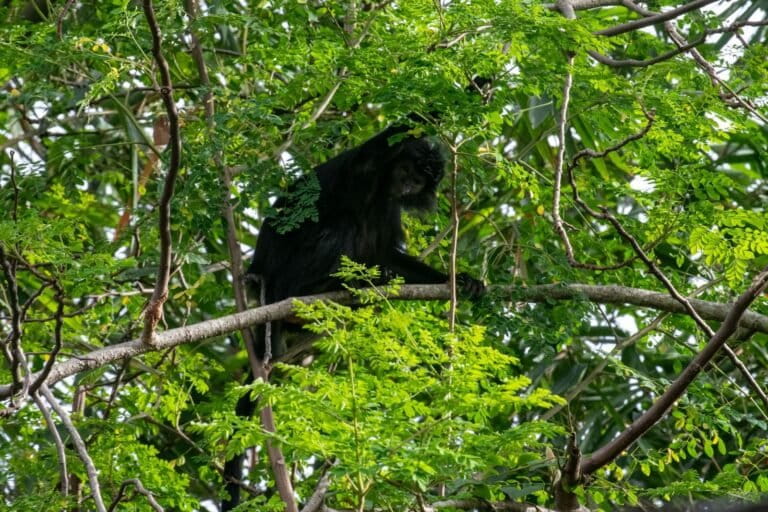
A precious habitat for the Javan langur (Lutung Jawa) remains in a small remaining forest area on the north coast of Bekasi Regency, West Java, Indonesia, in the Muaragembong district. However, this region is facing severe coastal erosion, making land access difficult. Visitors must now use boats to reach this conservation area as the former land route has been lost to erosion. Amidst vast shrimp ponds and remnants of mangrove forests, the Javan langur is barely maintaining its habitat. Daman, a local resident, has been volunteering to protect the langur's habitat in this area since 2012. He states that he usually enters the forest to monitor the Javan langurs after searching for mud crabs. Besides the Javan langur, the area is also a habitat for various other wildlife, including long-tailed macaques, water birds, egrets, black-faced spoonbills, river kingfishers, and paddyfield herons. However, the Javan langur's habitat continues to shrink. According to data from the Bekasi Regency government, out of the initially designated 10,000 hectares of protected forest area, approximately 2,338.85 hectares of land have been lost due to erosion, 1,700 hectares are inundated, and nearly 90% of the forest area has been converted into fish ponds. Research also indicates that the mangrove area in Muaragembong has decreased by 55% in the last four decades. Pantai Bahagia Village is one of the areas experiencing the most severe erosion. This condition threatens the Javan langur, whose population in the area is now around 70 individuals. The shrinking mangroves make it increasingly difficult for langurs to find food and water. Daman explains that Javan langurs prefer the leaves of the 'Jeruju' plant. During the dry season, the water around the Citarum River estuary becomes brackish due to saltwater intrusion, forcing langurs to approach human settlements in search of freshwater. The shrinking habitat of the Javan langur signifies the severity of environmental issues faced by Indonesia's coastal regions. While natural environments are sacrificed for urban development and economic activities, the survival of wildlife dependent on them is endangered.
Original source
Mongabay Indonesia