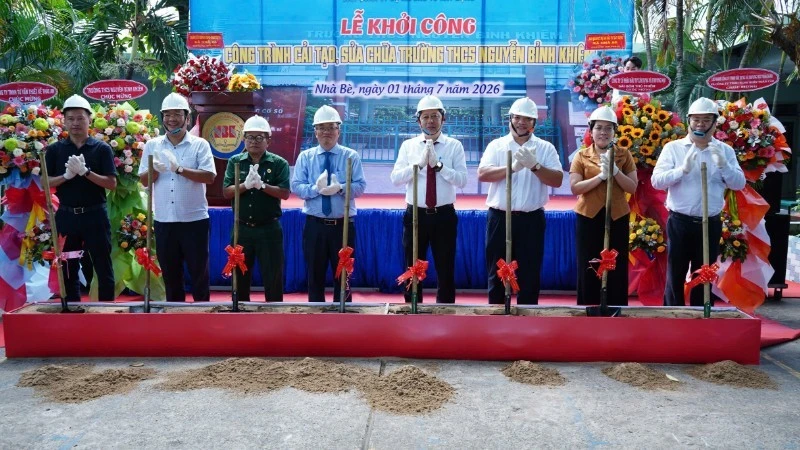
Ho Chi Minh City's Nha Be District Invests Nearly VND 700 Billion in Educational Facilities Ahead of New School Year
Nha Be District in Ho Chi Minh City is investing approximately VND 700 billion (around USD 27 million) in upgrading and repairing educational facilities ahead of the new school year. This initiative aims to meet the demands of rapid urbanization and improve the learning environment for students. Further investments exceeding VND 1.6 trillion are planned for 2026-2027.
Nha Be District in Ho Chi Minh City has announced plans to invest approximately VND 700 billion (around USD 27 million) in upgrading and repairing educational facilities ahead of the new school year. This initiative aims to expand educational infrastructure and provide a high-quality learning environment for students in the rapidly urbanizing district. The investment is part of the commemoration of the 50th anniversary of Saigon-Gia Dinh City being renamed Ho Chi Minh City on July 2, 2026, and the 1st anniversary of Nha Be District's establishment on July 1, 2025. Specifically, about VND 80 billion will be allocated for the renovation and expansion of five educational institutions, including Phuoc Kien High School, Nguyen Binh Khiem Secondary School (Campuses 1 and 2), Bui Van Ba Primary School, Tran Thi Ngoc Han Primary School (Campuses 1 and 2), and Hoa Lan Kindergarten. An additional 11 projects are scheduled for implementation by the end of the year, bringing the total number of educational facility development projects in 2026 to 16, with an estimated total investment of nearly VND 700 billion. Nha Be District intends to focus resources on infrastructure development to meet advanced teaching and learning conditions, considering its characteristics as a locality with new residential development projects. The District People's Committee has instructed the Project Management Board to coordinate closely with consulting units and contractors to ensure strict adherence to design and technical standards, guarantee quality, progress, and labor safety, and minimize disruption to teaching and learning activities. Furthermore, 21 educational infrastructure construction projects are planned for the period 2026-2027, with a total investment exceeding VND 1.6 trillion. Under Vietnam's one-party system, local government infrastructure investments are coordinated with central government plans, aiming to promote regional economic development and social welfare. Investment in education is particularly emphasized from the perspective of nurturing future human capital, positioning it as a component of strengthening the foundation for economic growth. Amidst complex relations with China, educational investment will continue to be a significant policy priority for maintaining domestic stability and development.
多角的分析
今回の Nhà Bè県における大規模な教育施設投資は、ベトナム経済の持続的な成長を支える人的資本への先行投資と見ることができる。ベトナム政府は、製造業の高度化やサービス産業の発展を目指す中で、質の高い教育を受けた労働力の確保が不可欠である。特に、ホーチミン市のような経済の中心地では、急速な都市化と人口増加に対応するため、教育インフラへの投資は地域経済の活性化と将来的な競争力強化に直結する。過去の事例でも、教育への投資は長期的な経済成長率の上昇に寄与する傾向が統計的に示されており、今回の投資もその延長線上にあると考えられる。
このニュースは、ベトナムのインフラ開発、特に教育分野への投資機会を示唆している。ホーチミン市のような主要都市部では、人口増加と都市化に伴い、教育施設の需要が継続的に高まることが予想される。投資家にとっては、学校建設、教材供給、教育技術関連サービスなど、教育インフラに関連する企業への投資が有望視される可能性がある。ただし、ベトナムのインフラプロジェクトは政府の計画に大きく依存するため、プロジェクトの進捗状況や政府の財政状況を注視する必要がある。また、為替リスクや法規制の変更なども考慮すべき点である。
今回の教育施設投資は、 Nhà Bè県に住む子供たちとその家族にとって、学習環境の質的向上という直接的な恩恵をもたらす。特に、急速な都市開発が進む地域では、既存の学校施設が手狭になったり、老朽化したりする問題が生じやすい。これにより、教育機会の格差が生じる可能性も懸念される。今回の投資は、こうした格差を是正し、全ての子供たちがより良い環境で学べる機会を確保しようとする試みである。また、建設工事の際には、周辺住民への騒音や交通への影響を最小限に抑える配慮が求められる。
ホーチミン市 Nhà Bè県では、子供たちの学習環境が改善されることへの期待が高まっている。特に、急速な開発が進む地域では、学校の収容能力や設備の老朽化が保護者たちの間で懸念されていた。今回の投資により、子供たちがより快適で安全な環境で学べるようになり、保護者たちの安心感も増すだろう。一方で、建設工事に伴う騒音や交通渋滞が、一時的に日常生活に影響を与える可能性も指摘されている。
背景・歴史的文脈
ベトナムは1986年のドイモイ政策以降、市場経済化を進め、目覚ましい経済成長を遂げてきた。この成長を支える重要な柱の一つが、教育分野への投資である。特に、人口増加と都市化が進むホーチミン市のような大都市では、教育インフラの整備が喫緊の課題となっている。過去、ベトナム政府は教育への投資を国家戦略として位置づけ、学校建設や教員養成に力を入れてきた。今回の Nhà Bè県における大規模投資は、こうした長年の教育政策の延長線上にあるものであり、急速な社会経済的変化に対応し、国民の生活水準向上と人的資本の強化を目指すベトナム政府の姿勢を反映している。
原文ソース
Nhan Dan