Thailand rejects Chinese request to ban Myanmar mining documentary
Society
2026年7月18日
3
DVB
Relations
🇲🇲Myanmar🇹🇭Thailand🇨🇳China

General articles are free for 24 hours after publish.

Thailand rejects Chinese request to ban Myanmar mining documentary

Share
AI Summary

The Thai government rejected a direct request from the Chinese Embassy in Bangkok to block the screening of a documentary detailing severe human rights abuses linked to a Chinese-backed copper mine in Myanmar, press free

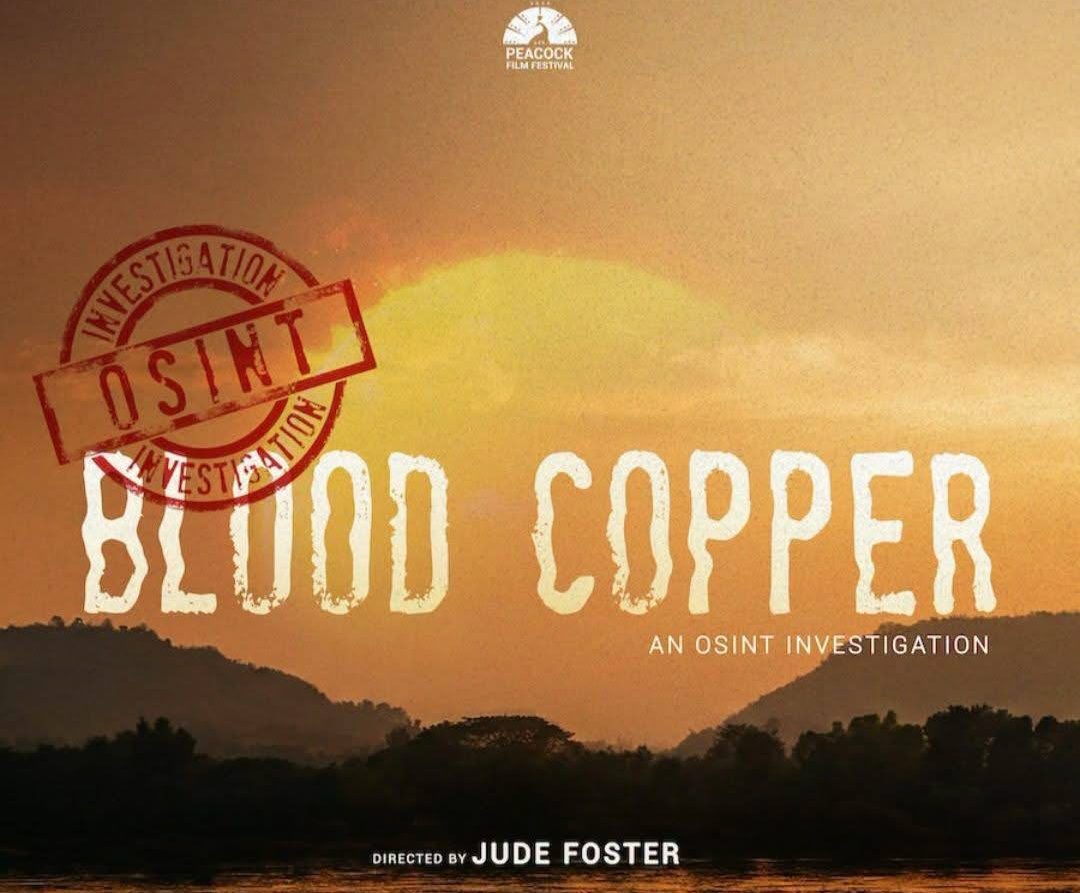
The Thai government rejected a direct request from the Chinese Embassy in Bangkok to block the screening of a documentary detailing severe human rights abuses linked to a Chinese-backed copper mine in Myanmar, press freedom advocates and prominent journalists confirmed this week. The diplomatic friction centered on the June 15 screening of Blood Copper at the Foreign Correspondents’ Club of Thailand (FCCT). The documentary, produced by DVB in collaboration with the investigative group Myanmar Witness, uses open-source intelligence (OSINT) to detail how Myanmar military forces have violently cleared villages in Sagaing Region to expand the Letpadaung Copper Mine. According to sources, the Chinese Embassy explicitly pressured the Thai Ministry of Foreign Affairs to cancel the event. The Thai government ultimately declined to intervene, allowing the screening and panel discussion to proceed. Pravit Rojanaphruk, a prominent Thai journalist and senior staff writer for Khaosod English, verified the incident, describing it as a “behind-the-scenes” display of heroism by Thai officials. “The censorship attempt ultimately failed,” Rojanaphruk wrote on July 15. “This ‘behind-the-scenes’ record serves as a stark reminder of the ongoing threats to press freedom and freedom of expression and attempts to impose a Chinese media-censorship model on Thai media.” Phil Robertson, director of Asia Human Rights and Labor Advocates (AHRLA) and a board member of the FCCT, characterized the embassy’s actions as part of an “accelerating campaign of transnational censorship and repression” that disregards Thai sovereignty. “Over the past several weeks, we’ve seen the Chinese Embassy in Bangkok blatantly act to undermine media freedom in Thailand by seeking to censor this FCCT program, and then later by making menacing calls to media outlets,” Robertson said, referring to recent reports of embassy officials intimidating journalists who covered protests outside Chinese diplomatic missions. “Fortunately, the Thai MFA pushed back against this brazen Chinese government campaign by declining to take action,” Robertson added. A lucrative and deadly enterprise The Letpadaung mining complex, located in Sagaing’s Salingyi Township, is a highly controversial joint venture between the Union of Myanmar Economic Holdings (UMEHL)—a military conglomerate—and Wanbao Mining, a subsidiary of the Chinese state-owned defense corporation Norinco. For years, local communities have staged massive protests against land confiscation and severe environmental pollution linked to the site. Since the military seized power in a coup on Feb. 1, 2021, the area has become a fierce conflict zone. Blood Copper utilizes satellite imagery, geolocation, and verified digital forensics gathered at significant risk by citizens on the ground. The film’s OSINT analysis proves that regime forces stationed at the mine are systematically attacking surrounding communities to expand the mining footprint. The mine reportedly generates millions of dollars monthly, profits that rights groups argue flow directly into the military’s coffers to sustain its nationwide war against resistance forces. Jude Foster, the director of Blood Copper, stated that Beijing’s push to silence the film exposes a deep sensitivity regarding the complicity of its state-owned enterprises in the regime’s atrocities. “China’s pressure to stop the film screening is misplaced,” said Foster. “It should be stopping the Wanbao company’s collusion with the military regime and pressure it to honour its environmental and social responsibility commitments.” Defending press freedom The failed censorship attempt highlights the precarious environment for journalists operating in Southeast Asia, but also marks a significant defense of free expression by Thai authorities in the face of pressure from Beijing. “The attack on Blood Copper also shows just how sensitive China is to the Burmese people’s massive opposition to the Letpadaung mining project,” Robertson noted. “The bottom line is China and its government-controlled companies are running amok in Myanmar, causing immense damage, but Beijing wants to hide that fact.” The film’s creators emphasized that establishing a verified, evidence-based historical record is critical for future accountability, a task made possible only when platforms like the FCCT are protected from foreign interference. “Our responsibility is to tell stories with integrity and allow audiences to engage with important issues through evidence and lived experiences,” said Chan Chan, the producer of the film and organizer of the DVB Peacock Film Festival. “Freedom of expression and the press cannot just be arbitrarily wiped out in Thailand the same way it is done in China,” she added

0

Original source

DVB

原文を読む