Vietnam Lowers Fuel Prices Amid Global Market Fluctuations
Economy
2026年8月7日
3
Nhan Dan
Relations
🇻🇳Vietnam🇨🇳China

General articles are free for 24 hours after publish.

Vietnam Lowers Fuel Prices Amid Global Market Fluctuations

Share
AI Summary

Vietnam adjusted retail prices for gasoline and petroleum products downwards on August 6th, aligning with global market trends. The impact on households and businesses is expected to be limited.

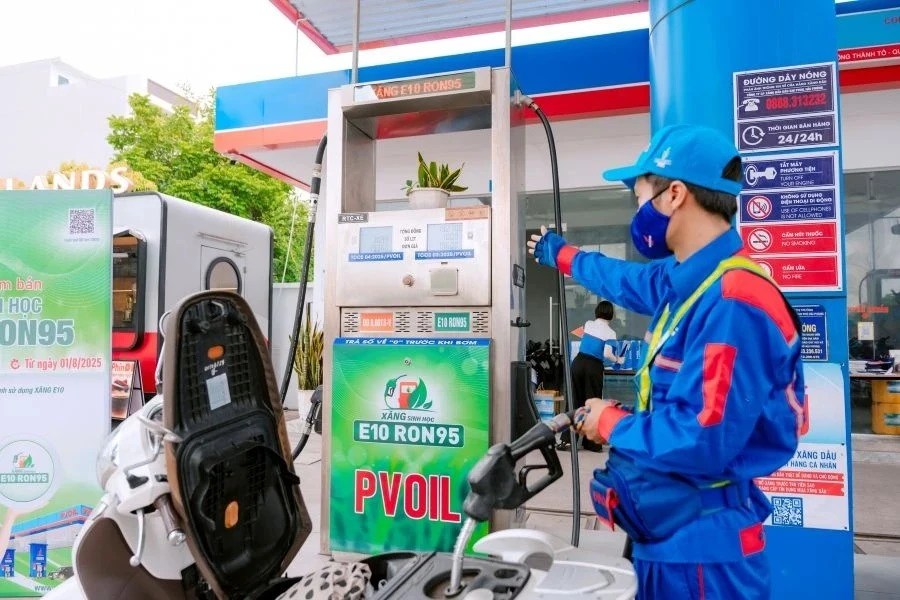
In the latest price adjustment on August 6th, Vietnam has lowered the retail prices of gasoline and some petroleum products. This move, implemented by the Ministry of Industry and Trade and the Ministry of Finance, aligns domestic prices with global market fluctuations. Specifically, E5 RON92 gasoline will see a reduction of 660 VND per liter, while E10 RON95-III gasoline will be reduced by 535 VND per liter. Other petroleum products, such as diesel, also continue to decrease in price compared to the previous adjustment period. This price adjustment was carried out in accordance with Decision No. 1987/QD-BCT dated August 6, 2026, from the Minister of Industry and Trade, concerning the application of measures using the petroleum price stabilization fund. The aim is to ensure domestic prices closely follow global market developments while harmonizing the interests of the state, businesses, and consumers. The stabilization fund saw a contribution of 200 VND per liter for bio-gasoline, while no contributions were made for diesel and fuel oil. Following the adjustment, the maximum retail prices for commonly used petroleum products in the market are as follows: * E5 RON92 gasoline: not exceeding 21,728 VND/liter, a decrease of 660 VND/liter. * E10 RON95-III gasoline: not exceeding 22,324 VND/liter, a decrease of 535 VND/liter. * Diesel 0.05S: not exceeding 27,544 VND/liter, a decrease of 80 VND/liter. * Fuel oil 180CST 3.5S: not exceeding 16,391 VND/kg, a decrease of 87 VND/kg. These prices are to be applied by petroleum trading and distributing businesses no later than 3 PM on August 6, 2026, in accordance with current regulations. Under Vietnam's one-party system, the government maintains strict control over key economic sectors, including energy pricing. This recent reduction in fuel costs reflects global trends in crude oil prices and could offer some relief to household budgets. However, Vietnam's economy remains export-driven and susceptible to global supply chain dynamics and international demand. Balancing economic growth with price stability, especially amidst its complex relationship with China, continues to be a key challenge for the government.

0

Original source

Nhan Dan

原文を読む