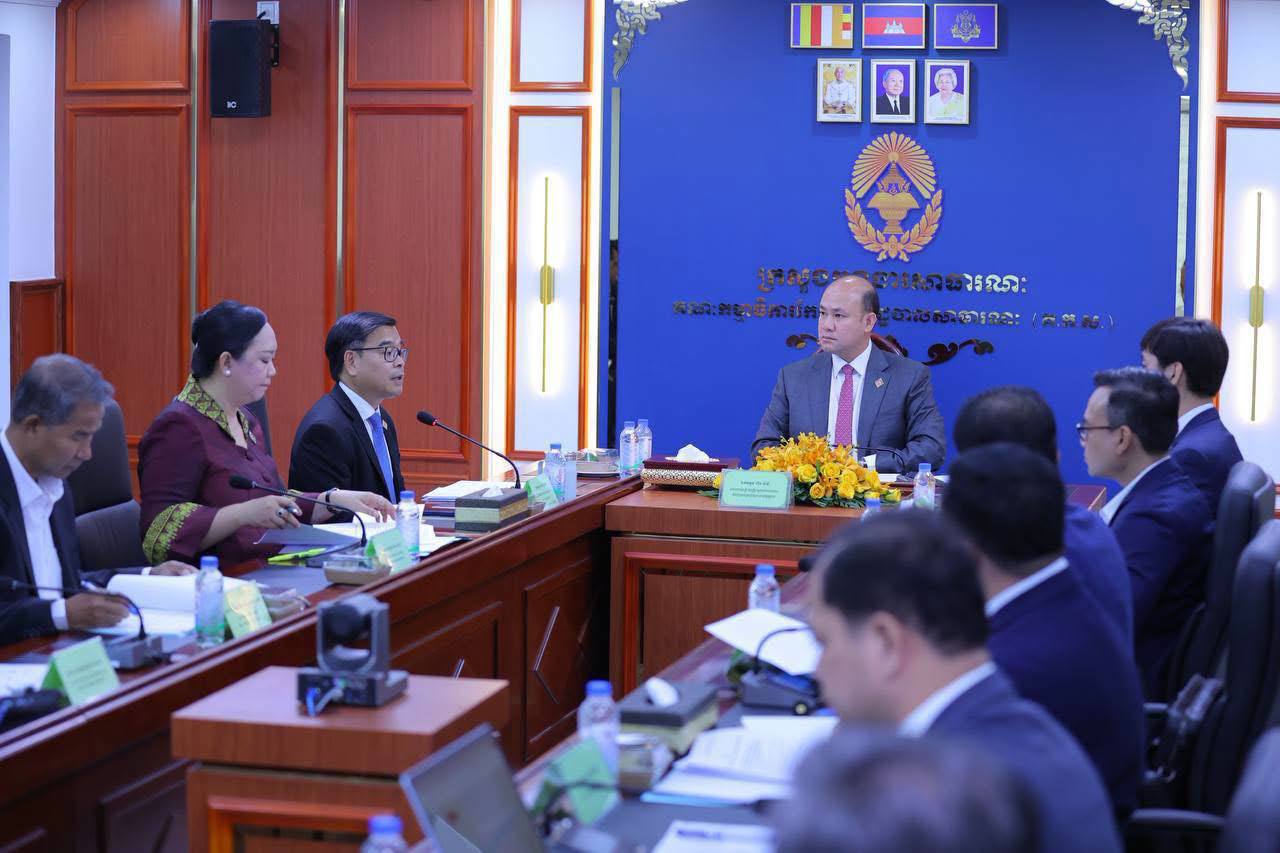
Cambodia's Institute of Administration Holds Reform Meeting to Enhance Civil Servant Training
Politics
2026年7月7日
4
CPP Cambodia
Relations
🇰🇭Cambodia🇻🇳Vietnam

Cambodia's Institute of Administration Holds Reform Meeting to Enhance Civil Servant Training

AI サマリー

Cambodia's Institute of Administration convened a reform meeting chaired by Deputy Prime Minister Hun Many. Key agenda items included organizational reforms, selection of future senior and mid-level officials, and updates to training programs, aiming to enhance public service quality and human capital development.

Cambodia's Institute of Administration (SAPA) held a significant meeting on July 7, 2026, chaired by Deputy Prime Minister and Minister of Civil Service, Hun Many, who also serves as the Chairman of the Institute's Council. The meeting was attended by Yuk Bunna, Secretary of State of the Ministry of Civil Service, the Director of the Institute of Administration, and numerous relevant officials. During the session, a summary of key tasks and the progress of the Institute of Administration's work was presented. The agenda included: (1) a draft Royal Decree on the amendment of the Royal Decree on the organization and functioning of the Institute of Administration; (2) a draft Sub-Decree on the amendment of the Sub-Decree on the Statute of the Institute of Administration; (3) a proposal for the selection of the 14th batch of Senior Civil Servant candidates and the 13th batch of Secretary candidates; and (4) a proposal for the selection of interns for the 2027 Senior and Mid-level Official Training Courses. Additionally, discussions covered the organization of the closing ceremony for the 2025 training courses and the opening ceremony for the 2026 training courses, along with other miscellaneous matters. Deputy Prime Minister Hun Many stated that the meeting of the Institute of Administration's Council is crucial for reviewing and monitoring the progress of work, exchanging views, and setting development directions in line with evolving contexts. He reiterated the Institute's role in training selected civil servant candidates and trainees, enhancing their knowledge, skills, attitudes, and professional ethics to strengthen human capital development for public administration and ensure efficient service delivery to the citizens. This initiative underscores Cambodia's commitment to professionalizing its bureaucracy and supporting national development.

多角的分析

経済的影響

行政大学院の改革は、公共サービス提供の効率化と行政能力の向上を通じて、長期的にカンボジア経済の安定と成長に寄与すると考えられます。優秀な人材育成は、投資環境の改善や汚職の削減にも繋がり、経済発展の基盤強化に不可欠です。過去の事例でも、行政能力の高い国は、より持続的な経済成長を達成する傾向があります。

投資家心理

行政改革による官僚の質向上は、投資家にとって予測可能性と透明性の向上を意味します。法制度の整備や手続きの円滑化が進めば、ビジネスリスクが低減し、海外からの直接投資(FDI)を呼び込む上で有利に働くでしょう。特に、インフラ開発や経済特区など、政府の関与が大きい分野での投資判断に影響を与えます。

社会的影響

行政大学院の研修プログラムの刷新は、国民への公共サービス提供の質に直接影響します。より専門的で倫理観の高い公務員が育成されれば、市民はより迅速かつ公正な行政サービスを受けられるようになります。これは、市民の政府に対する信頼を高め、社会全体の満足度向上に繋がる可能性があります。一方で、選抜プロセスにおける公平性や、研修内容が現場の実情に合っているかどうかが課題となるでしょう。

市民の声

今回の会議で議題となった、上級行政官候補生や書記官候補生の選抜、研修プログラムの改訂は、カンボジア国民が日常的に接する行政サービスの質に直接関わります。例えば、免許の発行、税金の申告、公共施設の利用など、市民生活のあらゆる場面で公務員の対応が影響します。より質の高い研修を受けた公務員は、市民の問い合わせに的確に対応し、手続きを迅速に進めることが期待されます。これは、市民の行政に対する不満を軽減し、生活の利便性を向上させることに繋がるでしょう。また、研修内容に倫理教育が含まれることは、汚職の削減や、より公正な行政運営への期待を高めます。

背景・歴史的文脈

カンボジアの行政大学院(SAPA)は、1979年のベトナム軍侵攻後の混乱期を経て、1990年代初頭に再建された公務員養成機関です。当初は限られたリソースの中で、国の再建を担う人材育成に注力しました。近年の経済発展と国際社会との関わり深化に伴い、より専門的で国際基準に適合した行政官の育成が求められるようになり、組織改革やカリキュラムの見直しが継続的に行われています。特に、フン・マネット政権下では、行政の効率化と透明性向上を重視する姿勢が鮮明になっており、今回の会議はその一環として位置づけられます。

原文ソース

CPP Cambodia

原文を読む