Indonesia Enters Regenerative Medicine Era as BPOM Encourages Stem Cell Therapy Development
Business
2026年7月5日
5
Detik

Indonesia Enters Regenerative Medicine Era as BPOM Encourages Stem Cell Therapy Development

AI サマリー

Indonesia's National Agency of Drug and Food Control (BPOM) has expressed its commitment to advancing regenerative medicine, particularly stem cell therapy. This move signals Indonesia's ambition to bolster its competitiveness in precision medicine and biotechnology on the global stage.

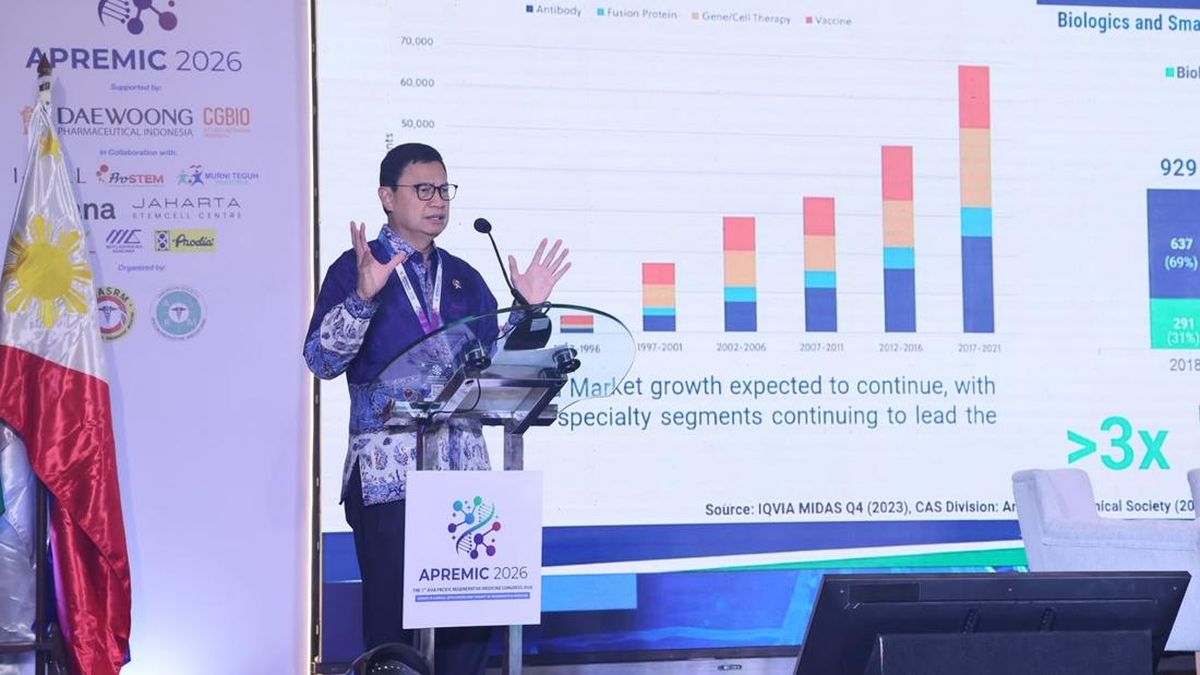
The National Agency of Drug and Food Control (BPOM) of Indonesia is actively encouraging the development of regenerative medicine, particularly focusing on stem cell therapy. This initiative signifies Indonesia's ambition to transition from modern medicine heavily reliant on chemical drugs to regenerative therapies such as stem cell, gene, and tissue engineering, which are capable of addressing the root causes of diseases at the molecular level. Prof. Taruna Ikrar, Head of BPOM, emphasized the importance of translating research findings into societal benefits during his presentation at the Asian Pacific Regenerative Medicine Congress (APREMC) 2026. He stated that the true value of innovation lies not just in scientific discoveries or laboratory outcomes, but in its ability to be developed into safe, effective, high-quality therapies accessible to the wider public. Ikrar highlighted that introducing stem cell therapy into healthcare services requires close synergy between researchers, the pharmaceutical industry, regulatory bodies, healthcare professionals, and the government. Internationally, thousands of gene, RNA, and cell-based therapy candidates are undergoing various stages of research and development, with some products already approved in different countries, marking the dawn of a new era in more precise healthcare supported by advanced technology. This presents a significant opportunity for Indonesia to strengthen its capacity in health biotechnology and enhance the competitiveness of its national pharmaceutical industry. However, the primary challenge in developing stem cell therapy is not merely discovering new technologies, but ensuring they can be consistently produced according to international standards before being administered to patients. Every innovation must undergo a lengthy process, from basic research, preclinical testing, clinical trials, production adhering to Good Manufacturing Practice (GMP) standards, regulatory evaluation, to post-market surveillance. Stem cell-based therapies are considerably more complex than conventional drugs, requiring strict oversight of aspects such as biological variation, cell purity, dosage determination, and traceability of raw material origins to guarantee product safety. BPOM is strengthening regulations for Advanced Therapy Medicinal Products (ATMPs), including stem cell, gene, and tissue engineering therapies, by referencing various international standards to align Indonesia's oversight system with global practices. Ikrar asserted that the regulator's role is not to hinder innovation but to ensure that all health technologies can be utilized by the public without compromising safety and quality. He also encouraged the adoption of the Academia-Business-Government (ABG) collaboration model, where universities generate research and human resources, industry develops production and commercialization, and the government provides support through regulations and oversight systems. This synergy aims to ensure research outcomes evolve into health products that provide tangible benefits to society, rather than remaining mere academic works. Indonesia is showing progress in building an ecosystem for modern therapies. Several stem cell processing facilities have obtained GMP certification, numerous laboratories are receiving guidance from BPOM, and various collaborations between universities, the pharmaceutical industry, and the government are yielding innovations ready for the next stages. Ikrar noted that while scientific discoveries initiate hope, GMP standards ensure quality consistency, and public trust is built through robust clinical evidence and post-market surveillance. The future of stem cell therapy hinges on the ability to transform research findings into safe, high-quality, effective, and accessible health products. Beyond technological advancement, it is crucial to ensure these innovations genuinely improve quality of life, save more patients, and strengthen Indonesia's position in the global health biotechnology landscape. Source: Detik

多角的分析

経済的影響

インドネシア政府は、幹細胞治療を含む再生医療分野への投資を奨励することで、高付加価値産業の育成と健康バイオテクノロジー分野での国際競争力強化を目指している。これは、長期的に国の経済成長を牽引し、医薬品輸入依存からの脱却に貢献する可能性がある。しかし、初期投資の大きさ、高度な専門人材の育成、そして国際基準を満たす製造体制の構築には、依然として大きな課題が残る。これらの課題を克服できれば、新たな雇用創起と輸出機会の拡大につながるだろう。

投資家心理

幹細胞治療分野への投資は、高い成長ポテンシャルを秘めているものの、同時に高いリスクも伴う。開発には長期間と巨額の資金が必要であり、規制当局の承認プロセスも複雑である。インドネシア国内でGMP基準を満たす製造施設や、高度な研究開発能力を持つ企業はまだ限られているため、投資家は慎重なデューデリジェンスが求められる。国際的な大手製薬会社やバイオテクノロジー企業との提携、あるいは政府からの支援策の有無が、投資判断の重要な要素となるだろう。

社会的影響

再生医療の発展は、これまで治療が困難であった疾患に対する新たな希望をもたらす可能性がある。しかし、高額な治療費が一部の富裕層に限定され、国民皆保険制度への適用が遅れる場合、医療格差が拡大する懸念がある。また、幹細胞の倫理的な問題や、偽医療・詐欺的な治療法への注意喚起も重要となる。国民が安全かつ公平に最新医療の恩恵を受けられるような、包括的な政策と情報提供が求められる。

市民の声

幹細胞治療の開発は、これまで有効な治療法がなかった難病に苦しむ患者とその家族にとって、大きな希望の光となる。しかし、治療が保険適用されるのか、自己負担額はどの程度になるのか、といった具体的な情報はまだ少ない。地方に住む人々が、都市部と同等の最新医療にアクセスできるのかという懸念もある。国民としては、BPOMによる厳格な品質管理と、治療費に関する透明性の高い情報公開を期待したい。

背景・歴史的文脈

インドネシアにおける再生医療、特に幹細胞治療の開発は、世界的な医療技術の進歩と、国内の医療サービス向上への強いニーズから生まれている。2020年代に入り、バイオテクノロジーの急速な発展は、それまで治療が困難であった疾患に対する新たな可能性を開いた。インドネシア政府は、国民の健康増進と医療分野での国際競争力強化を目指し、バイオテクノロジー、特に医薬品開発への投資を拡大してきた。BPOM(食品医薬品監督庁)は、国内外の規制基準に準拠した医薬品・医療機器の承認と監視を担う中核機関であり、再生医療分野の発展においては、革新的な技術を安全かつ効果的に国民へ提供するための規制枠組みの整備が急務となっている。過去には、医薬品の品質管理や偽医薬品の問題も指摘されており、BPOMの役割はますます重要になっている。

原文ソース

Detik

原文を読む