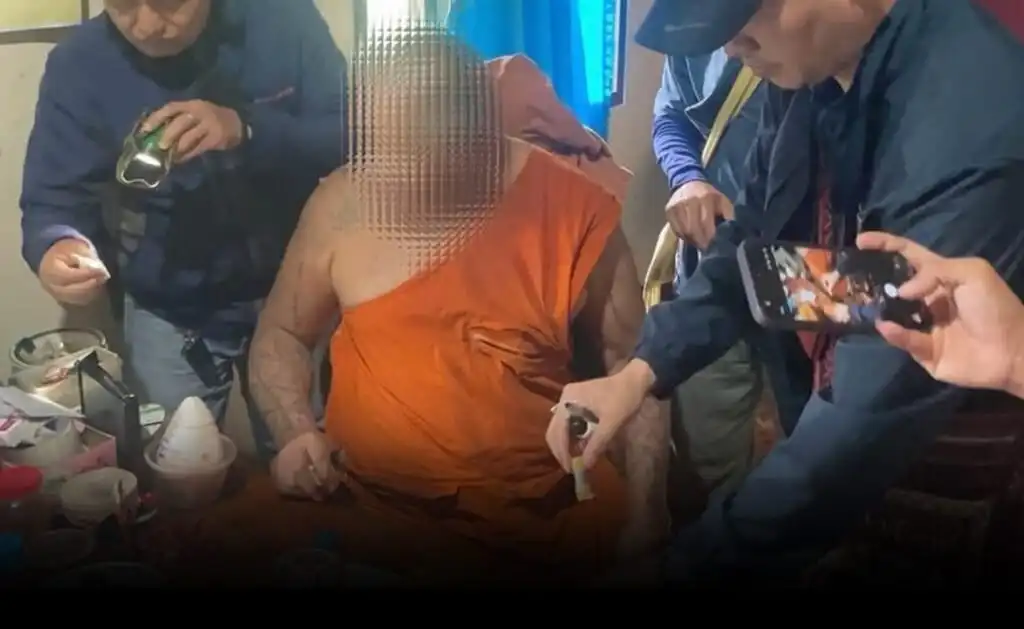
Mae Hong Son Temple Abbot Arrested for Heroin Use Following Resident Complaints
In Mae Hong Son province, Thailand, a temple abbot suspected of drug use has been arrested. Following tip-offs from residents, security forces raided the temple, discovering heroin. The abbot was defrocked before being formally taken into custody.
MAE HONG SON – A significant joint operation unfolded on July 9 in the Pang Mapha district of Thailand’s northern Mae Hong Son province, leading to the arrest of a prominent temple abbot suspected of drug use. The investigation was prompted by numerous complaints from local residents. Villagers had long expressed concerns over the abbot's suspicious behavior, strongly suspecting his involvement with dangerous illegal drugs. These rumors had deeply affected the faith of Buddhists in the close-knit community. The raid involved a large, coordinated team comprising Pang Mapha Police, Border Patrol Police Company 336, soldiers from the 722nd Infantry Company, and district officials. The joint task force searched the temple premises and discovered a quantity of heroin, a strictly controlled Category 1 narcotic, which was seized as evidence. Following the discovery, authorities detained the abbot for questioning. Due to his status as a monk, a normal arrest was not immediately possible. A formal defrocking ceremony was conducted to strip him of his religious status. After this ritual, the former abbot was handed over to the police and officially arrested at the local police station. The suspect now faces serious criminal charges under Thai law for the illegal possession of narcotics. Local authorities have pledged to prosecute the case to the fullest extent of the law. Pang Mapha is a quiet district located near the national border, and such remote northern areas often grapple with illegal drug smuggling. The local government consistently relies on tips from citizens to combat this crime. Community members expressed relief that their urgent complaints were heeded. Restoring peace and trust in local temples remains a top priority. The police plan to continue strict patrols to ensure the community's safety from drugs. Information Source: Chiang Rai Times
多角的分析
この事件は直接的な経済的影響は小さいものの、薬物問題が地域経済、特に観光業に悪影響を与える可能性を示唆している。メーホンソン県は風光明媚な地域であり、治安の悪化は観光客の減少を招きかねない。また、薬物密輸ルートとなっている可能性のある国境地域での治安維持コストの増加も考えられる。
このニュース自体が直接的な投資リスクを示すものではないが、タイの地方部における法執行の有効性や、宗教施設が関わる犯罪への対応能力を示す事例となりうる。投資家は、タイ全体の治安状況や、特に国境地域におけるリスク要因を評価する際に、このような事件を参考にする可能性がある。
住民からの通報が事件解決の鍵となった点は、地域社会の治安維持への関与と、当局への信頼の重要性を示している。しかし、寺院の住職が薬物に関与していたという事実は、地域住民の信仰心やコミュニティの結束に深い傷を与えたと考えられる。特に、地方の小規模コミュニティでは、寺院は精神的な支柱であり、その権威の失墜は住民の不安を増大させるだろう。
メーホンソン県パンマップハー地区の住民は、長らく住職の不審な行動に不安を感じていた。彼らが勇気を持って通報したことで、薬物問題が明るみに出て、地域社会の安全が守られる一歩となった。しかし、信頼していた宗教指導者が薬物に関与していたという事実は、住民にとって大きな衝撃であり、今後の地域社会の再建と信頼回復が課題となる。
背景・歴史的文脈
タイ北部、特にメーホンソン県のような国境地帯は、歴史的にラオス、ミャンマー、中国のゴールデントライアングル地域と隣接しており、古くからアヘンや覚醒剤などの違法薬物の密造・密輸ルートとなってきた。冷戦時代には、反共勢力の資金源ともなった薬物問題は、タイ政府にとって長年の課題である。近年は、より強力な合成覚醒剤(ヤーバーやアイス)の流通が問題となっており、国境警備の強化と地域住民との連携が、薬物撲滅の鍵となっている。
原文ソース
Chiang Rai Times