General articles are free for 24 hours after publish.
Vietnam's Next Manufacturing Chapter: Shifting from Green to High Value-Added
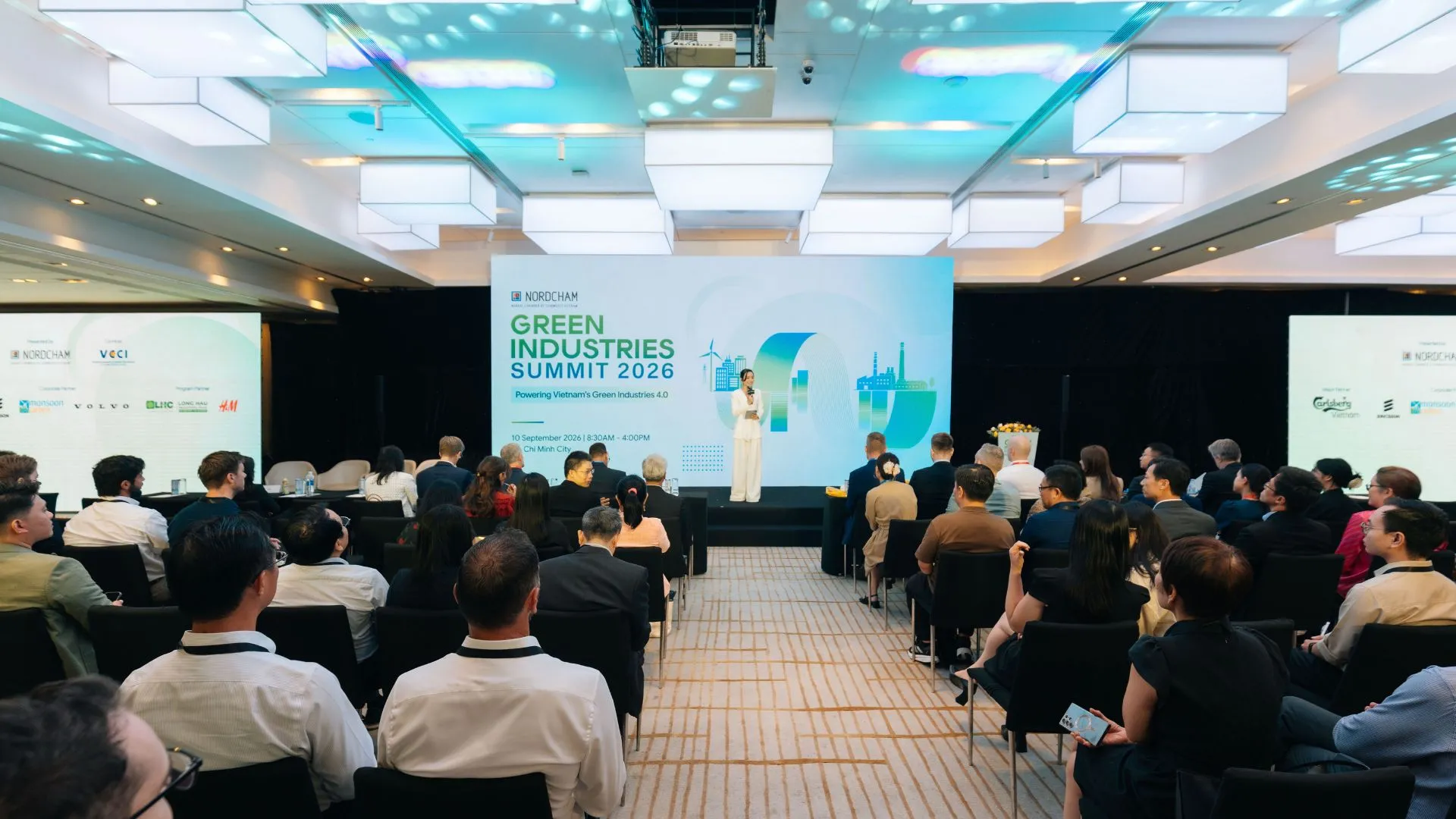
The "Green Industries Summit 2026" in Vietnam focused on enhancing manufacturing competitiveness through renewable energy, smart manufacturing, and digital transformation. The discussion highlighted a shift from being a mere production base to developing advanced engineering and deeper supply chains.
Vietnam's manufacturing sector is poised for a significant evolution, moving beyond its current role as a production hub. The "Green Industries Summit 2026," co-hosted by NordCham Vietnam and the Vietnam Chamber of Commerce and Industry (VCCI), brought together business leaders, policymakers, and industry experts to chart a course for enhancing the nation's industrial competitiveness. Major international companies, including LEGO, H&M Group, Ericsson, Carlsberg, ABB, and Vestas, participated, delving into critical areas such as renewable energy, smart manufacturing, automation, digitalization, circular economy principles, and the development of robust industrial ecosystems. The summit's discussions underscored a fundamental shift in Vietnam's manufacturing landscape: sustainability is increasingly viewed not as a separate corporate agenda, but as an integral component of overall competitiveness. Vietnam's manufacturing and processing sector has demonstrated robust growth, expanding by 9.97% in 2025, its strongest rate since 2019, solidifying its position as a cornerstone of the national economy. As this sector grows, so does the imperative for energy efficiency, effective emissions management, and access to cleaner energy sources. For companies operating in global markets, these environmental and energy considerations are becoming crucial factors in evaluating production locations and suppliers. This green transition intersects directly with the broader challenge of industrial competitiveness: how can Vietnam expand its manufacturing base while simultaneously making it more efficient, resilient, and sustainable? The summit discussions highlighted Vietnam's decade-long effort to establish itself as an alternative manufacturing base within global supply chains. The next frontier is to deepen this position by moving beyond sheer factory capacity to focus on surrounding capabilities. This includes fostering stronger local suppliers, enhancing engineering expertise, developing specialized component manufacturing, cultivating technical skills, and improving production management and traceability. This is precisely where sustainability and digitalization converge with manufacturing competitiveness. A more interconnected and efficient industrial ecosystem can significantly boost productivity while enabling companies to meet increasingly stringent international demands. Industry leaders emphasized that Vietnam is transitioning from being a mere "China+1" destination to developing a more complete industrial ecosystem. The focus is shifting from simply increasing factory numbers to capturing greater value per product manufactured, which involves more engineering, local component production, and the accumulation of design and industrial know-how. Manufacturing competitiveness, it was argued, is an outcome of the entire ecosystem, not just individual factories. Discussions also addressed automation and digitalization, with a consensus that technology adoption should be driven by the need to solve specific operational problems, such as reducing rejection rates, improving machine utilization, shortening lead times, strengthening traceability, or cutting energy consumption. The summit collectively pointed to a broader challenge: Vietnam must transition from attracting manufacturing to upgrading it. This necessitates deepening domestic supply chains, bolstering technical and management capabilities, improving infrastructure, enhancing production efficiency, and expanding access to sustainable energy. While technology can accelerate this transition, industrial capabilities and skilled human capital remain paramount. Developing the engineers, technicians, and managers required to operate, integrate, and continuously improve increasingly sophisticated manufacturing systems is a long-term endeavor. Having already proven its ability to attract foreign manufacturing investment, Vietnam's next crucial step is to continuously upgrade the processes that follow investment, building a deeper industrial ecosystem that generates more value, enhances resilience, and supports sustainable growth towards 2030. CONTRIBUTOR | Guillaume Rondan ([email protected]) is a French entrepreneur living in Vietnam for 9 years. He founded MoveToAsia supporting SMEs, business owners, and international buyers looking to capture opportunities in Asia, with a strong focus on Vietnam. We deliver end-to-end sourcing solutions through an international team of sourcing analysts and technical experts (covering supplier identification, product development, and quality control) for a fully turnkey approach.
Original source
Vietnam Insider