General articles are free for 24 hours after publish.
Bu Gia Map National Park: A Beacon of Hope for Wildlife Rescue and Rehabilitation
The Bu Gia Map National Park's wildlife rescue center in Dong Nai province serves as a crucial hub for rehabilitating and reintroducing rescued animals. In 2026, the center handled 60 intake operations and seven release events, with growing public awareness supporting conservation efforts.
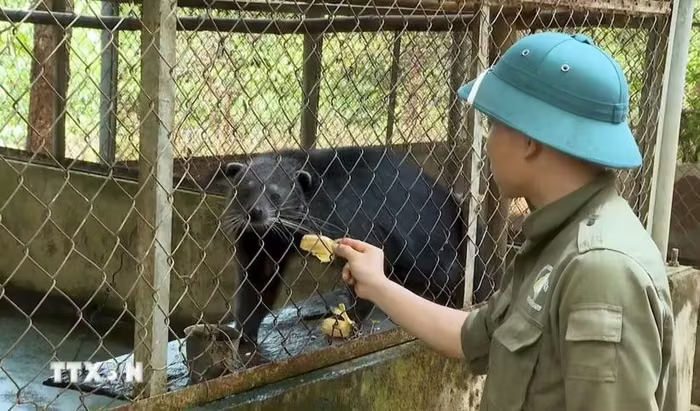
Deep within the vast forests of Bu Gia Map in Dong Nai, the Center for Tourism Promotion, Rescue, and Conservation of Bu Gia Map National Park serves as a haven for rehabilitating and reintroducing rescued wild animals into the wild. Every successful rescue not only saves an individual life, but also helps sustain wild populations, protect genetic biodiversity, and restore the forest ecosystem. Inside the center’s semi-wild enclosures, various wildlife species undergo regular veterinary monitoring, nutrition rehabilitation, and behavioral conditioning to rebuild their natural survival skills. Each animal arrives with a distinct history: some suffer from snare wounds, others were seized by law enforcement from illegal wildlife holding facilities, and many have lost their survival instincts after years in captivity. According to rescue specialists, treating physical injuries is only the first step. To ensure an animal is fit for release, caretakers must restore its physical endurance, re-train its foraging abilities, and test its ability to adapt to natural conditions. Hoang Anh Tuan, Deputy Director of Bu Gia Map National Park, emphasized that wildlife rescue—especially of rare and endangered species—plays a vital role in the national park’s conservation mission. “Successfully rescuing a wild animal means more than saving a single life; it helps sustain wild populations, preserves valuable genetic resources, and restores ecological balance,” Tuan shared. Two otters are cared for and rehabilitated at the Center for Tourism Promotion, Rescue, and Conservation of Bu Gia Map National Park, Dong Nai. (Photo: Dau Tat Thanh/VNA) Once fully recovered, eligible animals are evaluated by the center in coordination with competent authorities to select suitable, secure wilderness locations for their release back into the forest. Alongside active rescue operations, public awareness surrounding wildlife protection has improved significantly. In numerous instances, local residents who encountered stray or injured wild animals in residential areas proactively alerted local authorities and specialized units to ensure safe handovers, medical care, and proper release. Tran Van Truong, Deputy Director of the Wildlife Rescue Center at Bu Gia Map National Park, noted encouraging trends in community engagement. The public increasingly recognizes the significance of conservation and voluntarily surrenders wildlife to authorities rather than keeping animals as domestic pets. According to Truong, during 2026, the center completed 60 intake operations involving more than 70 wild animals and organized seven release events to return over 20 individuals to the wild. In the first half of 2026 alone, the center received 88 wildlife individuals for emergency rescue and care. Behind these achievements lies the dedication of the center’s rescue and veterinary staff. The work demands comprehensive zoological knowledge and rigorous, continuous observation—from tailored nutritional regimens and disease treatment to endurance rehabilitation and pre-release adaptability assessments. Community support has also grown, with volunteers, youth groups, students, and local families actively participating. Truong noted that public involvement provides essential operational support while spreading conservation awareness to younger generations. “We are delighted to welcome volunteers, young people, students, and families from across the country who come to support wildlife rescue work. You not only provide hands-on help, but also inspire younger and future generations to value wildlife protection,” Truong said. In the center’s semi-wild enclosures, various wildlife species receive dedicated care, health monitoring, and training to rebuild their adaptability to natural habitats. (Photo: Dau Tat Thanh/VNA) Since its establishment, the Wildlife Rescue Center at Bu Gia Map National Park has rescued, treated, and released thousands of wild animals back into nature. Each successful release grants an animal a renewed opportunity to survive, reproduce, and support forest biodiversity. Nevertheless, not every animal can be promptly reintroduced. Those suffering from severe trauma, deep physical exhaustion, or prolonged domestic confinement require extended rehabilitation periods. Some individuals that have permanently lost wild foraging or predator-avoidance skills remain under permanent sanctuary care. Throughout these challenges, the rescue teams remain dedicated to their mission. For them, rehabilitating each wild animal preserves a vital link in the ecological web and safeguards natural heritage for future generations. From semi-wild enclosures nestled in the Bu Gia Map wilderness, the road back to the canopy can take months or even years. Yet when a healthy animal steps back into its native forest, every effort is rewarded, steadily bringing life and balance back to the green canopy. (Source: Vietnamplus)
Original source
Vietnam Insider