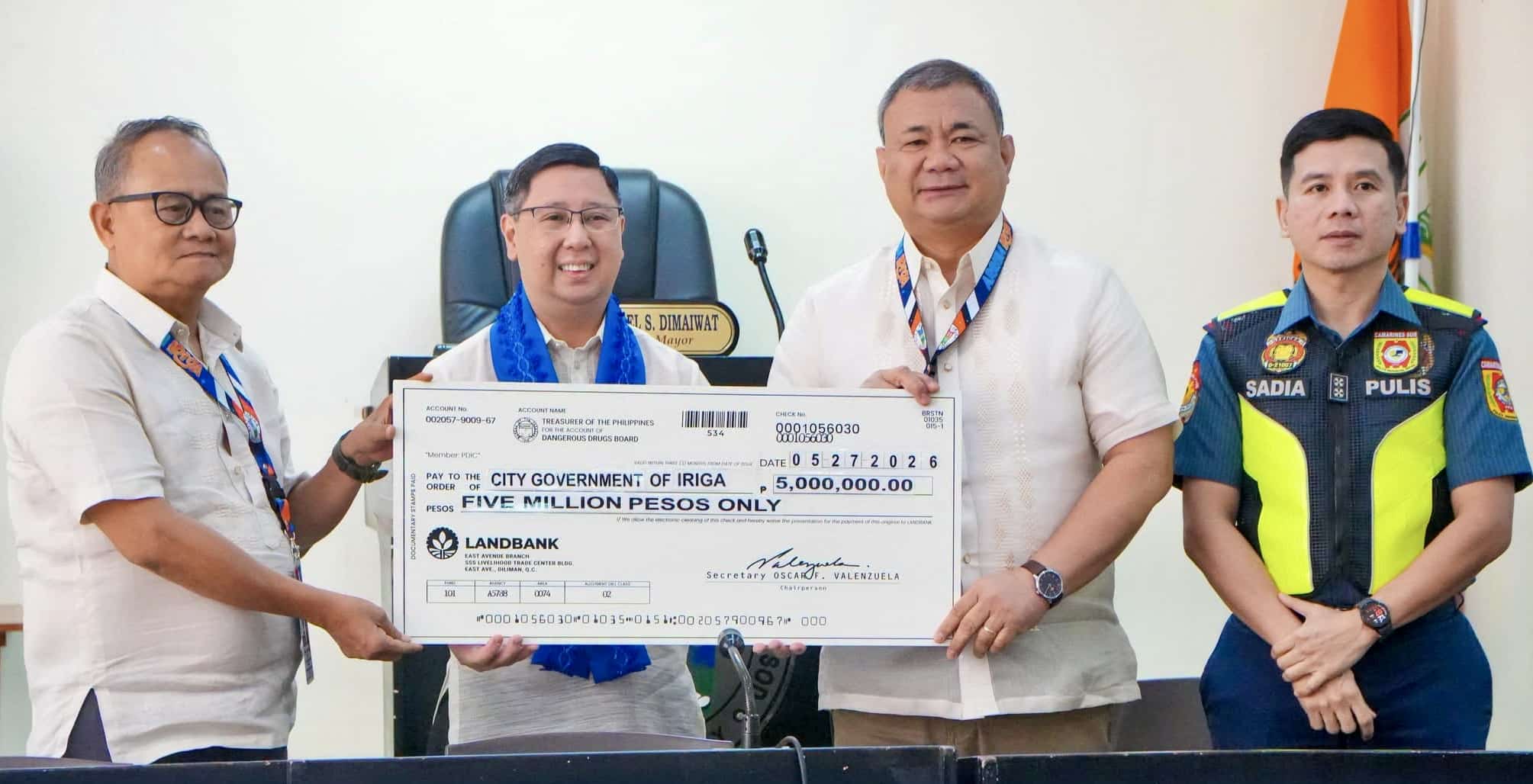
Iriga City to Get First Community Drug Rehab Center with P5M DDB Grant
Iriga City in Camarines Sur, Philippines, has received a P5 million grant from the Dangerous Drugs Board (DDB) for the construction of its first community-based drug rehabilitation center. The facility emphasizes a health-centered approach, addressing root causes like poverty and trauma.
IRIGA CITY, Camarines Sur — The Dangerous Drugs Board (DDB) has given the city government of Iriga P5 million for the construction of its first community-based drug rehabilitation center. The facility will rise at the New Government Center 2 in Barangay Sta. Elena. DDB Executive Director Earl P. Saavedra personally turned over the check to Mayor Rex C. Oliva during a ceremony at the Sangguniang Panlungsod Session Hall on Monday. READ: Marcos admin eyes drug rehab facility per province by 2028 Saavedra said the agency continues to promote a health-centered approach to addressing illegal drug use, stressing that drug dependence is “a chronic relapsing mental health condition” that requires rehabilitation and sustained community support rather than a purely peace-and-order response. He said effective rehabilitation must include relapse prevention by addressing the root causes of substance use, such as poverty, trauma, and other social factors. He added that the facility could also be used for advocacy, prevention education, and community mobilization when it is not being utilized for rehabilitation services. Oliva thanked the DDB for the grant, saying the project would establish what is expected to be the first community-based drug rehabilitation center in the Rinconada area, and possibly in Camarines Sur. “We assure the DDB that the P5 million will be utilized with utmost transparency, accountability, and efficiency,” Oliva said, adding that the city remains committed to providing compassionate, evidence-based, and holistic rehabilitation services for residents affected by substance use. City administrator Ramon Maharlika C. Oaferina II said the rehabilitation center will complement existing anti-drug initiatives, including mandatory drug testing for city government employees and job applicants, the operation of a Balay Silangan facility, law enforcement efforts by the Iriga City Police Station, and livelihood programs for recovering persons./coa
多角的分析
この補助金は、地域経済への直接的な影響は限定的であるものの、リハビリセンター建設および運営に伴う雇用創出や、回復者の社会復帰を促進することによる長期的な経済的貢献が期待される。薬物問題の根源である貧困や社会的不利へのアプローチは、地域社会の生産性向上に繋がる可能性がある。
直接的な投資機会は少ないが、薬物問題の改善は、地域社会の安定化と治安向上に寄与し、間接的に投資環境を改善する可能性がある。特に、地域経済の活性化や人的資本の向上に繋がるインフラ整備への投資は、長期的な視点で見れば魅力的となりうる。
イリガ市、特にリンコナダ地域における薬物依存問題は、地域社会の健康と安全に深刻な影響を与えている。このリハビリセンターは、地域住民が抱える薬物依存という個人的な苦しみだけでなく、貧困やトラウマといった社会的な要因にも目を向け、包括的な支援を提供する点で重要である。これにより、家族関係の修復や、地域社会への再統合が進むことが期待される。しかし、施設が不足している現状では、全ての依存症患者をカバーするには限界がある可能性も指摘されている。
イリガ市の市民、特に薬物依存に苦しむ本人やその家族にとって、この地域密着型リハビリセンターの開設は希望の光となる。これまで十分な支援を受けられなかった人々が、自宅から通える範囲で、専門的なケアや地域社会のサポートを受けられるようになることは、回復への大きな一歩となる。また、センターが予防教育や地域動員にも活用されることで、地域全体の薬物問題への意識向上と、より安全なコミュニティの実現に繋がるだろう。
背景・歴史的文脈
フィリピンでは、薬物乱用は長年にわたり深刻な社会問題とされてきた。特に2016年以降、当時のドゥテルテ政権下で強力な「麻薬戦争」が展開され、多くの逮捕者や犠牲者を出した。しかし、この強硬策は人権侵害への懸念を招き、根本的な薬物依存問題の解決には至らないとの批判も多かった。現在のマルコス政権は、より人道的で健康中心のアプローチへと転換を図っており、今回のDDBによる地域リハビリセンターへの補助金は、その政策の一環と見られる。過去の「麻薬戦争」で疲弊した地域社会において、地域主導での支援体制構築は、依存症からの回復と社会復帰を促進する新たな試みである。
原文ソース
Inquirer NewsInfo