General articles are free for 24 hours after publish.
Revilla Bail Highlights Judicial Hurdles in Prosecuting Top Officials
The granting of bail to former Senator Ramon Revilla, Jr. in a corruption case has highlighted the difficulty of prosecuting high-ranking officials, with analysts pointing to the challenge prosecutors face in directly linking political figures to schemes despite evidence of irregularities.
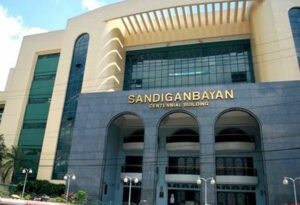
By Mark Joseph M. Sanchez THE Sandiganbayan’s decision to grant bail to former Senator Ramon “Bong” B. Revilla, Jr. in his malversation case has underscored the difficulty of prosecuting senior public officials in corruption cases, with analysts saying prosecutors often face the challenge of directly linking political figures to schemes despite evidence of irregularities. The anti-graft court’s Third Division on July 31 allowed Mr. Revilla to post a P1-million cash bond in his P92.8-million malversation case after ruling that the prosecution failed to establish that the evidence of his guilt was strong. His trial on graft and malversation charges involving an alleged “ghost” flood control project in Pandi, Bulacan will continue. The same resolution denied the bail petitions of several Public Works officials after finding strong evidence of guilt against them. Associate Justice Karl B. Miranda dissented from the majority’s decision to grant Mr. Revilla bail, saying the former senator’s role should be viewed within the broader practice inside the Department of Public Works and Highways. “To absolve a project proponent based on the ground that he did not personally participate in the disbursement process or in the falsification of the documents would unnecessarily fracture a single continuing scheme,” Mr. Miranda wrote in his dissent. The Office of the Ombudsman, which filed the charges against Mr. Revilla in January, said it respects the ruling but would continue pursuing the case. “We will exhaust all remedies to highlight the basis for which we can say that evidence of guilt is indeed strong against former Senator Ramon ‘Bong’ Revilla,” Assistant Ombudsman Jose Dominic “Mico” F. Clavano IV said in a statement. National Union of Peoples’ Lawyers President Ephraim B. Cortez said the ruling reflects a recurring challenge in corruption cases involving senior officials. “The challenge is proving the complicity of the politicians involved,” he said in a Viber message. “More often, they are the ones being absolved of criminal liability because they are not the ones directly disbursing or receiving the money.” He said accountability should not stop with lower-ranking officials who physically handle government funds, particularly in projects allegedly inserted into the national budget through political intervention. “This same principle should apply to the senators and bigger fish, since they should be accountable for the government funds allocated to them,” he said. Michael Henry Ll. Yusingco, a senior research fellow at the Ateneo Policy Center, said the outcome also reflects the demanding legal standard prosecutors must satisfy. “The evidentiary bar that must be met is very high — proof beyond reasonable doubt,” he said via Facebook Messenger. Mr. Yusingco added that proceedings before the Sandiganbayan present an added challenge because prosecutors must convince a collegiate court rather than a single judge. “They have to essentially argue their position to three individuals,” he said. Mr. Cortez said proving the participation of senior officials requires evidence directly linking them to the scheme. “But conspiracy is the act of all,” he said. “The high-ranking officials are indispensable in the commission of the malversation or plunder. These cannot be committed without their knowledge and/or acquiescence, considering that these are their allocations and involve staggering amounts.” Mr. Yusingco said there is no single formula for successfully prosecuting corruption cases. “The only requirement is that the evidence must comply with the Rules of Evidence,” he said, adding that prosecutors might rely on documentary evidence, testimonial evidence or a combination of both, depending on the circumstances. Mr. Cortez said prosecutors could strengthen such cases by gathering evidence that not only establishes the misuse of public funds but also directly ties senior officials to the wrongdoing. “Apart from procuring proof of the malversation itself, they should gather other evidence to directly link the concerned government official,” he said. “Especially the politicians for whose favor the allocation involved was inserted into the national budget.” Ombudsman Jesus Crispin “Boying” C. Remulla, meanwhile, described the ruling as “an eye-opener” and said it underscored the need to strengthen the government’s anti-corruption efforts. “We have to fight harder in this battle for us to win the war against corruption,” he said during his Saturday radio program Executive Session on DZRH. He also said he hopes to discuss the matter with Chief Justice Alexander G. Gesmundo, adding that the fight against corruption requires a whole-of-government approach in which the Ombudsman gathers the evidence while the Judiciary performs its role in adjudicating cases. The Sandiganbayan’s ruling resolved only Mr. Revilla’s petition for bail and did not determine his criminal liability. Trial on the graft and malversation charges will proceed. Source: BusinessWorld Nation
Original source
BusinessWorld Nation