Cambodia and Germany Enhance Sustainability in Garment, Footwear, and Bag Sectors
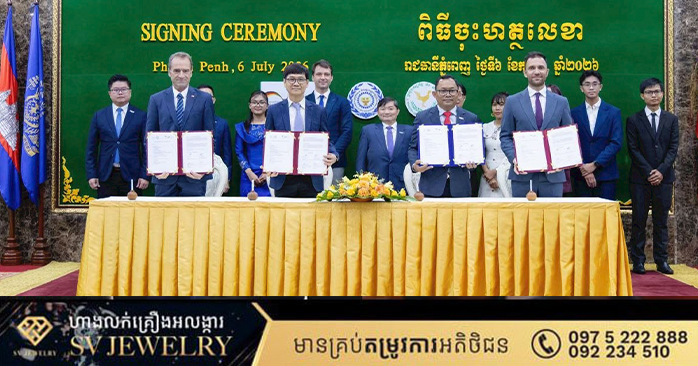
Cambodia and Germany signed an agreement on July 6th to implement the technical cooperation project "FABRIC Cambodia II," aimed at enhancing sustainability in the garment, footwear, and bag industries. This collaboration focuses on strengthening labor rights, environmental and social standards, and competitiveness in global supply chains.
The Ministry of Labour and Vocational Training, the Ministry of Economy and Finance, and the German Agency for International Cooperation (GIZ) have signed an agreement to implement the technical cooperation project "FABRIC Cambodia II," aimed at promoting sustainability in the textile industry. The signing ceremony, held at the Ministry of Labour and Vocational Training on July 6th, was attended by H.E. Heng Sour, Minister of Labour and Vocational Training, and Mr. Christof Weigelmeier, Deputy Head of Mission and Head of Development Cooperation at the German Embassy in Cambodia. This agreement aims to strengthen sustainable supply chains and promote compliance with social and environmental standards, advancing through public-private collaboration. H.E. Heng Sour expressed his profound gratitude to the German government for its continued support and deepening cooperation in the Garment, Footwear, and Bag (GFT) sector. He stated that this agreement signifies the strong commitment of the German government and people to support and share solidarity with the Cambodian people, especially workers. He added that the ceremony transcends a mere agreement, reinforcing international partnerships and translating shared noble objectives into effective actions for the tangible benefit of workers and enterprises, thereby strengthening the foundation of the Cambodian economy. Mr. Christof Weigelmeier, in turn, expressed pride in continuing cooperation with Cambodia through this significant project to further promote labor rights, environmental and social standards, and support the development of the GFT sector. He emphasized that strengthening environmental, social, and human rights standards, along with compliance monitoring, will enhance Cambodia's competitiveness in global supply chains. Germany is prepared to provide further support for this project and remains committed to being a strong partner for Cambodia on its path to graduating from the list of least developed countries.
多角的分析
この協定は、カンボジアの主要な輸出産業である縫製・靴・バッグ(GFT)セクターの持続可能性向上に焦点を当てており、経済的影響は大きい。GIZ(ドイツ国際協力機構)との連携は、技術移転と基準向上を通じて、製品の品質と国際市場での競争力を高めることを目指す。過去の事例では、EUの一般特恵関税制度(GSP)のような貿易優遇措置の維持・拡大には、労働・環境基準の遵守が不可欠であり、このプロジェクトはカンボジアが「開発途上国」から卒業する上での重要なステップとなる。これにより、より高い付加価値を持つ製品へのシフトや、新たな市場開拓の可能性が生まれると考えられる。
投資家にとって、この協定はカンボジアのGFTセクターにおけるリスク低減と、ESG(環境・社会・ガバナンス)投資の観点からの魅力向上を示唆する。ドイツ政府およびGIZの関与は、プロジェクトの信頼性と持続可能性を保証する要因となる。基準遵守の強化は、国際的なブランドからの調達基準を満たしやすくなり、長期的な投資の安定性につながる。特に、欧米市場への輸出が多いカンボジアにとって、こうした国際基準への適合は、サプライヤーとしての信頼性を高め、新たな投資を呼び込むための重要な要素である。
このプロジェクトは、カンボジアのGFTセクターで働く数百万人の労働者の労働条件と生活水準の向上に直接的な影響を与える可能性がある。環境基準の強化は、工場周辺の地域社会における公害リスクを低減し、より健康的な生活環境をもたらすことが期待される。また、労働者の権利保護の強化は、過去に指摘されてきた労働問題の改善につながり、社会的な安定にも寄与するだろう。具体的には、プノンペン近郊の工場地帯で働く女性労働者たちが、より安全で公正な労働環境で働く機会を得ることが期待される。
カンボジア国民、特に縫製・靴・バッグ産業で働く労働者にとって、この協定は生活の質向上への期待を高める。労働条件の改善、賃金の上昇、より安全な職場環境の実現は、多くの家庭の経済的安定に直結する。また、環境基準の強化は、工場の周辺地域に住む人々の健康や生活環境の改善にもつながる。プノンペンやその近郊で働く労働者たちは、SNSなどを通じてこうした国際的な取り組みに関心を持っており、具体的な変化を期待している。
背景・歴史的文脈
カンボジアの縫製・靴・バッグ(GFT)産業は、同国の経済成長と雇用創出の主要な柱である。長年にわたり、EUや米国市場への輸出に大きく依存してきたが、国際社会からの労働者の権利や労働環境、環境基準に関する要求は年々高まっている。特に、EUの一般特恵関税制度(GSP)の恩恵を受けるためには、これらの基準の遵守が不可欠である。ドイツは、EU加盟国として、またGIZを通じた開発協力においても、こうした持続可能性と労働基準の向上に強い関心を示してきた。過去には、労働組合との対話や、工場監査の強化などを通じて、カンボジアのGFTセクターの改善を支援してきた実績がある。今回の「FABRIC Cambodia II」は、こうした過去の協力の延長線上にあり、より包括的かつ長期的な視点での持続可能性強化を目指すものである。
原文ソース
CEN Cambodia