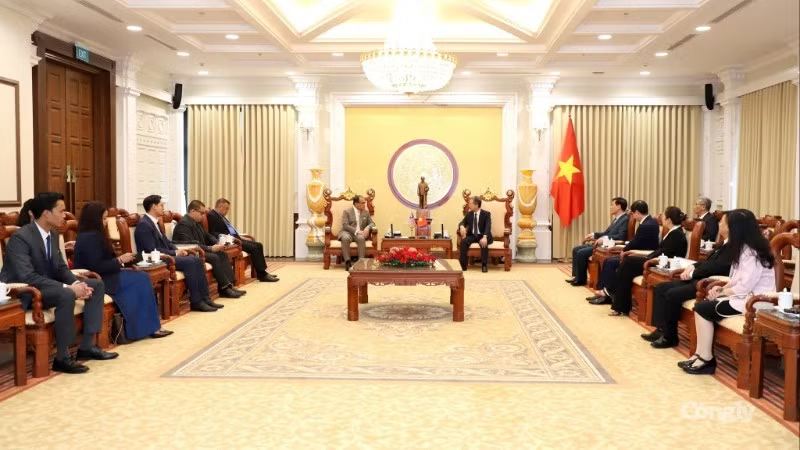
Vietnam and Malaysia Enhance Judicial Cooperation
Vietnam's Chief Justice and Malaysia's Attorney General met in Hanoi, agreeing to strengthen judicial cooperation. Both sides aim to deepen collaboration through sharing legal systems and human resource development.
Vietnam and Malaysia have agreed to further strengthen cooperation in the judicial sector. On the morning of July 9, in Hanoi, Mr. Nguyen Van Quang, a member of the Central Committee of the Communist Party and Chief Justice of the Supreme People's Court, received Tan Sri Mohd Dusuki Mokhtar, Attorney General of Malaysia, for a courtesy visit and working session at the Supreme People's Court. This meeting aimed to deepen mutual understanding of the legal systems and judicial practices of both countries and to establish concrete cooperation frameworks. Discussions likely focused on sharing experiences and implementing joint training in areas such as law enforcement, judicial procedures, and human resource development. Vietnam has recently emphasized strengthening cooperation within the Association of Southeast Asian Nations (ASEAN), positioning international cooperation in the judicial field as contributing to the establishment of the rule of law and regional stability. The Chief Justice of the Supreme People's Court expressed his expectations for further deepening the trust relationship between the two countries and building a substantive cooperative relationship through the meeting with the Malaysian Attorney General. (Supplement) Under its one-party system, Vietnam is advancing the modernization of its legal system and its alignment with international standards, with international cooperation in the judicial sector being a crucial element in promoting domestic reforms. Furthermore, amidst a complex relationship with China, strengthening ties with ASEAN countries holds a significant position in Vietnam's foreign policy strategy. The enhancement of judicial cooperation with Malaysia can be understood as part of Vietnam's broader foreign and domestic policy strategies.
多角的分析
今回の司法協力強化は、直接的な経済的影響よりも、両国間の信頼醸成と法制度の調和を通じて、将来的な投資環境の安定化に寄与する可能性が高い。特に、AIや戦略的投資分野でのベトナムとフランスの協力促進(原文で言及されている類似のニュース)と並行して考えると、ベトナムが法制度の透明性と予測可能性を高め、外国からの投資を誘致しようとする姿勢がうかがえる。
投資家にとって、司法協力の強化は、法制度の安定性と予測可能性の向上につながるため、ポジティブなシグナルとなり得る。特に、契約履行や紛争解決における透明性が高まれば、ベトナムへの投資リスクは低減する。ただし、具体的な協力内容やその実行度合いが、今後の投資判断における重要な要素となるだろう。
司法協力の強化は、両国の法曹界における知識や経験の共有を促進し、国民への司法サービスの質の向上につながる可能性がある。また、法制度の透明性が高まることで、市民の権利保護が強化されることも期待される。具体的には、両国の弁護士や裁判官が相互に研修を受ける機会が増え、より公平で効率的な司法手続きが実現するかもしれない。
司法制度の国際協力が進むことは、市民がより公正で迅速な裁判を受けられる可能性を高める。特に、国際的な商取引や投資が増加する中で、両国の法制度が連携し、手続きが円滑になることは、市民生活やビジネス活動における不確実性を減らすことに繋がる。例えば、越境での法的な問題が発生した場合に、両国の司法機関が協力して解決にあたる体制が整えば、市民の負担は軽減されるだろう。
背景・歴史的文脈
ベトナムは、1986年のドイモイ政策以降、市場経済化と国際社会への統合を進めてきた。その過程で、法制度の整備は国家運営の基盤として重視され、特に一党体制下での法の支配の確立が課題となっている。ASEAN加盟国との司法協力は、地域における法の支配の普及と、ベトナムの国際的な信頼性向上に寄与する。中国との複雑な関係の中で、ASEAN諸国との多角的な協力関係を構築することは、ベトナムの外交戦略において不可欠な要素となっている。
原文ソース
Nhan Dan