General articles are free for 24 hours after publish.
Vietnam's 'Green Ticket' Food Traceability Expands to Markets, Schools
Ho Chi Minh City's 'Green Ticket' food traceability program is expanding from supermarkets to traditional markets and school canteens. Consumers can now verify product origins via QR codes, enhancing trust in food safety and transparency.
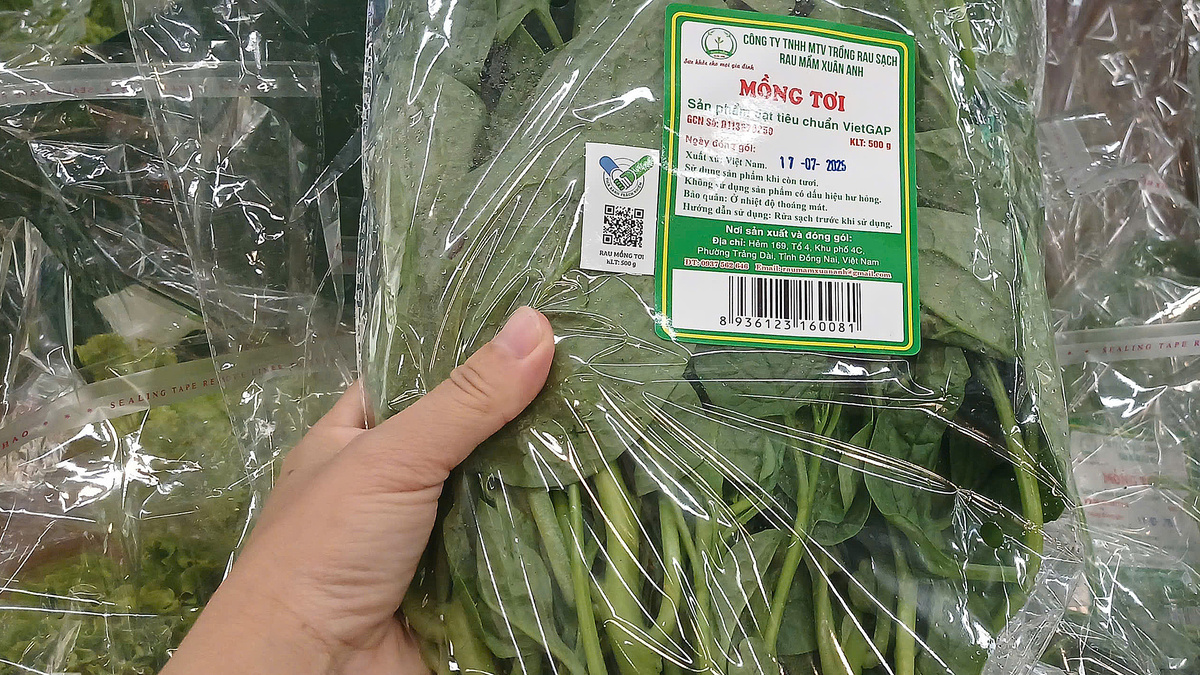
After more than two years of implementation, Ho Chi Minh City's 'Green Ticket' food traceability program has expanded from supermarkets to traditional markets and school canteens, bringing transparent food origins closer to consumers. The 'Green Ticket' is a program by the Ho Chi Minh City Department of Industry and Trade aimed at ensuring food origin transparency. Participating businesses must disclose production information, traceability, and take responsibility for product quality. For over a month, Ms. Hoang Lan in An Khanh ward has felt more confident when purchasing products bearing this label. Previously, tracing the origin of vegetables was difficult, but now, by scanning a QR code, she can identify the production location, supplier, and the product's journey. "I buy not just because it's delicious, but also because I know where the food comes from," she said. These products are now appearing not only in supermarkets but also in traditional markets. Ms. Hang in Tan My ward noted that previously, buying traceable food often required visiting modern retail systems, but now, even at the market, stalls selling meat with 'Green Ticket' labels can be found. A 'Green Ticket' product at MM Mega Market in An Khanh ward (HCMC). Photo: Thi Ha This change is being piloted at Tan My market with two pork stalls offering traceable products, fully displaying product information. A vendor participating in the model stated that the company provides support from sourcing to equipment, making it easier for businesses to access standard-compliant food. She believes consumers need more time to adapt to the new model, but it's a direction that helps traditional markets enhance their goods' quality and build customer trust. According to Mr. Nguyen Nguyen Phuong, Deputy Director of the HCMC Department of Industry and Trade, after more than two years, many businesses are no longer hesitant. The 'Green Ticket' is not a new quality certification but digitizes existing standards like VietGAP and HACCP through QR codes and blockchain platforms for traceability. In the last three months, the number of participating businesses has increased rapidly. To date, over 500 businesses with nearly 6,000 products have been certified under the 'Green Ticket.' This scale generally meets the demand of distribution systems and collective kitchens for fresh food, though it remains modest compared to the overall market size. Expanding the program requires more time, as not all businesses are ready to disclose data, change production processes, and accept monitoring mechanisms. Mr. Nguyen Van Dung, Vice Chairman of the HCMC People's Council, inspects 'Green Ticket' products at MM Mega Market in HCMC. Photo: Thi Ha The program has also extended to collective kitchens and schools. Mr. Phuong believes that when these units actively choose 'Green Ticket' food, businesses will have more motivation to improve product quality. The model is currently being piloted in Tan My, Vinh Hoi wards, and Dong Thanh commune before wider replication. Many businesses are also expanding their participation. MM Mega Market currently has 329 'Green Ticket' products, nearly 300 of which are fresh food, and aims to standardize 100 school canteens by September. Unilever Food Solutions has implemented about 20 products adhering to the program's criteria. According to Mr. Phuong, businesses participate voluntarily but are subject to regular monitoring by management agencies, consultants, and distribution systems. If businesses are found to intentionally violate commitments regarding quality and food safety, their products will be immediately removed from the program. Ho Chi Minh City is researching the expansion of this model to more traditional markets through commodity trading floors, initially piloting with the meat sector. This model shares many similar criteria, helping to broaden the supply of safe food to consumers. Thi Ha
Original source
VnExpress