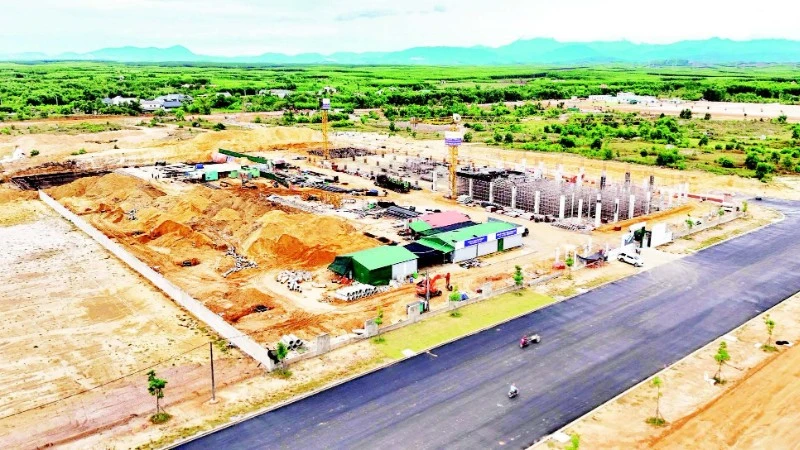
Quang Tri Province Reconfigures Economic Space to Attract New Investment Wave
Quang Tri Province in central Vietnam has unveiled a list of 185 strategic projects for investment attraction from 2026-2030. Focusing on energy, logistics, tourism, and green agriculture, the province aims to establish itself as a regional hub.
Quang Tri Province in central Vietnam is accelerating the reconfiguration of its economic space to realize sustainable development goals. At a recent conference on planning adjustments and investment promotion, the Provincial People's Committee officially announced its priority investment project list for the 2026-2030 period. According to Nguyen Duc Tan, Deputy Director of the Quang Tri Investment, Trade, and Tourism Promotion Center, the province plans 185 strategic projects across key sectors including energy, logistics, tourism, and green agriculture, while fostering an open and attractive investment environment for domestic and foreign investors. The province identifies the attraction of social resources, especially private capital and foreign direct investment (FDI), as a core driver for its development into a multi-functional development hub in the North Central region from 2026 to 2030. The list of 185 projects signifies a synchronized plan, focusing on high-tech, high-value-added, and environmentally friendly industries. The breakdown of investment sectors shows logistics leading with 62 projects, followed by energy (36), tourism (22), and green agriculture (26). Other sectors, including industry, industrial park infrastructure, urban development, healthcare, and education, account for the remaining 39 projects. This distribution reflects the strategic thinking of Quang Tri's leadership, positioning logistics and energy as the "wings" for industrial breakthrough, and agriculture and tourism as the "sustainable foundation" for the green economy. Leveraging its geographical and climatic advantages, Quang Tri continues to pursue its goal of becoming a large-scale energy center. Notably, offshore wind power projects along the coast of Hon La Economic Zone and the Southeast Quang Tri Economic Zone are expected to significantly boost coastal industries. Hoang Nam, Permanent Vice Chairman of the Provincial People's Committee, highlighted the province's crucial geographical position, benefiting from major national highways, the North-South railway, expressways, two airports (Dong Hoi and Quang Tri), three international border gates (La Lay, Lao Bao, Cha Lo), and three seaports (Hon La, Cua Viet, My Thuy), connecting three East-West economic corridors. This multi-gateway structure enhances connectivity, reduces logistics costs, and increases attractiveness to global supply chains. The province prioritizes logistics as a strategic sector, calling for investment in 62 projects focused on large-scale transport infrastructure and warehouse distribution systems. Key projects include the My Thuy-Dien Sanh railway line (14 km) and logistics centers in the Southeast Quang Tri Economic Zone (100-200 hectares) and at the La Lay international border gate (10-50 hectares). Furthermore, aiming for sustainable development, Quang Tri adheres to a "green growth" policy, promoting eco-tourism and high-tech agricultural projects. Plans include a large-scale resort complex at Bau Sen Lake (2,000 hectares) and high-tech agricultural applications focusing on climate-resilient organic rice, red dragon fruit, and high-tech pineapples, alongside organic coffee and pepper cultivation for export. To facilitate investment, the province commits to administrative reform, offering preferential investment policies, swift land clearance, and developing a high-quality workforce. The transparent and determined approach of Quang Tri's leadership signals its aspiration to be a safe, sustainable, and profitable investment destination and a reliable partner for future prosperity.
多角的分析
クアンチー省は、物流とエネルギーを経済成長の二本柱と位置づけ、地域ハブとしての地位確立を目指している。これは、ベトナム政府が推進する「南北経済回廊」の強化と、サプライチェーンの多様化という世界的なトレンドに合致する。特に、港湾、空港、鉄道、高速道路といったインフラへの大規模投資は、物流コストの削減と効率化に直結し、国内外からの製造業や貿易業の誘致に不可欠となる。グリーン農業と観光への注力は、経済の多角化と持続可能性を高める試みであり、付加価値の高い産業育成を目指すベトナム経済の構造改革とも連動している。
クアンチー省が提示する185のプロジェクトリストは、投資家にとって具体的な投資機会を示すものとなる。特に、インフラ開発、再生可能エネルギー(洋上風力、太陽光)、そして先進的な農業・観光分野への投資は、成長ポテンシャルが高いと見られる。地理的優位性、政府の投資誘致への積極的な姿勢、そして優遇措置は、リスクを軽減しリターンを最大化しようとする投資家にとって魅力的な要素となるだろう。ただし、プロジェクトの実行能力、許認可プロセス、そして現地の労働力確保といった実行リスクの評価は重要となる。
クアンチー省の投資誘致は、地域経済の活性化と雇用創出に繋がる可能性がある。特に、大規模なインフラプロジェクトや工業団地の開発は、地方からの都市部への人口流出を食い止め、地域社会の発展に貢献することが期待される。しかし、大規模開発に伴う環境への影響や、地域住民の生活様式への変化、土地利用に関する摩擦が生じる可能性も考慮する必要がある。グリーン農業やエコツーリズムへの投資は、環境保全と地域文化の維持を両立させる上で、住民の理解と協力を得ながら進めることが重要となる。
クアンチー省の住民にとって、今回の投資誘致は、雇用機会の増加や地域経済の活性化という恩恵をもたらす可能性がある。特に、若年層にとっては、地元でのキャリア形成の機会が増えることが期待される。しかし、大規模開発に伴うインフラ整備や環境への影響、そして土地利用の変化などが、地域住民の生活にどのような影響を与えるかは、今後の進捗次第である。例えば、物流ハブ開発に伴う交通量の増加や、観光開発による自然環境の変化などが、住民の日常生活に影響を与える可能性がある。
背景・歴史的文脈
ベトナムは、経済成長の持続と国際競争力の強化のため、インフラ整備と投資環境の改善を国家戦略の柱としている。特に、地理的に重要な位置にある沿岸部や国境地域では、物流ハブや産業クラスターの形成が推進されてきた。クアンチー省は、ベトナム戦争からの復興を経て、近年、その地理的優位性と開発ポテンシャルが再評価されている。過去には、ラオスやタイとの経済連携強化の拠点としても期待され、東西経済回廊のベトナム側終着点としての役割も担ってきた。今回の投資誘致リストは、こうした過去の取り組みを踏まえ、より具体的かつ大規模な開発を目指すものと言える。
原文ソース
Nhan Dan