Negros gov seeks ‘green’ solution to sugarcane pest
The governor of Negros Occidental, Philippines, has declared support for environmentally friendly methods over chemical aerial spraying to combat the red-striped soft-scale insect (RSSI) infesting sugarcane fields. The province aims to focus on biological control, such as fungal production, for this pest and future issues.
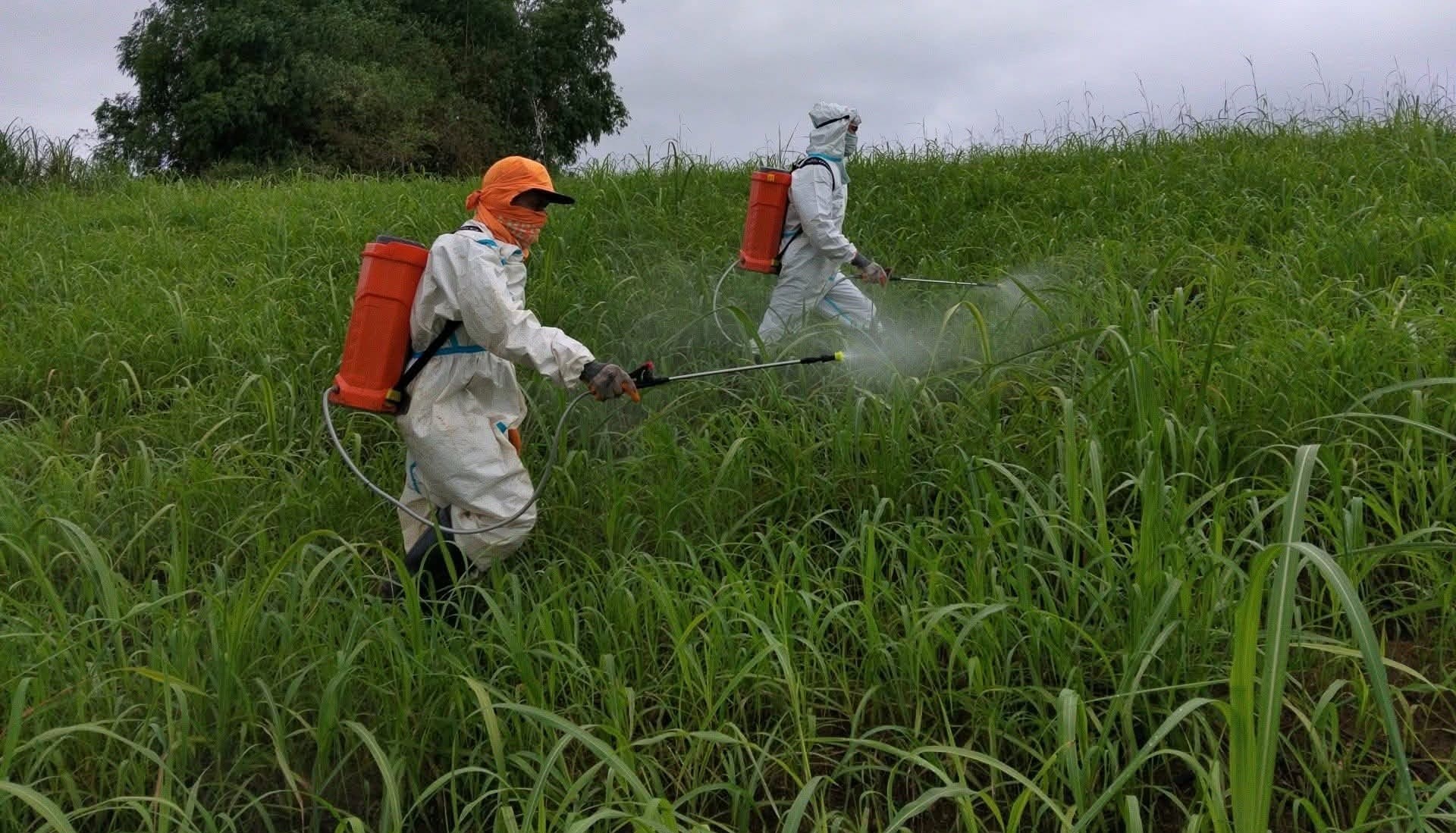
GROUND BATTLE VS RSSI Spraying operations continue against the red-striped soft-scale insect (RSSI) in sugarcane farms in Bukidnon province. On Negros Island, sugarcane farmers are seeking wider and faster effort to fight the pest through aerial spraying, although the governor of Negros Occidental prefers an environment-friendly solution. BACOLOD CITY, NEGROS OCCIDENTAL, Philippines — Negros Occidental Governor Eugenio Jose Lacson said the provincial government would “go green” in the fight to eradicate the red-striped soft-scale insect (RSSI) that had infested the province’s sugarcane fields, vowing that they will not fund the proposed islandwide aerial spraying of chemicals. The provincial government will only support biological control or natural approach to prevent the spread of not only RSSI but also to address all future pest problems, Lacson pointed out. He said the province is looking at fungal production as one of the primary ways to fight RSSI, Lacson added. READ: Sugarcane pest attacks other crops in Negros The governor’s pronouncements resonated with leaders of different sectors who earlier expressed concern over the planned massive aerial spraying. Lacson acknowledged the concerns that because wind direction cannot be controlled, and there are densely populated barangays and aquaculture and livestock farms near sugarcane fields that will be affected by the chemical spray. He noted that the provincial government has already declared a province-wide state of calamity due to RSSI to hasten the release of funds to address the problem. With this, there is no longer a need for individual town and city governments to issue similar declarations as the provincial declaration allows them to release their own local disaster response funds, he said. READ: Pest ravages sugarcane farms in the Visayas Already, at least 60,000 hectares of sugar farms in Negros Occidental, which produces 60 percent of the country’s sugar requirements, had been ravaged by RSSI. If not addressed soon, the Sugar Regulatory Administration (SRA) is worried the pest infestation could result in about 30 percent drop in the country’s sugar output, which means lost sales of about P17.5 billion. Manuel Lamata, president of United Federation of Sugar Producers, had proposed undertaking aerial spraying, at the estimated cost of some P200 million, to cover 250,000 hectares of sugar farms on Negros Island. Lamata maintained that the aerial spraying is safe for animals and humans, adding that drones would be used in areas within 200 meters of residential houses. But former SRA chief Rafael Coscolluela expressed concern over the environmental impact of a proposed Negros-wide aerial spraying of chemical pesticides to fight the pest. “On paper, aerial spraying by airplane sounds good, but let us look at its practicality,” Coscolluela said. “What will be its effect on communities that might become unintended victims of the spraying, since they are saying chemical pesticides will be used?” He asked how the spraying can be kept within targeted farms when wind direction must be considered. Coscolluela also worried over its impact on poultry farms, wildlife, such as beneficial insects, rivers, and groundwater sources used for drinking by local residents. /cb
多角的分析
ネグロス・オクシデンタル州のサトウキビ産業は、フィリピンの砂糖生産の60%を担っており、その被害は国の経済に直接的な打撃を与えます。RSSIによる生産量30%減は、約175億ペソ(約470億円相当)の販売機会損失に繋がる可能性があります。州知事の「グリーン」なアプローチは、短期的なコスト削減や環境保護の観点からは望ましいですが、生物的防除の効果が現れるまでの時間差や、その効果が空中散布と同等に迅速かつ広範囲に及ぶかどうかが経済的リスクとなります。もし生物的防除が効果を発揮しない場合、長期的な生産性の低下や、さらなる追加投資の必要性が生じる可能性があります。
サトウキビ産業への投資家にとって、今回の害虫被害は収益性の低下と将来的な不確実性をもたらします。州知事の環境配慮型アプローチは、ESG投資の観点からはポジティブですが、その効果が不確実な場合、投資家はリスク回避のために投資を控えるか、より安定した市場への資金移動を検討する可能性があります。特に、砂糖価格の変動リスクに加え、病害虫リスクが顕在化することは、農産物関連企業への投資判断において重要な要素となります。代替作物の検討や、より強固な病害虫管理体制を持つ地域への投資が優先されるかもしれません。
ネグロス・オクシデンタル州のサトウキビ農家は、害虫被害により生計を脅かされています。知事が提案する化学物質の空中散布は、周辺住民や畜産・養殖農家への健康被害や環境汚染のリスクが指摘されており、地域社会の安全に対する懸念が高まっています。一方、生物的防除は、その効果が不確実であるため、農家は収穫量の減少や経済的損失に直面する可能性があります。このような状況下では、農家への直接的な経済的支援や、代替収入源の確保、そして地域住民と農家との間の情報共有と合意形成が、社会的な安定のために不可欠となります。
ネグロス・オクシデンタル州の住民は、サトウキビ畑を襲う害虫「RSSI」の蔓延という直接的な脅威に直面しています。州知事が環境に優しい解決策を模索する一方で、一部の農家はより迅速な空中散布を求めており、住民の間でも対応策を巡る意見の対立が生じる可能性があります。特に、化学物質の空中散布が実施された場合、風に乗って飛散する農薬による健康被害や、近隣の養鶏場や水産養殖への影響が懸念されます。住民は、安全な環境と安定した食料供給の両方を求めており、当局には科学的根拠に基づいた、住民の健康と環境を最優先した対策が求められています。
背景・歴史的文脈
フィリピンのサトウキビ産業は、国内経済において重要な位置を占めており、特にネグロス島はその中心地です。しかし、過去にも病害虫の被害は繰り返し発生しており、その都度、農薬の使用を巡る環境問題と経済的損失との間で、政府や関係者の間で意見の対立が生じてきました。今回の赤縞軟スケール虫(RSSI)の蔓延は、過去の教訓を踏まえ、より持続可能で環境に配慮した対策が求められる中で、その対応策の選択が改めて問われている状況と言えます。
原文ソース
Inquirer NewsInfo