General articles are free for 24 hours after publish.
Dong Thap Province Completes Traffic Signal Installation on National Highway 30 Bypass, Enhancing Safety
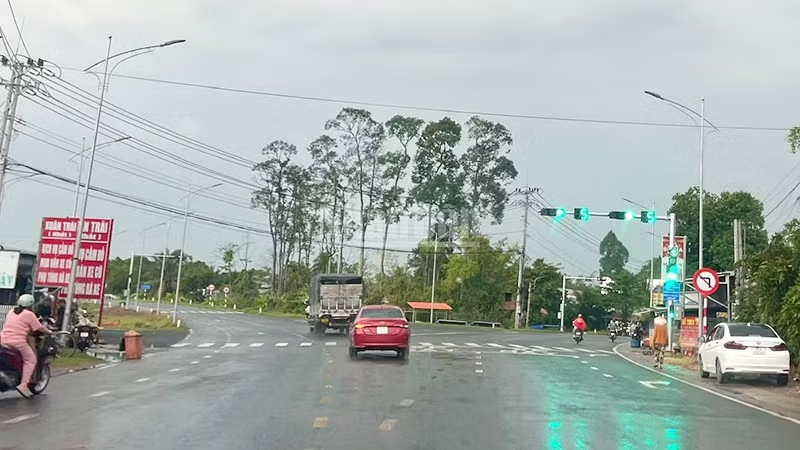
Dong Thap Province has completed the installation of traffic signals as part of the renovation of an intersection on the National Highway 30 bypass. This addresses long-standing traffic safety concerns and is expected to improve safe passage for local residents.
Dong Thap Province in southern Vietnam has taken a significant step towards enhancing traffic safety on the National Highway 30 bypass. The Provincial Department of Construction announced the completion of traffic signal system installation at the intersection of National Highway 30 and the old National Highway 30 in Phong My commune. The system is currently undergoing trial operation. For a long time, traffic safety risks, particularly road deterioration during the rainy season, have been pointed out on the National Highway 30 bypass. Previously, local residents had expressed concerns about road conditions, describing them as dusty in the dry season and flooded in the wet season. The low traffic safety at the bypass intersection was also a concern, and the current signal installation is a response to these issues. Nhan Dan, the official newspaper of the Communist Party of Vietnam, has previously reported on infrastructure issues in this region, and this progress can be seen as an example of media coverage prompting administrative action. The introduction of the signal system is expected to reduce vehicle confusion at the intersection and lower the risk of traffic accidents. Vietnam is experiencing a rapid economic growth that has led to an increase in vehicle ownership, with many areas struggling to keep up with infrastructure development. Improving road networks, especially in rural areas, is an essential task for streamlining logistics, revitalizing local economies, and most importantly, ensuring resident safety. This case in Dong Thap Province highlights the importance of infrastructure development in rural areas. Source: Nhan Dan
Original source
Nhan Dan