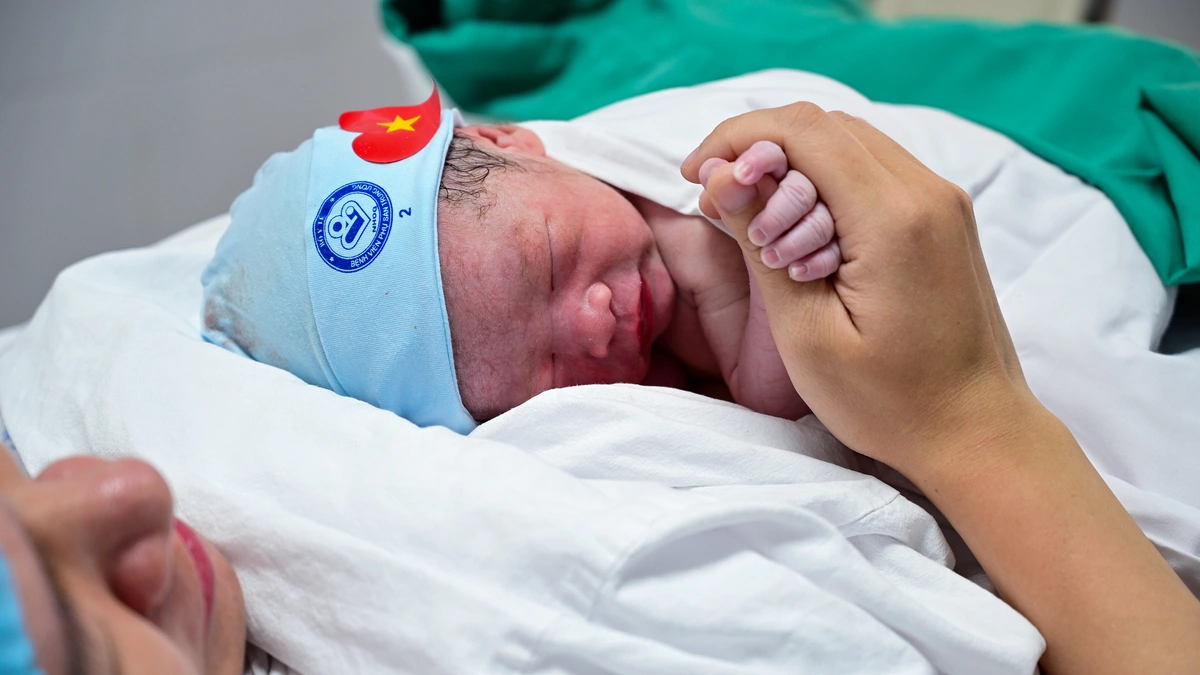
Vietnam Proposes Monthly Allowance for Children Under 3 to Boost Birth Rate
Vietnam's Ministry of Health has proposed a policy allowing local authorities to provide monthly financial support to children under three years old, aiming to reverse the country's record-low birth rate. The amount and form of assistance, such as cash or in-kind benefits, would be determined by each locality based on its financial capacity and social context.
The Ministry of Health is seeking public feedback on a draft circular guiding new population policies, with a key highlight being the proposal to allow local authorities to allocate monthly financial support for children from birth up to 36 months of age. This initiative is the latest effort to revive Vietnam's birth rate, which has hit a historic low with an average of 1.91 children per woman, below the necessary replacement level. The draft grants provinces and cities the autonomy to decide the level and form of financial assistance based on their fiscal capacity and socio-economic characteristics. Instead of a uniform national figure, localities can choose to provide cash or in-kind support to pregnant women and mothers who give birth to their second child. In addition to the monthly allowance for children under three, the draft also expands other support packages, such as lunch expenses for preschool children and direct rewards for women who complete their childbearing goals before the age of 35. Data from the Population Department indicates that despite pronatalist policies implemented over the past five years, their effectiveness has not met expectations due to the current support levels being too low. Most localities offer only one-time bonuses ranging from VND 450,000 to VND 1 million per case, which is a negligible amount compared to the actual cost of raising a child today. In reality, some bright spots like Tay Ninh province have spent nearly VND 20 billion to reward communes with good birth rates and support over 4,500 women who had two children. Similarly, Dong Nai and Hai Phong have also spent billions of dong from their budgets to assist families. However, to create a real turning point, the shift from one-time bonuses to regular monthly financial support is considered a more sustainable and substantial solution. Besides the goal of increasing the average number of children, the Ministry of Health's draft also aims to balance sex ratios and improve the quality of the population. Localities will develop policies to honor families with two daughters and provide tuition fee exemptions and health insurance support for girls in impoverished areas. Vulnerable groups and poor households will also receive free support for prenatal and neonatal screening, as well as regular contraception and healthcare services. Following the official issuance of this circular, provincial Departments of Health will directly advise their respective People's Councils to approve specific expenditure levels, ensuring they align with local budget constraints and the needs of the local population. East Asian powerhouses like South Korea, Japan, and Singapore also spend billions of dollars on "baby bonus" packages and monthly child allowances, yet the results have not reversed the record-low birth rates. In Europe, Nordic countries have achieved more favorable outcomes by combining cash subsidies with comprehensive welfare systems, focusing on free preschool education and extended paid parental leave for both mothers and fathers. Hungary's experience shows that drastic measures like lifetime personal income tax exemption for women who have four children can create an immediate boost, but population stability is difficult to maintain without long-term social security elements. International experts assess that financial support plays a "necessary" role in alleviating the financial burden of child-rearing, while the "sufficient" condition lies in policies balancing work and life, along with gender equality in childcare. Overall, cash is an essential support solution, but its actual effectiveness depends heavily on the availability of public service infrastructure and the economic stability of each country.
多角的分析
ベトナムの出生率低下は、経済成長に伴う都市化、教育水準の向上、そして子育て費用の高騰といった構造的な変化と深く関連している。政府が提案する月額手当は、家計の直接的な負担軽減策として一定の効果が期待されるが、経済成長が続く中で、教育費や住居費といったより根本的な問題への対策が伴わなければ、出生率の長期的な回復には限界がある。また、地方自治体の財政力に依存する形式は、地域間の格差を生む可能性があり、全国的な出生率向上という目標達成には課題を残す。
この政策は、消費財、特にベビー用品や子供向けサービスを提供する企業にとって、潜在的な市場拡大の機会となりうる。しかし、手当の額や支給期間が限定的である場合、消費行動への影響は緩やかになるだろう。投資家は、この政策がベトナムの長期的な人口動態にどのような影響を与えるかを注視する必要がある。出生率の回復が鈍い場合、労働力供給の減少や高齢化の加速といったマクロ経済リスクが顕在化し、投資環境に影響を与える可能性がある。
ベトナムでは、都市部を中心に結婚・出産年齢が上昇し、子供を持つことへの経済的・精神的負担感が増大している。今回の月額手当の提案は、特に経済的に余裕のない家庭にとって、子供を持つことへのハードルを下げる一助となる可能性がある。しかし、女性の社会進出が進む中で、育児と仕事の両立支援、男性の育児参加促進といった、より包括的な社会制度の整備が、出生率回復には不可欠である。また、地方ごとの裁量に委ねられることで、支援の格差が生じ、社会的な不満につながる懸念もある。
今回の月額手当の提案は、子育て世代、特に低所得層の家庭にとって、直接的な経済的恩恵をもたらす可能性がある。これにより、子供を持つことへの心理的な負担が軽減され、希望する子供の数を持てるようになるかもしれない。しかし、手当の金額が、実際の教育費や生活費をどの程度カバーできるかが鍵となる。また、地方自治体によって支援内容に差が出る場合、不公平感が生じる可能性も指摘されている。多くの市民は、単なる金銭的支援だけでなく、質の高い教育や医療へのアクセス改善、そして仕事と育児を両立できる社会環境の整備を求めている。
背景・歴史的文脈
ベトナムでは、1980年代後半から実施された人口抑制政策「フエ・ホア(計画的出産)」により、出生率は大幅に低下した。その後、経済発展と社会の変化に伴い、晩婚化・晩産化が進み、合計特殊出生率は、人口置換水準(2.1人)を大きく下回る水準で推移している。政府は、出生率回復のため、これまでにも様々な奨励策を打ち出してきたが、子育て費用の高騰や女性の社会進出といった構造的な要因により、その効果は限定的であった。今回の月額手当の提案は、こうした背景を踏まえ、より直接的な経済的支援に焦点を当てた新たな試みである。
原文ソース
VnExpress