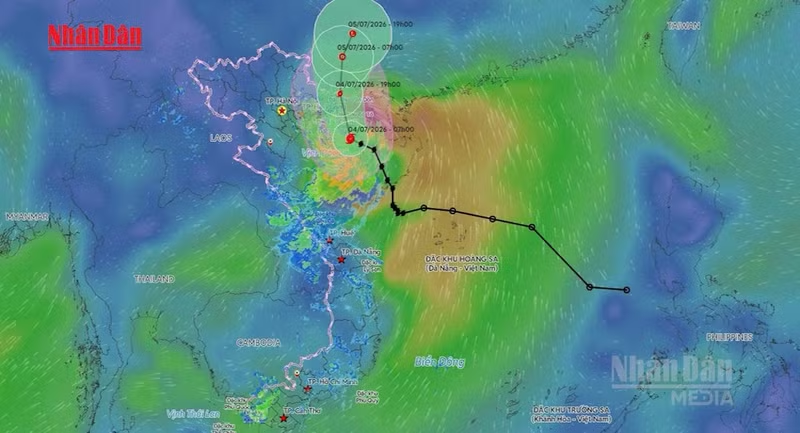
Typhoon No. 1 Makes Landfall off Quang Ninh Province, Northeast Vietnam, Warning Issued for Heavy Rain and Flooding
Environment
2026年7月5日
4
Nhan Dan
Relations
🇻🇳Vietnam🇨🇳China

Typhoon No. 1 Makes Landfall off Quang Ninh Province, Northeast Vietnam, Warning Issued for Heavy Rain and Flooding

AI サマリー

Typhoon No. 1 is approaching the waters off Quang Ninh Province in northeastern Vietnam, with maximum wind speeds of 8-9 (62-88 km/h) near the center, and gusts up to level 11. Heavy rainfall exceeding 400mm is forecast across the northeastern region, with strong warnings issued for floods and landslides.

According to the National Center for Hydro-Meteorological Forecasting, as of 4 PM on July 4, the center of Typhoon No. 1 was located at approximately 20.9 degrees North latitude and 107.9 degrees East longitude, in the waters off Quang Ninh Province. The strongest winds near the eye of the storm are estimated to be at level 8-9 (62-88 km/h), with gusts up to level 11. The typhoon is moving northward at a speed of 10-15 km/h. Forecasts indicate that Typhoon No. 1 will approach the northern Gulf of Tonkin on July 5, bringing very heavy rainfall to the northern regions of Vietnam. This is expected to lead to a heightened risk of widespread flooding, flash floods, and landslides. Rainfall exceeding 350mm is anticipated in northern Vietnam on July 4, with projections suggesting that the typhoon's influence could result in prolonged heavy rains over a wide area for several consecutive days. Typhoon No. 1 initially developed as a tropical depression before intensifying into a typhoon. By July 3, thunderstorms were already increasing across the country, from the north to the south. Vietnam, a nation pursuing economic growth under its one-party system, is inherently vulnerable to natural disasters like typhoons and floods due to its geographical location. The northern regions, characterized by numerous rivers and specific topographical features, face particularly high risks of flooding and landslides. The extent of damage caused by Typhoon No. 1 may underscore the critical need for robust recovery and reconstruction efforts, as well as continued investment in infrastructure development. Moreover, Vietnam's strategic position, sharing a substantial border with China, lends it considerable geopolitical significance. Its resilience in the face of natural disasters is a key factor not only for its internal stability but also for its broader regional implications.

多角的分析

経済的影響

台風1号による広範囲な豪雨は、農業、漁業、そしてインフラに直接的な被害をもたらす可能性がある。特に、農作物の収穫時期と重なれば、食料供給への影響や農家所得の減少につながり、経済成長の足かせとなりうる。また、道路や橋梁などのインフラ被害は、物流コストの上昇を招き、サプライチェーンに遅延を生じさせるリスクがある。ベトナム経済は製造業と輸出に依存しているため、こうした物流の寸断は国際的な取引にも影響を及ぼす可能性がある。政府は迅速な被害状況の把握と復旧支援策を講じる必要がある。

投資家心理

自然災害、特に台風による被害は、ベトナムへの投資リスクを一時的に高める要因となる。インフラへのダメージは、企業の操業や物流に影響を与え、生産性の低下やコスト増加につながる可能性がある。しかし、ベトナムの長期的な経済成長見通しは依然として堅調であり、災害からの迅速な復旧能力は投資家の信頼を維持する上で重要となる。特に、インフラ投資や防災関連産業への投資機会が生まれる可能性もある。投資家は、短期的なリスクと、ベトナム政府の対応能力、そして長期的な市場の回復力を慎重に評価する必要がある。

社会的影響

今回の台風1号による大雨は、北ベトナムの多くの住民、特に低地や河川沿いに住む人々の生活に直接的な影響を与える。家屋の浸水、避難生活、そして農作物の被害は、生計を脅かす深刻な問題となりうる。また、インフラの損壊は、交通網の寸断による物資不足や、通信網の不通を引き起こし、日常生活に混乱をもたらす可能性がある。子供たちの学校への通学や、高齢者の医療アクセスにも支障が生じることが懸念される。政府による迅速かつ的確な避難誘導と支援が、被害の最小化と住民の安全確保のために不可欠である。

市民の声

北ベトナムの住民、特に広寧省やその周辺地域では、台風による豪雨と強風により、家屋の損壊や浸水、停電といった被害が懸念される。収穫期を迎えた農作物への被害は、農家の生計に直結する問題であり、食料価格の上昇につながる可能性もある。また、交通網の寸断は、生活必需品の入手を困難にし、地域経済にも影響を及ぼす。避難勧告が出された地域では、住民は安全な場所への移動を余儀なくされる。政府や地方自治体による迅速な情報提供と、避難場所の確保、そして被災者への支援が喫緊の課題となる。

背景・歴史的文脈

ベトナムは、東南アジアの熱帯モンスーン気候帯に位置し、台風銀座と呼ばれる地域に属している。特に北部沿岸地域は、毎年、夏から秋にかけて複数の台風や熱帯低気圧の影響を受け、甚大な被害が発生してきた。1980年代以降の経済開放政策(Đổi Mới)以降、ベトナムは急速な経済成長を遂げ、都市化が進む一方で、インフラ整備が追いつかない地域も存在する。また、ベトナムは中国と約1,200kmにわたる国境を共有しており、自然災害への対応能力は、国内の社会安定のみならず、地域全体の安全保障にも影響を与えうる要素となっている。過去には、2007年の台風センセン(Xangsane)や2017年の台風ダムレイ(Damrey)などが、ベトナムに壊滅的な被害をもたらした事例がある。

原文ソース

Nhan Dan

原文を読む