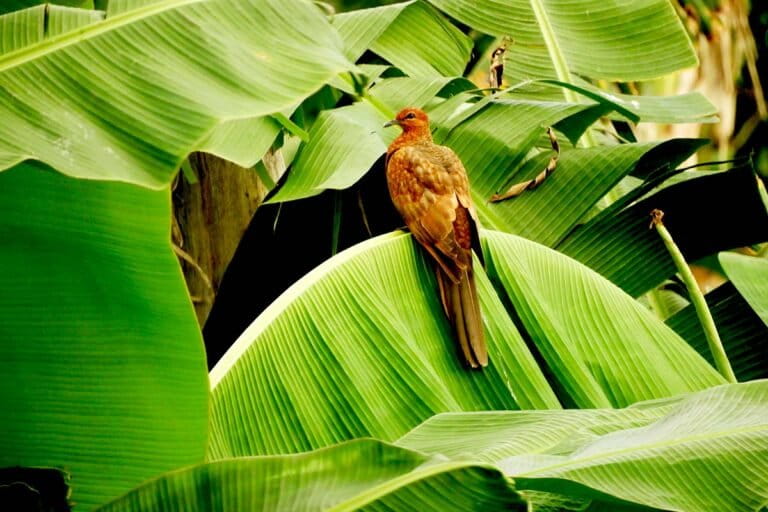
Enggano Island's Endemic Uncal Enggano Plays Crucial Role in Forest Regeneration
The Uncal Enggano (Macropygia cinnamomaea), an endemic bird species of Enggano Island, plays a vital role in forest regeneration despite its unassuming appearance. By consuming fruits, this bird aids in seed dispersal across a wide area, contributing to the maintenance of the forest ecosystem.
The Uncal Enggano (Macropygia cinnamomaea), an endemic bird species found exclusively on Enggano Island in Bengkulu Province, Indonesia, is playing an extremely crucial role in the island's forest regeneration, despite its unassuming appearance. This bird, characterized by its grayish-brown plumage and non-melodious song, possesses the ability to disperse seeds across wide areas by consuming fruits. This capability makes it an indispensable contributor to the maintenance of the forest ecosystem. Zulqarnain Assidiqqi, Director of Endemic Indonesia Society, points out, "Enggano Island has only this species of Uncal, so its ecological function is very central." While the Uncal Enggano primarily inhabits the forests of Enggano Island, recognized internationally as an Important Bird and Biodiversity Area (IBA), it has also adapted to changing environments and is increasingly observed in areas bordering forests, such as residents' gardens in recent years. They are usually seen in pairs within the forest, but multiple individuals may gather in agricultural land when searching for food. Their diet includes crops like corn, rice, and bananas, but in the forest, they prefer wild fruits, such as those from the 'nelung' tree, which bears small fruits about the size of corn. The presence of birds like the Uncal Enggano, which are responsible for seed dispersal, is essential for maintaining forest resilience and biodiversity, especially in areas undergoing development. Protecting this bird is a significant challenge in preserving Enggano Island's unique ecosystem. Source: Mongabay Indonesia
多角的分析
ウンカル・エンガノの生息環境は、エンガノ島の森林の健全性と直接的に結びついている。森林の減少や劣化は、この鳥の餌となる果実の供給源を奪い、ひいては種子散布能力の低下につながる。これは、森林の自然再生能力の低下を意味し、長期的には木材資源やその他の森林産物の持続可能性に影響を与える可能性がある。もしエンガノ島が観光資源として森林の生態系に依存しているのであれば、この鳥の役割は観光収入の維持にも間接的に貢献すると考えられる。
エンガノ島の開発プロジェクトや土地利用計画は、ウンカル・エンガノの生息環境に影響を与える可能性がある。投資家は、環境アセスメントにおいて、この固有種の保護がどのように考慮されているかを確認する必要がある。生態系サービスを提供する生物の保護は、企業のCSR(企業の社会的責任)活動や、環境認証の取得においてプラスに働く場合がある。長期的な視点では、持続可能な開発は、関連するリスクを低減し、地域社会からの信頼を得る上で重要となる。
ウンカル・エンガノは、エンガノ島住民の生活空間にまで進出していることが報告されている。これは、鳥が食料源を求めて生息環境の変化に適応していることを示唆する。住民が鳥の存在をどのように認識し、共存しているかは、鳥の保護活動に影響を与える。例えば、庭園で鳥に餌を与える習慣がある場合、それは鳥の生存に寄与する可能性があるが、一方で、農作物への被害として認識される可能性もある。この鳥の存在が、島の文化や伝統にどのように組み込まれているか、あるいは今後の共存のあり方が問われている。
エンガノ島の住民にとって、ウンカル・エンガノは身近な存在であると同時に、その生態系における役割はあまり意識されていない可能性がある。鳥が農耕地にも現れることは、住民の生活に直接的な影響を与える可能性がある。例えば、農作物を食べることで被害をもたらすのか、それとも鳥の存在が地域の自然環境の豊かさを示す指標として認識されるのか。住民の鳥に対する認識や行動が、この固有種の将来を左右する鍵となるだろう。
背景・歴史的文脈
エンガノ島は、インドネシアのスマトラ島沖に位置する孤島であり、その独特な生態系は長らく研究者の注目を集めてきた。特に、その地理的孤立性から多くの固有種が進化しており、ウンカル・エンガノもその一つである。過去数十年にわたり、インドネシアでは急速な経済成長に伴い、森林伐採や土地利用の変化が各地で進行してきた。エンガノ島も例外ではなく、開発の圧力に晒される中で、固有種の生息環境の保全が課題となっている。この鳥の役割が再認識されたことは、森林の生態系サービスに対する理解が深まったことを示唆している。
原文ソース
Mongabay Indonesia