Czech-Taiwan Ties: Cooling Rhetoric, Sustained Substance
Politics
2026年7月3日
5
The Diplomat Indonesia
Relations
🇮🇩Indonesia🇨🇳China

Czech-Taiwan Ties: Cooling Rhetoric, Sustained Substance

AI サマリー

Czechia's new Babiš government has cooled its rhetoric on Taiwan, but the substantive relationship remains intact. Economic ties, particularly a surge in drone exports, have strengthened post-government change, serving as a case study on the durability of Europe-Taiwan relations under a Beijing-friendly administration.

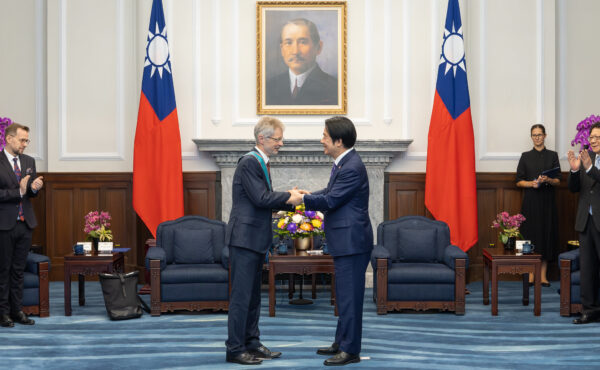
Read The Diplomat, Know The Asia-Pacific Czechia’s new government has changed its tone on Taiwan, but left most of the substance of the relationship intact. Taiwan’s President Lai Ching-te presents the Order of Propitious Clouds with Special Grand Cordon to Czech Senate President Miloš Vystrčil in Taipei, Taiwan, June 2, 2026. When Prime Minister Andrej Babiš returned to power in late 2025, many assumed Czechia’s unusually warm relationship with Taiwan would cool with him. Under the previous government, Prague had become one of Taipei’s most enthusiastic partners in Europe. Babiš had criticized that posture as ideological indulgence that harmed Czech business interests in China, and the signals since have seemed to confirm a pullback. A closer look at what has actually changed, rather than what has been said, suggests a more precise reading: Babiš’s government has cooled the rhetoric while leaving most of the substance in place. An illustration of this came when Senate President Miloš Vystrčil, a member of the opposition Civic Democrats (ODS), the party that led the previous government, planned a delegation to Taiwan in early June. Babiš declined to provide a government aircraft, saying it was a needless expense, and that he did not want the trip seen as an official endorsement that could damage Prague’s ties with Beijing. It was widely read as the moment Prague’s Taiwan enthusiasm met its new limit. Yet the trip went ahead. Vystrčil, who had anticipated the refusal, led a delegation of around 40 business and academic figures to Taipei on a commercial flight in early June. By his own account the group was smaller than it might have been, precisely because it lacked state transport, but Vystrčil and the others still made the trip and met Taiwanese officials. The visit coincided with a Taiwanese pledge to establish a new fund, reportedly valued at 50 million euros, to encourage investment in both directions. The economic core of the relationship has not merely survived the change of government; based on the available official figures, it is expanding. According to Taiwan’s Ministry of Economic Affairs, Taiwan’s drone exports in the first quarter of 2026 exceeded US$100 million to Czechia, making it Taiwan’s single largest drone market. On its own, Czechia’s drone imports from Taiwan surpassed the value of Taiwan’s total global drone exports for all of 2025. Official trade data reported by international agencies put Taiwan’s small-drone exports at more than 181,000 units in the first four months of 2026, close to 20 times the figure for the same period a year earlier, with Czechia and Poland as the leading destinations. Taiwanese analysts have suggested that a substantial share of these systems is ultimately bound for Ukraine through charitable or government-linked programs. If so, the Czechia-Taiwan drone trade is not an abstract token of political friendship. It is tied to the single issue that most animates Czechia’s current foreign policy debate: support for Ukraine. And it has continued to grow through a change of government that was expected to be skeptical of precisely this kind of engagement. That doesn’t mean the change of government was without consequence. Marc Cheng, executive director of the European Union Centre in Taiwan, observed that the new government is “not devoted to these bilateral relations as before,” despite the people-to-people foundations remaining and sustaining their own momentum. The tone from Prague has genuinely shifted. The question is why the shift has been so much louder in rhetoric than in substance. A government seeking to distinguish itself from its predecessor has a limited repertoire of foreign policy gestures available. Taiwan policy is unusually well suited to symbolic recalibration: refusing a government plane is vivid, materially costless, and satisfying to the parts of the coalition that favor warmer ties with Beijing. But the trade, the investment, and the delegations continued, because stopping those would have carried a cost. A similar instinct appeared in the dispute over who would represent Czechia at the NATO summit in Ankara in July. Babiš’s government sought to keep President Petr Pavel, a prominent supporter of Ukraine and the transatlantic alliance, from leading the delegation – a striking choice on two counts. Pavel is the constitutional commander-in-chief of the Czech Armed Forces, and before entering politics he was a retired army general who chaired NATO’s Military Committee from 2015 to 2018, making him arguably the most NATO-fluent figure in Czech public life. A Constitutional Court injunction ultimately required the government to include Pavel, but the Cabinet still designated the prime minister as the delegation’s head. There too, the contest was largely over representation and optics rather than the underlying fact of NATO membership. But the comparison also marks the argument’s limit. The Babiš government has not confined itself to symbolic change when it comes to Ukraine. Reuters’ reporting has described the new Cabinet as shifting on several foreign policy commitments, including funding for Ukraine’s war effort. That´s a change of substance, not merely of tone. The pattern, then, is not that this government never alters course, but that it does so selectively. Where a commitment is materially costly or politically central, the Babiš government has shown a willingness to change the policy itself. Where a relationship is commercially valuable and largely self-sustaining, as with Taiwan, it has so far been content to adjust the presentation. For Taiwan and its partners across the Indo-Pacific, the Czech case offers a useful gauge of how durable European engagement really is once a more Beijing-friendly government takes office. The early evidence suggests that where ties are anchored in commercial interest and institutional momentum – investment, manufacturing, drones, direct flights – they can absorb a considerable amount of rhetorical cooling without breaking. Former Czech Foreign Minister Jan Lipavský, who oversaw much of the previous government’s Taiwan outreach, argued in Taipei in March that the relationship would probably not see much change under Babiš, although he predicted that the new government will likely focus on the business side of the relationship and practical issues rather than democratic values. He pointed to Taiwanese investment and jobs in Czechia, Foxconn’s established presence, and a planned direct air link between Taipei and Prague by Taiwan’s Starlux airline. His advice to other small European states hoping to build ties with Taipei doubled as a diagnosis of why the Czechia-Taiwan relationship has proved durable: “The symbolism should not precede the practical cooperation.” Subscribe today and join thousands of diplomats, analysts, policy professionals and business readers who rely on The Diplomat for expert Asia-Pacific coverage. Get unlimited access to in-depth ana

多角的分析

経済的影響

チェコ・台湾間のドローン貿易の急増は、単なる経済取引を超え、ウクライナ支援という地政学的な文脈と深く結びついている。これは、欧州諸国がロシアの侵攻を受けたウクライナへの支援を継続する中で、サプライチェーンの多様化と安全保障上の必要性から、台湾のような信頼できるパートナーとの関係を強化する動きを示唆している。バビシュ政権は、中国との関係を考慮しつつも、この経済的・戦略的機会を完全に放棄することはできないという現実的な判断を下していると言える。

投資家心理

投資家にとって、この事例は「言説」と「実質」の乖離を見極める重要性を示唆している。バビシュ政権の台湾に対する言説の冷却化は、一時的に市場に不確実性をもたらす可能性がある。しかし、ドローン輸出の急増や投資基金の設立といった実質的な経済活動が継続・拡大している事実は、この関係が商業的利益によって強く支えられていることを示している。投資家は、表層的な政治的ニュースに惑わされず、具体的な経済指標やビジネスの勢いを注視する必要がある。

社会的影響

チェコと台湾の間のドローン貿易が、最終的にウクライナへ供給されているという事実は、遠く離れた国々の市民生活に間接的な影響を与えていることを示唆する。ウクライナの防衛を支援するドローンは、現地の市民の安全やインフラの保護に貢献する可能性がある。一方で、チェコ国内では、台湾との関係強化が中国との経済関係に与える影響について、ビジネス界と一部の政治勢力の間で意見の相違が存在する。これは、国際関係と国内経済的利益との間で、社会がどのようにバランスを取るかという課題を浮き彫りにしている。

市民の声

チェコ市民にとって、新政権の台湾への言説の冷却化は、直接的な生活への影響は少ないかもしれない。しかし、ウクライナへの支援という、チェコ国民が関心を寄せる外交政策の側面において、台湾との協力が継続されていることは、間接的な安心材料となる可能性がある。また、台湾との経済関係の維持・拡大は、雇用創出や技術革新に繋がり、長期的に市民の経済的恩恵に貢献すると期待される。ただし、中国との関係悪化のリスクについては、市民の間でも懸念が存在する可能性がある。

背景・歴史的文脈

チェコと台湾の関係は、2010年代後半から急速に深化し始めた。特に、2020年8月のチェコ上院議長による台湾訪問は、両国関係における画期的な出来事となった。これは、中国の「一つの中国」原則に対する挑戦と見なされ、国際社会の注目を集めた。前政権は、民主主義や人権といった価値観を共有する台湾との関係強化を重視し、経済協力や文化交流を積極的に推進した。しかし、2025年末に発足したバビシュ新政権は、経済的国益を優先し、中国との関係修復を図る姿勢を見せ、台湾政策の転換が予想されていた。

原文ソース

The Diplomat Indonesia

原文を読む