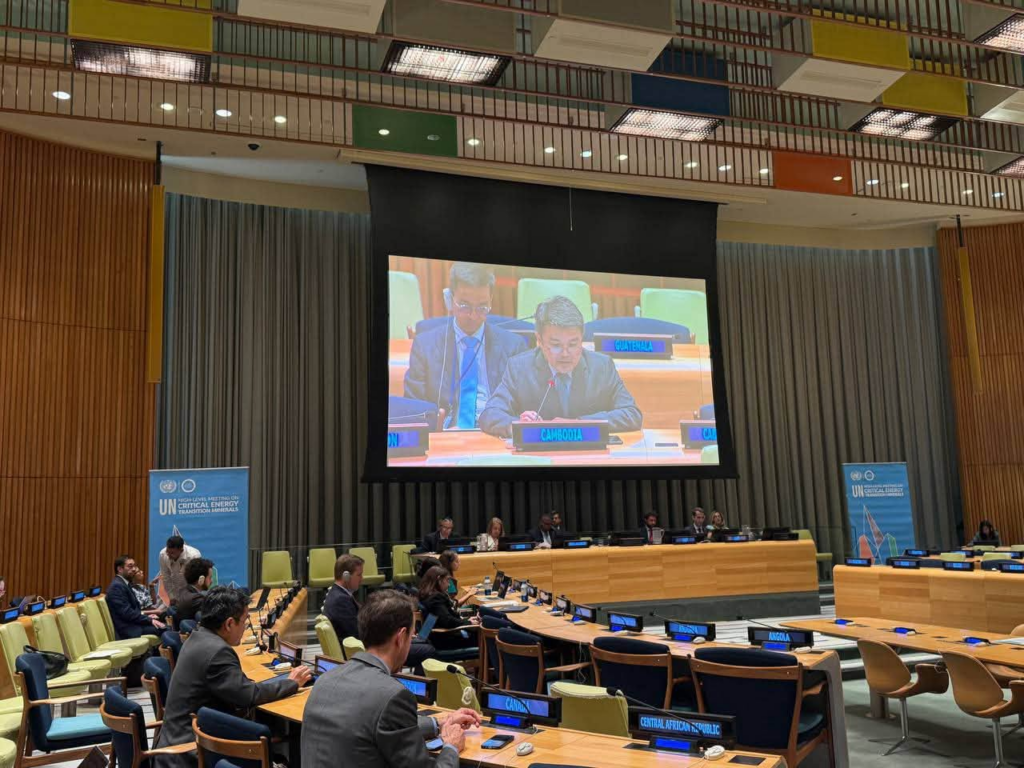
Cambodia Outlines 5-Point Strategy for Strategic Mineral Resource Utilization
Economy
2026年7月15日
3
Kampuchea Thmey Local
Relations
🇰🇭Cambodia🌐United Nations / ASEAN

Cambodia Outlines 5-Point Strategy for Strategic Mineral Resource Utilization

AI サマリー

Cambodia presented a five-point strategic priority to enhance national economic value from critical mineral resources at a UN meeting, aiming for sustainable economic development and a balanced clean energy transition.

Cambodia has outlined five strategic priorities for enhancing the national economic value of its critical mineral resources during a high-level meeting on critical mineral resources for the clean energy transition, held at the United Nations Headquarters in New York. The strategy aims to foster sustainable economic development and a balanced energy transition. At the meeting on July 14, 2026, Mr. Yeung Chansophara, Cambodia's Deputy Permanent Representative to the UN, highlighted the government's efforts to establish the necessary technical and policy foundations for managing critical mineral resources in line with development contexts. The five strategic priorities presented by the Deputy Permanent Representative are: 1. Strengthening geological data and knowledge. 2. Developing a national framework for critical minerals. 3. Promoting responsible mining operations and environmental protection. 4. Driving higher value addition. 5. Enhancing regional and multilateral cooperation. Mr. Chansophara emphasized that the global energy transition must be swift and just. He called upon the international community to provide support in capacity building, technology transfer, and technical assistance to help developing economies move beyond merely extracting raw materials and contribute to a balanced energy transition.

多角的分析

経済的影響

カンボジアは、重要鉱物資源を単なる採掘対象から、付加価値の高い産業へと転換させることで、経済構造の高度化を目指しています。これは、資源依存型経済からの脱却と、クリーンエネルギー移行という世界的な潮流に乗るための戦略です。5つの戦略は、データ基盤の強化から国際協力まで網羅しており、資源開発における透明性と持続可能性を重視する姿勢を示唆しています。特に、付加価値向上は、現地での加工・精錬能力の向上を意味し、雇用創興や技術移転に繋がる可能性があります。

投資家心理

カンボジアの重要鉱物資源戦略は、投資家にとって新たな機会とリスクの両方をもたらします。戦略の実行には、インフラ整備、技術移転、法規制の整備などが不可欠であり、これらは外国直接投資(FDI)を呼び込む要素となり得ます。特に、環境規制の強化や責任ある鉱業の推進は、ESG投資(環境・社会・ガバナンス)を重視する投資家層にアピールする可能性があります。しかし、地質データの不足や、国際的な資源価格の変動リスク、そして地政学的な影響も考慮する必要があります。

社会的影響

重要鉱物資源の開発は、地域社会への影響が避けられません。5つの戦略のうち、「責任ある鉱業事業と環境保護の促進」は、鉱山開発に伴う環境汚染や土地収用、住民の生活への影響といった社会的な課題に正面から向き合う姿勢を示しています。しかし、これらの原則が現場でどのように実施され、地域住民の権利がどのように保護されるかが重要です。また、資源開発による経済的恩恵が、一部の層に偏らず、広く国民に行き渡るような仕組み作りも問われます。

市民の声

カンボジア国民にとって、重要鉱物資源の戦略的活用は、将来の経済的安定と生活水準の向上に繋がる可能性があります。特に、資源開発から得られる収益が、教育、医療、インフラ整備といった公共サービスに還元されれば、国民全体の福祉向上に貢献するでしょう。しかし、資源開発の恩恵が一部の富裕層や外国企業に集中し、環境破壊や地域社会の分断といった負の側面が強調される場合、国民の不満が高まるリスクも存在します。透明性の高い資源管理と、開発利益の公正な分配が求められます。

背景・歴史的文脈

カンボジアは、近年、経済成長を遂げる一方で、資源開発への依存度を減らし、より付加価値の高い産業構造への転換を目指しています。特に、ASEAN地域における地政学的な位置づけと、クリーンエネルギー移行という世界的な潮流を踏まえ、重要鉱物資源の戦略的活用は、国家経済の新たな柱となる可能性を秘めています。過去には、一部の資源開発プロジェクトにおいて、環境問題や不透明な契約が指摘された経緯もあり、今回の5つの戦略は、こうした課題への反省と、持続可能な開発への決意を示すものと考えられます。

原文ソース

Kampuchea Thmey Local

原文を読む