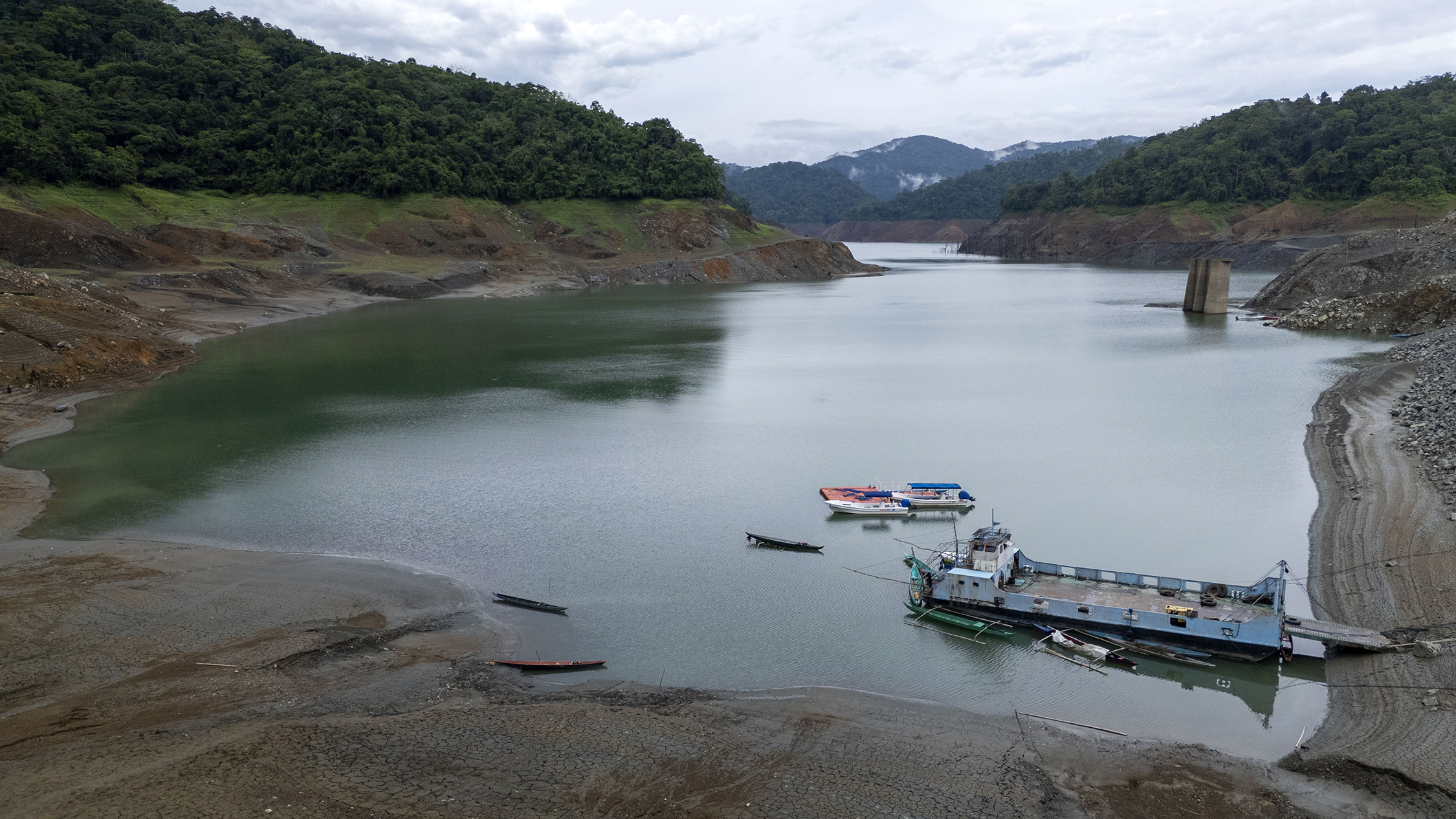
Angat Dam Hits Record Low, Threatening Water Supply for Metro Manila and Central Luzon
The water level at Angat Dam, a crucial water source for the Philippines, has hit a new record low, raising serious concerns about water shortages for residents and farmers in Metro Manila and Central Luzon. Monsoon rains are proving insufficient to replenish the reservoir.
CITY OF MALOLOS, Philippines — While 17 people died with 10 more missing in Mindanao because of Supertyphoon Inday (international name: Bavi), more than 15 million residents of the Metro Manila area and more than 22,000 farmers in Pampanga and Bulacan continue to pray for rain. Angat Dam’s water level fell further to 156.07 meters above sea level (masl) on Saturday, with local officials saying only heavy rains from a typhoon crossing the Sierra Madre mountain range — not the southwest monsoon or “habagat” — can replenish the country’s main reservoir. The reservoir stood at 156.09 meters above sea level (masl) at 6 a.m. before dipping further to 156.02 masl by 1 p.m., based on records from the Bulacan Provincial Disaster Risk Reduction and Management Office (PDRRMO). The latest reading came after the reservoir breached its previous record low despite rains brought by Inday and the habagat. Angat Dam is located in the mountainous hilltop area of Barangay San Lorenzo in Norzagaray town, within the Angat Watershed Forest Reserve in the Sierra Madre mountain range. Manuel Lukban Jr., head of the Bulacan PDRRMO, said the dam’s water level remained virtually unchanged because the recent rains fell over lowland areas and did not favor the Sierra Madre watershed whose runoff feeds the reservoir. “It is almost the same because these are habagat rains, not rains coming from the mountains. The dam’s elevation will increase more easily if a typhoon directly hits the Sierra Madre,” Lukban told the Inquirer. The reservoir measured 156.39 masl on Friday. On Thursday, Angat Dam fell below its previous historic low, reaching 156.69 masl at 6 a.m. before declining further to 156.66 masl at 11 a.m., from 156.68 masl at 8 a.m. The current level has surpassed the previous record low of 157.56 masl, recorded in July 2010 during a severe El Niño episode that devastated rice production, particularly in Central Luzon. Raul Agustin, a senior PDRRMO officer, recalled that then Agriculture Secretary Arthur Yap ordered a series of cloud-seeding operations over the Angat watershed to help replenish the reservoir during the 2010 drought, but agricultural officials are not very optimistic about the impact of such operations. Due to the critically low water levels, the National Water Resources Board has reduced water allocations for Metro Manila and halted irrigation supply to farms in Bulacan and Pampanga. Lukban said the current water level is the lowest he has seen in nearly six years as head of the provincial disaster management office. The mean annual rainfall in the Philippines varies significantly by region but ranges from 965 mm to 4,064 mm every year. Metro Manila’s water suppliers have assured their customers that they have identified alternative sources of water, but the impact will likely have a more serious effect on farmers, especially in Central Luzon, which serves as Metro Manila’s “rice bowl.” The National Irrigation Administration (NIA) has completely suspended irrigation water releases to approximately 27,000 hectares of rice fields served by the Angat-Maasim River Irrigation System. Normally, the wet season planting begins around July 15, but NIA officials have confirmed that irrigation supply will likely be delayed until August at the earliest. Until the dam reaches at least 185 meters, farmers can only expect a negligible 10 cubic meters, which is insufficient for rice cultivation. In its 5 p.m. weather advisory on Saturday, the Philippine Atmospheric, Geophysical and Astronomical Services Administration reported that monsoon rains are forecast to affect Zambales, Bataan and Occidental Mindoro. Occasional rains, caused by the southwest monsoon, may affect Metro Manila and the southern Tagalog region, Western Visayas, Negros Island Region, Ilocos Region, and Central Luzon. /atm
多角的分析
アンヘルトダムの水位低下は、フィリピン経済、特に農業部門に直接的な打撃を与えています。中部ルソンは「米の貯蔵庫」として知られ、灌漑用水の供給停止は米の生産量を大幅に減少させ、食料価格の上昇とインフレ圧力の増大を招く可能性があります。これは、既にインフレに苦しむフィリピン経済にとって、さらなる負担となります。また、水不足は産業用水の供給にも影響を及ぼし、製造業やサービス業の生産性低下につながる恐れがあります。
投資家にとって、この水不足はインフラ関連、特に水管理・浄水・配水システムへの投資機会を示唆する一方で、農業関連企業や、水供給に依存する製造業への投資リスクを高めます。長期的な視点では、気候変動への適応策や、より持続可能な水資源管理技術への投資が求められるでしょう。食料安全保障への懸念は、国内消費市場の安定性にも影響を与える可能性があります。
水不足は、首都圏の約1500万人以上の住民の日常生活に直接的な影響を与えています。水道水の供給制限は、家庭での衛生状態の悪化や、日常生活の不便さを引き起こします。特に、低所得者層は代替水源の確保が困難な場合が多く、健康リスクが増大する可能性があります。また、農民にとっては、生計の基盤である農業が危機に瀕しており、経済的な困窮や地方からの都市部への人口流出を加速させる恐れがあります。
マニラ首都圏の住民は、日々の生活で水の配給や節水を強いられています。特に、子供を持つ家庭では衛生管理が難しくなり、不安を感じています。農民たちは、田んぼに水が引けず、今年の収穫の見通しが立たず、家族の生活をどう維持していくか途方に暮れています。SNS上では、水不足への不満や、政府への対策を求める声が高まっています。
背景・歴史的文脈
フィリピンの主要な水源であるアンヘルトダムは、首都圏と周辺地域の水供給の約90%を担っており、その水準は長年にわたり注目されてきました。特に2010年にはエルニーニョ現象によりダムの水位が過去最低を記録し、深刻な水不足と農業への壊滅的な影響をもたらしました。この経験から、水資源管理の重要性は認識されていましたが、インフラ投資の遅れや気候変動の影響が重なり、再び危機的な状況に直面しています。中部ルソン地域はフィリピンの主要な米生産地であり、その水供給は国の食料安全保障に直結しています。
原文ソース
Inquirer NewsInfo