Cambodia Promotes Digitalization and New Teaching Methods to Enhance Buddhist Education Quality
Cambodia held a closing ceremony for a training course for administrators of Buddhist primary schools. Minister of Cults and Religion, Cham Borin, encouraged the adoption of digitalization and active learning methods, aligning with Prime Minister Hun Manet's 'Pentagonal Strategy' for human resource development and socio-economic progress.
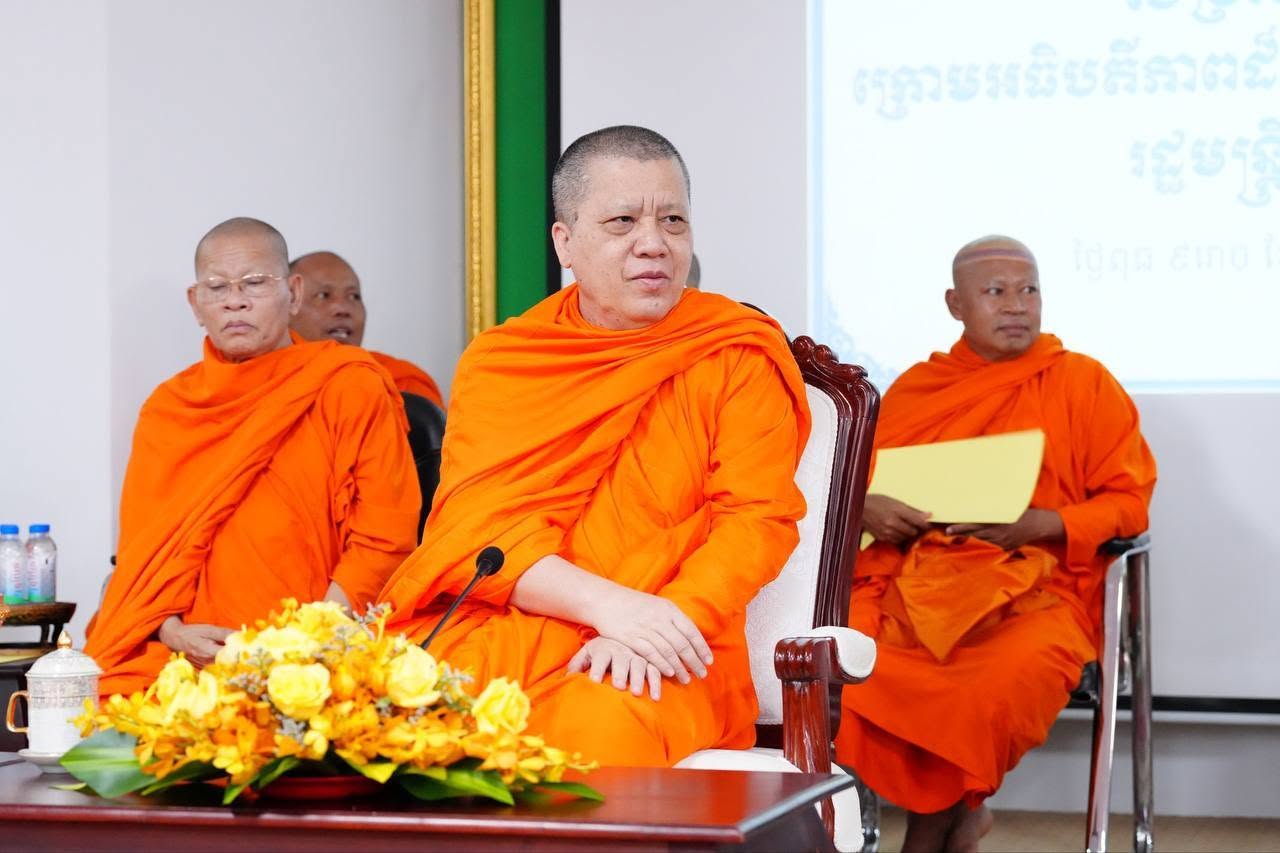
On the afternoon of July 8, 2026, H.E. Cham Borin, Minister of Cults and Religion, presided over the closing ceremony of a training course for administrators of Buddhist primary schools. The event took place at the General Directorate of National Buddhist Education, Ministry of Cults and Religion. The ceremony was attended by approximately 64 participants, including Venerable Monk leaders, senior monks, and trainees from various provinces and specialized departments under the General Directorate of National Buddhist Education. During the occasion, H.E. Cham Borin praised and highly commended the trainees for their diligent efforts in studying all subjects over the past three days, successfully completing the training course. He stated that the 7th legislature of the National Assembly, under the pragmatic leadership of Prime Minister H.E. Dr. Hun Manet, has adopted the 'Pentagonal Strategy' as the agenda for Cambodia's socio-economic development over the next 25 years. The first phase of the Pentagonal Strategy prioritizes five key areas: Growth, Employment, Equity, Efficiency, and Sustainability, with a focus on five core priorities: 'Human, Road, Water, Electricity, and Technology,' particularly 'Digital Technology,' to respond to the Fourth Industrial Revolution and the digital transformation of Cambodia's economy and society. This aligns with the high recommendations of H.E. Dr. Hun Sen, Acting Head of State and President of the Senate, to further promote Khmer culture, traditions, and customs. Furthermore, H.E. Cham Borin emphasized that under the pragmatic leadership of Prime Minister H.E. Dr. Hun Manet, the General Directorate of National Buddhist Education has been provided with opportunities and capabilities to strengthen and expand the Buddhist education sector from primary to higher and postgraduate levels, in line with the policies of the 7th legislature's Pentagonal Strategy, for human capital development to contribute to national construction and development. The government's political program for nation-building and defense for 2023-2028 also clearly outlines the preservation and development of religion, including: 1) Respecting freedom of belief and religious practice, promoting Buddhism as the state religion, and supporting the practice of other religions in Cambodia. 2) Strengthening harmony among all religions and ethnicities in Cambodia, preventing the commercialization of religion, and opposing discrimination based on belief or religion, with the aim of transforming the potential of all religions into a strong national solidarity force for peace, national unity, national sovereignty, and the promotion of socio-economic development. 3) Continuing to strengthen and expand Buddhist education at all levels. In response to the government's political program, H.E. the Minister shared several insights: 1. Knowledge on paper or in computer memory cannot change the quality of monks and students; therefore, trainees should adopt active teaching methods and new lesson plans in their classrooms, while also being adaptable to the specific circumstances of their schools and the learning levels of each student, avoiding rigidity. 2. In the era of Artificial Intelligence (AI) and the digital society, teachers cannot lag behind students in technology; thus, trainees are encouraged to regularly use digital tools (such as creating slides, educational videos, or classroom management programs) to make classrooms vibrant, modern, and attractive to students. 3. The strength of a single teacher cannot drive the entire school to prosper; therefore, trainees should share their knowledge and good techniques with colleagues and other teachers in Buddhist educational institutions for mutual progress. 4. Good teachers not only impart knowledge in literature or mathematics but also cultivate morality, virtue, and good conduct in every monk and student. 5. Global education and knowledge are constantly changing; therefore, trainees should not be content with their current level of knowledge but must continue to research, acquire new knowledge, and participate in regular refresher courses to update their skills and become strong 'human capital' in line with the government's Pentagonal Strategy. 6. Continue to strengthen the quality of Buddhist education at all levels by enhancing teacher qualifications and updating curricula to respond to technology, especially digital transformation and the rapid global and regional changes. On this occasion, H.E. the Minister offered blessings and good wishes to all esteemed monks, Venerable Monks, Excellencies, Ladies and Gentlemen, trainers, trainees, and all attendees, wishing them the four supreme blessings: long life, beauty, happiness, and strength, free from any adversity.
多角的分析
カンボジア政府は「五角戦略」を通じて、経済発展の基盤として「技術」、特に「デジタル技術」への投資を明確に打ち出している。仏教教育の現場においても、デジタルツールの活用や最新技術への対応を求めることは、将来的な労働力のデジタルスキル向上を目指す長期的な経済戦略の一環と見られる。教育の質向上は、人的資本の強化に直結し、より高度な産業への移行を可能にするための布石である。
この動きは、教育分野におけるデジタル化への投資機会を示唆する。仏教系学校へのデジタル教材や教育プラットフォームの提供、教員向け研修プログラムの開発などは、新たなビジネスチャンスとなり得る。政府がデジタル技術を重視する姿勢は、IT関連企業や教育テクノロジー企業にとって、カンボジア市場への参入または事業拡大の追い風となるだろう。
仏教はカンボジア社会において深い精神的支柱であり、教育システムにおいても重要な役割を担っている。今回の研修は、伝統的な仏教教育に現代的なデジタル技術と教育手法を融合させる試みであり、社会の価値観と現代化のニーズとの調和を図ろうとする動きと言える。これにより、伝統的な道徳観を維持しつつ、社会の変化に対応できる次世代の育成を目指すことになる。プノンペンの学校では既にデジタル教材の導入が進んでいるが、地方の仏教系学校ではインフラ整備や教員のデジタルリテラシー向上が課題となる可能性がある。
市民、特に仏教徒の保護者にとっては、子供たちが伝統的な価値観を学びつつ、現代社会で必要とされるデジタルスキルも習得できる教育環境が整備されることは歓迎すべきことである。しかし、デジタル化の恩恵が都市部と地方で均等に享受できるか、また、デジタルデバイド(情報格差)が生じないかといった懸念も生じる。地方の仏教系学校に通う子供たちの親は、学校でのデジタル教育の質や、家庭での学習支援の必要性について不安を感じるかもしれない。
背景・歴史的文脈
カンボジアでは、仏教が国民の精神的支柱として深く根付いており、教育システムにおいても仏教教育機関が重要な役割を担ってきた。近年、フン・マネト政権は、国家の長期的な発展戦略として「五角戦略」を掲げ、特にデジタル化と人的資本の強化を重点課題としている。この戦略は、第4次産業革命に対応し、経済成長を持続可能なものにすることを目指している。今回の仏教教育におけるデジタル化推進は、こうした国家戦略と伝統的な社会基盤との融合を図る試みであり、教育の質向上を通じて、社会全体の近代化と国際競争力の強化を狙ったものである。
原文ソース
CPP Cambodia