General articles are free for 24 hours after publish.
Vietnam Elevates Culture to National Competitive Edge through 'Soft Power'
Vietnam's Communist Party has unveiled a new policy emphasizing culture as a crucial 'soft power' alongside economic and technological strengths. With cultural development goals set for 2030 and a national soft power strategy aiming for 2045, the aim is to leverage culture for enhanced national competitiveness and international standing.
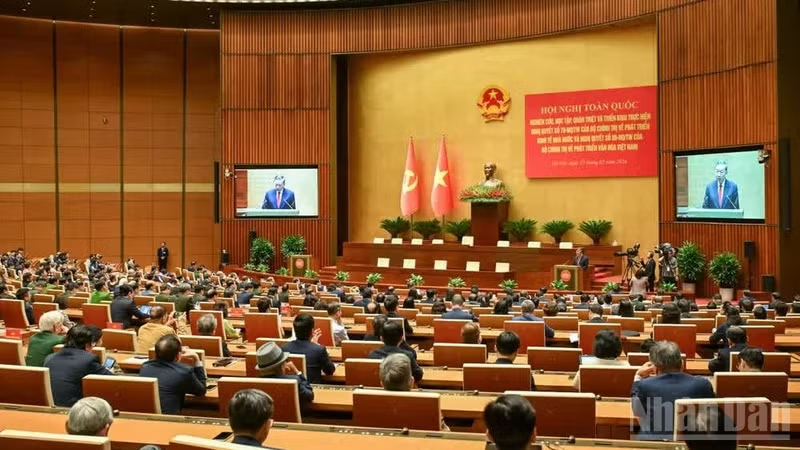
Vietnam's Communist Party has clearly defined a policy that positions culture, as 'soft power,' as a key to strengthening national competitiveness, in addition to economic and scientific-technological capabilities. This aims to maximize cultural resources and transform them into a driving force for development and a national competitive advantage. At a recent national conference, the thorough implementation of 'Resolution No. 79' and 'Resolution No. 80' adopted by the Party Central Committee's Politburo was emphasized. Specifically, 'Resolution No. 80' opens up new space for Vietnam's cultural development, setting concrete goals for up to 2030 and outlining a vision for a national soft power construction strategy looking towards 2045. This resolution is expected to be a crucial step for Vietnam to further enhance its presence in the international community. By strategically utilizing culture not just for the inheritance of arts and traditions, but as national soft power, it is anticipated to lead to the strengthening of economic and political influence. Under Vietnam's one-party system, the promotion of national strategies under the Party's leadership is emphasized, and this reinforcement of cultural policy is seen as part of that effort. For Vietnam, which continues to experience economic growth, improving its international image and expanding its external influence will be important elements in its diplomatic strategy, including its relations with China.
Original source
Nhan Dan