General articles are free for 24 hours after publish.
Dayak Basap Community Worries as Coal Mine Concession Changes Hands in East Kalimantan
The indigenous Dayak Basap community in East Kalimantan faces renewed environmental concerns as a former PT Kaltim Prima Coal concession is transferred to a company linked to Nahdlatul Ulama. Decades of coal mining have already caused deforestation and river pollution, impacting traditional livelihoods and cultural practices.
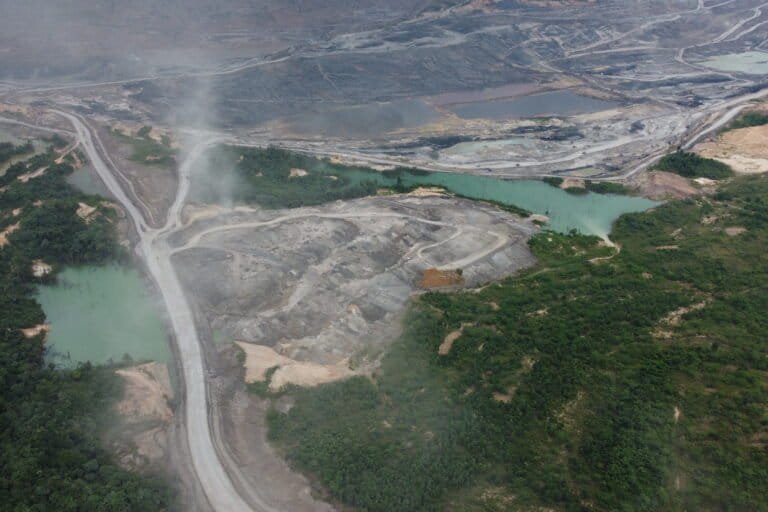
The indigenous Dayak Basap community in Tebangan Lembak Village, East Kutai Regency, East Kalimantan, has been grappling with the impacts of coal mining for approximately 15 years. Now, they face new concerns following the transfer of a portion of PT Kaltim Prima Coal's (KPC) former concession to PT Berkah Usaha Muamalah Nusantara (BUMNU), a company affiliated with Nahdlatul Ulama (NU). An analysis by Yayasan Auriga Nusantara indicates that out of a total of 37,000 hectares in Tebangan Lembak Village, around 14,187 hectares have been exploited for mining. BUMNU itself holds special mining business permits covering approximately 26,000 hectares spread across seven blocks, one of which is in Tebangan Lembak, spanning about 1,812 hectares. While BUMNU has not yet commenced exploitation, the Action for Ecology and People's Emancipation (AEER) notes at least 14 former mine pits in the area. Data from MapBiomas also shows mine pits covering approximately 592 hectares. The deforestation has made it difficult for the community to access medicinal plants they traditionally use. Rivers have become polluted and are no longer fit for consumption. During rainfall, the water turns murky and viscous. Residents have resorted to relying on refilled water and aid from corporate social responsibility (CSR) programs. "That's why it can't be drunk anymore. We just buy refilled water [for drinking]," said Masri, a Dayak Basap resident. A study by the Ministry of Environment and Forestry identifies the Bengalon River Basin as having a sensitive and vulnerable ecoregion. If its forest cover is cleared, recovery is estimated to take more than 100 years. The mines have also reduced the community's agricultural land. For the past five years, residents have been unable to harvest mountain rice, consequently preventing the traditional Nembang Tahun ceremony, which is held only after a successful harvest. Concerns are amplified as the indigenous community feels inadequately involved in the decision-making processes. This article was originally published on Mongabay
Original source
Mongabay Indonesia