General articles are free for 24 hours after publish.
BI Maintains Interest Rates, Focuses on Hedging Incentives to Support Rupiah
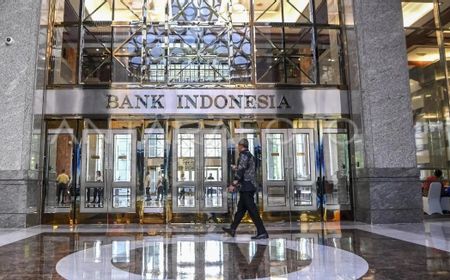
Bank Indonesia (BI) is maintaining its benchmark interest rate despite pressure on the rupiah. Instead, it is increasing incentives to reduce hedging costs against foreign exchange risk, aiming to attract foreign capital and stabilize the currency. Experts deem this approach appropriate for separating inflation control from exchange rate management.
JAKARTA - Bank Indonesia (BI) is maintaining its benchmark interest rate despite mounting pressure on the rupiah. Instead of raising interest rates, which would increase borrowing costs for the public and businesses, BI is opting for other policy instruments to stabilize the exchange rate. Fakhrul Fulvian, Head of Economics at Trimegah Sekuritas Indonesia, assessed that BI's decision to keep the BI-Rate at 5.75 percent is appropriate amidst high global pressures. He argued that not all pressures on the rupiah need to be met with higher interest rates for the entire economy. Fulvian highlighted BI's move to increase incentives for reducing hedging costs through swap transactions by up to 25 percent for a specific period. Hedging is a tool to mitigate losses from exchange rate fluctuations. Lower hedging costs are expected to attract foreign capital, especially when global uncertainties make investors hesitant. This policy allows BI to use different instruments for different challenges. Fulvian explained that the BI Rate is used to maintain inflation credibility and macro stability, while instruments like swaps and DNDF (Domestic Non-Deliverable Forward) can be specifically used to reduce foreign exchange risk costs and attract external funding. Comparing Indonesia's approach to India's use of foreign exchange swap facilities, Fulvian advised a gradual implementation for Indonesia. He suggested that a 25 percent incentive is sufficient to test market responses, and larger subsidies should only be provided if capital inflows improve significantly. The success of this policy will be measured by the development of foreign capital flows, rupiah stability, foreign exchange reserves, foreign ownership of Government Securities (SBN), and domestic liquidity conditions. Fulvian also stated that BI does not need to always respond to rising global bond yields by increasing its benchmark interest rate. Government bond yields should be allowed to adapt to investment risks, while exchange rate risks can be managed through hedging instruments. "Don't put all the shocks in the world into the BI Rate," he emphasized. With inflation at 3.19 percent on an annual basis as of August 2026, BI still has room for this approach. However, rising oil prices and continued rupiah weakening need to be monitored. Fulvian cautioned that hedging incentives should not become a permanent facility or a substitute for improving the economy's fundamentals. If attractive yields and lower hedging costs fail to attract foreign capital, the issue likely lies in the economy's fundamentals and balance of payments structure, rather than just costs. The development of foreign capital flows in the coming weeks will be a key indicator of BI's policy effectiveness.
Original source
VOI English